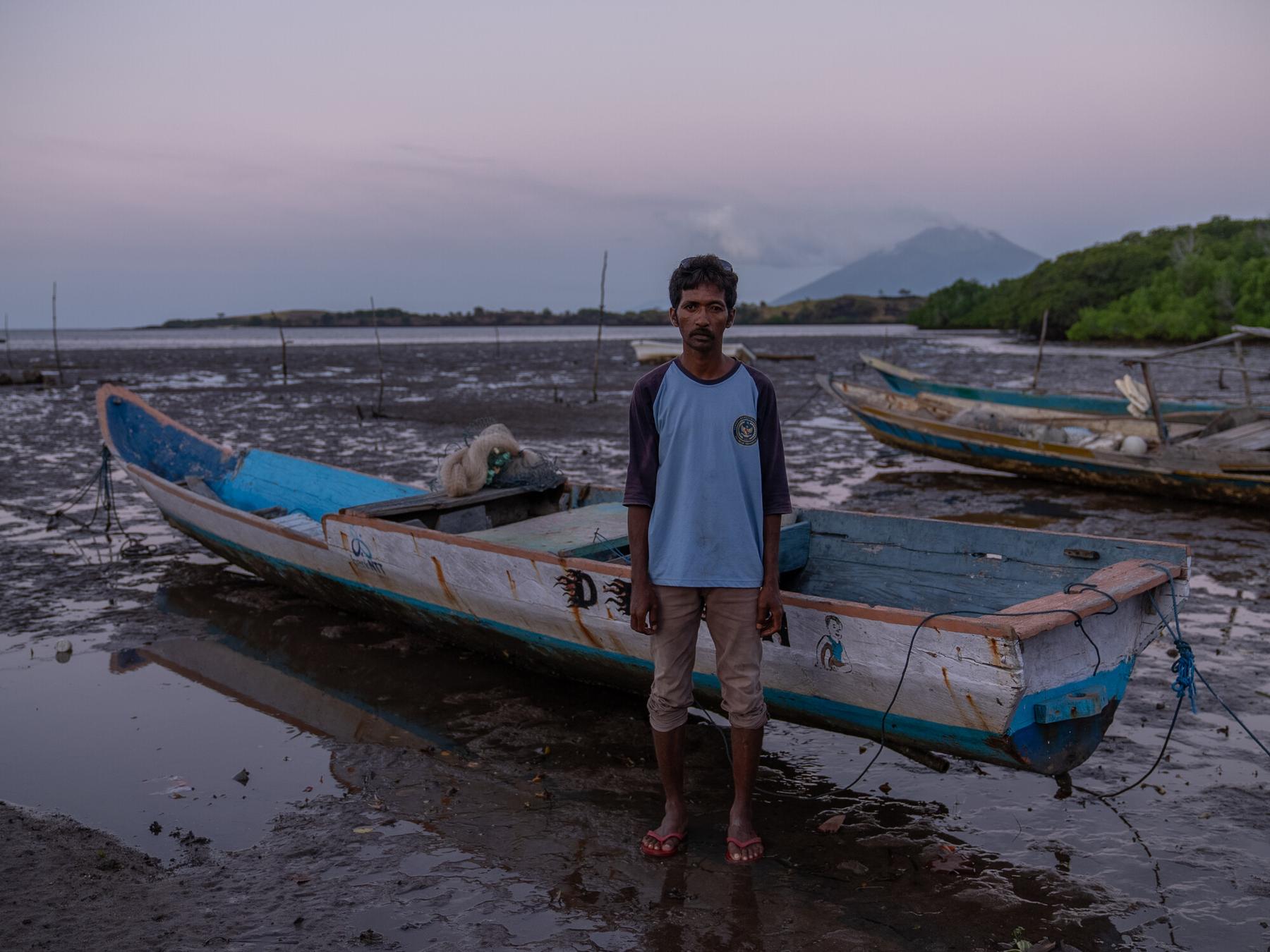
Indonesia: Said (33) in front of his fishing boat. He now struggles to catch enough fish for his family's daily needs, due to climate change and the fish moving further and further out to sea. Photo: Vikram Sombu/Oxfam. Oxfam acknowledges the support of the Australian Government through the Australian NGO Cooperation Program (ANCP).
Climate change
A more equal world is possible. One where any of us facing climate change have the resources to survive extreme weather, and the opportunity to build sustainable futures for generations to come.
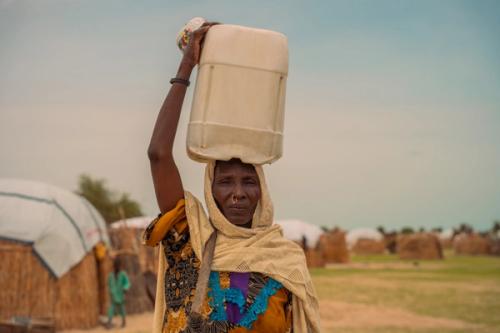
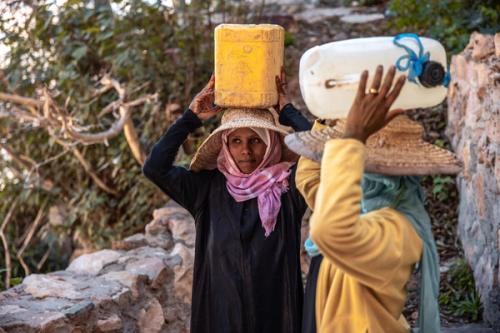
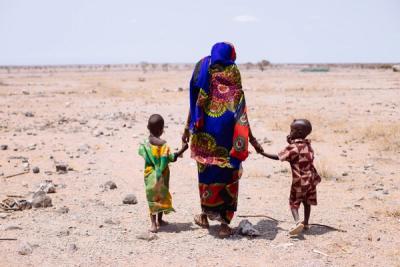
Chad: Yaka Oumarou, is a climate refugee in the Lake Chad province due to frequent flooding. She is on her way to fetch water in the lake. Photo: Adam Kraglaye/Oxfam
our approach
The climate crisis brings enormous injustice. It is affecting us all, but not equally.
In fact, the people who have contributed least to the changing climate are being affected by it the most, and are likely to be less able to protect themselves from the impacts.
Oxfam is seeking climate justice by making sure the people who are most impacted have a strong voice to influence policies and challenge polluters. We are also holding the biggest carbon emitters to account, advocating that they put resources back into communities to help them prepare and respond to climate impacts.
A safe, clean-energy future should be equally attainable for everyone, not a privilege reserved for wealthy nations and individuals. We are making sure people living in poverty benefit from future decisions about renewable energy and the creation of green, sustainable economies.
The disproportionate impact on communities
The climate crisis is disproportionately impacting people who are living in poverty, indigenous communities, women and children.
Despite being the original custodians of their lands, indigenous communities are often denied their fair share of its natural resources and are rarely involved in the decisions and policies that affect their lives and lands. The climate crisis deepens this injustice, and threatens the way of life and survival of indigenous communities around the world.
Women and people of diverse genders are more affected by climate change than men. They are often responsible for collecting water, will eat less than their family in times of scarcity and fare worse than men in times of disaster. Gender inequality means that women are also less likely to have access to knowledge, tools and finance to help them overcome climate challenges.
And of course, one of the greatest threats from climate change is to the health and prospects of our younger generations. They will face more extreme weather events, more limited access to clean water and food, and the risks associated with a rapidly changing environment.
To achieve climate justice, we must address the unequal burden placed on these communities. Everyone deserves a seat at the table when decisions are being made about their future, and Oxfam is making sure the voices of indigenous communities, women and those living in poverty are heard in the halls of power.