Asia-Pacific emergency
Months on from the devastation of successive disasters in the the Asia-Pacific region, Oxfam's emergency response continues.
On Saturday 26 September 2009, Typhoon Ketsana caused widespread wind and flood damage in the Philippines' capital Manila, and then continued through Vietnam, Laos and Cambodia leaving a path of destruction in its wake. A second typhoon hit the Philippines just over a week later. A tsunami destroyed entire villages in Samoa, and a massive 7.6 magnitude earthquake hit the Indonesian island of Sumatra.
Here’s a current roundup of the disasters, areas affected and our response so far:
- Indonesia (Sumatra) earthquake
- Samoa tsunami
- The Philippines typhoons
- Vietnam, Cambodia and Laos flooding
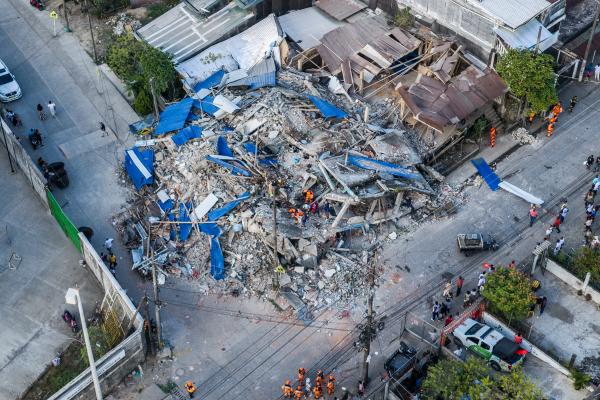
Photo: Bay ISMOYO/AFP PHOTO. Watch a slideshow of images from the Sumatran earthquake.
Indonesia (Sumatra) earthquake
The UN has reported that more than 1,000 people died as a result of the 7.6 magnitude earthquake that struck Padang on the island of Sumatra, Indonesia on Wednesday 30 September. Buildings and hospitals collapsed and emergency crews are still trying to find people among the rubble.
Oxfam has a team of 20 responding in the area and extra emergency staff are still on their way in to assist. Oxfam is placing an immediate priority on delivering clean water and shelter. And we're particularly focusing our efforts on more remote areas that haven’t received much assistance yet – mainly around Padang Pariaman which was the area closest to the epicentre of the quake.Those already on the ground have commenced distributing urgent supplies, including 2,500 hygiene kits and clothes, 5,000 tarpaulins for shelter with 10,000 more on their way.
The local Padang water supply was severely damaged by the earthquake, and the cost of water has doubled from 4,500 rupiahs before the earthquake, to 8,000 rupiahs per gallon now. We've already tankered in between 6,000 – 9,000 litres of clean water.
An Oxfam team of water experts travelled to the area to set up a water treatment plant which will provide 40,000 litres of clean water a day. This is enough drinking water for approximately 13,000 people.
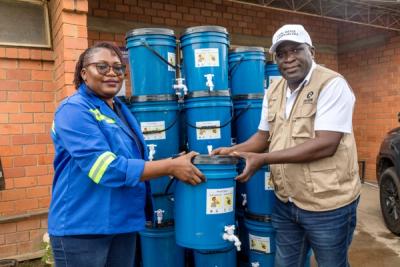
The team are also providing five 4,000 litre capacity water tankers and setting up a training centre for well cleaning. Another team will be assessing further water, sanitation, shelter and emergency needs.
Photo:REUTERS/Crack Palinggi (www.alertnet.org).
Photo: Fili Sagapolutele/AP
Samoa tsunami
On 29 September, a tsunami, caused by a massive 8.3 magnitude earthquake off the coast of the Samoa, devastated villages along the southern coast as well as the northern islands of Tonga, and the southern coast of American Samoa. One per cent of the population was wiped out by the tragedy and one out of every six people were seriously affected in some way.
An Oxfam team arrived in Samoa on 30 September and worked with government officials, other humanitarian agencies and partner organisations to help distribute relief materials including food, water and clothing within hours of the tsunami.
Oxfam also sending water tankers to affected areas to ensure delivery of clean water to displaced families for drinking, cooking and cleaning. And we're working with local partner Women in Business Development Incorporated (WIBDI) to support appropriate water, sanitation and hygiene activities, as well as assessing the long-term impact the effects of the tsunami will have on people's lives and livelihoods.
Our primary focus is to reduce the risk of disease outbreak and support the recovery and rehabilitation of affected communities.
Watch a slideshow of our response in Samoa. Photos: Jane Ussher/Oxfam
Piliilagi Leuluaialii tells of her loss to the typhoon
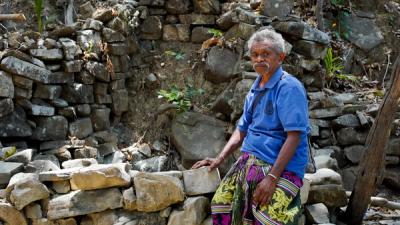
Standing beside the foundations of what was her home in Saleaaumea village, Piliilagi Leuluaialii, 57, tells her story. Pili lost her sister and one of her five sons. Her sister had had a stroke and when they saw the wave coming, her son tried to carry his aunt to safety, but both of them were killed.
“Water just came in so quickly and they weren’t able to take my sister out of the house.” Villagers, friends and family from Apia are now busy, cleaning up and burning debris. “When I could see the wave coming, I was just so scared and started running up behind the village – I don’t know what happened once the wave hit me.” Pili wants to build in the same place again, but doesn’t know how she’ll find the money.
Photo: REUTERS/Erik de Castro (www.alertnet.org)
The Philippines typhoons
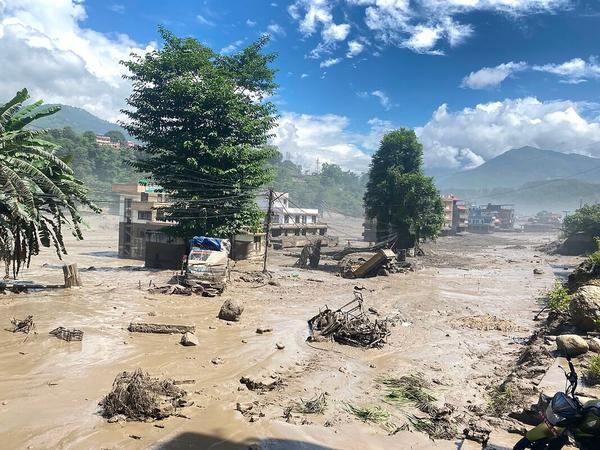
In late September 2009 close to one million families were affected by Typhoon Ketsana. Not since the 1950s has the Philippines' capital Manila seen such devastating flooding.
Photo: Danny Victoriano
Oxfam acted quickly by suspending its regular development work in the area in order to respond to the disaster. We also flew in extra staff to help. Our assessment teams identified that people were having problems getting access to clean water and food, so we’re still working with other agencies and authorities in the Philippines to make sure that people are getting what they most need.
We're currently helping 25,000 of the worst-affected families by providing clean water and emergency materials like blankets, soaps, cleaning equipment, clothes, and water containers. We're also providing small cash grants and shelter, and food relief has been distributed to over 17,000 people. Find out more about our Philippines response.
Vietnam, Cambodia and Laos flooding
Photo: Phouvong/Oxfam
The flooding from Typhoon Ketsana also caused widespread damage in Vietnam with over 100 casualties and thousands forcibly displaced.
Cambodia
An early damage estimate in Cambodia indicated that more than 30,000 hectares of rice paddy and crops were flooded. This has caused severe crop failure for Cambodia's largely farming population. could cause severe crop failure for Cambodia’s largely farming population.
Oxfam is working to help 5,000 families or about 20,000 people who need assistance in four provinces. Find out more about our Cambodia response
Vietnam
In Vietnam, we are currently working closely with the government and other agencies to understand the immediate and longer term needs. Our work has focused on responding in Kon Tum in the central Highlands with water supplies, household items, hygiene promotion and livelihood support. View photos from our distribution of aid to typhoon affected villagers in Dak Ro Ong
Laos
Typhoon Ketsana also hit southern Laos, causing widespread flooding in Seking, Saravane, Attepau and Savannekhet provinces. Initial assessments report 24 casualties and almost 10,000 families displaced.
Oxfam is planning to help over 1300 of the worst-affected families with the distribution of aid. The onset of the colder weather is a further threat for the most vulnerable survivors. Oxfam will be providing blankets and jackets to women, children and the elderly to help them through the colder months. We will also conduct an evaluation three months into the program to measure the effectiveness of our work in the region, and use the findings to ensure preparedness for future disasters in Laos. Find out more about our Laos response
How you can help
Help us respond to future emergencies like these, by becoming an Emergency 365 regular donor.
Conditions of use
When you contribute content to our site, you retain ownership of the copyright. You also grant permission to Oxfam Australia to display and distribute your content, and to use it for any promotional purpose, without remuneration, compensation, or payment of royalties.
In addition, you are responsible for the content of your material. Oxfam Australia takes no responsibility for the content of any messages or information posted by contributors.
Oxfam Australia retains the right, in our sole discretion, to review, edit or delete any material which we deem to be illegal, offensive or otherwise inappropriate.