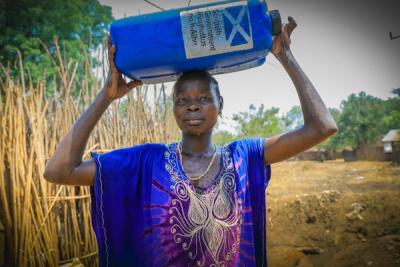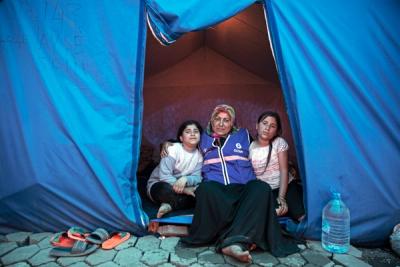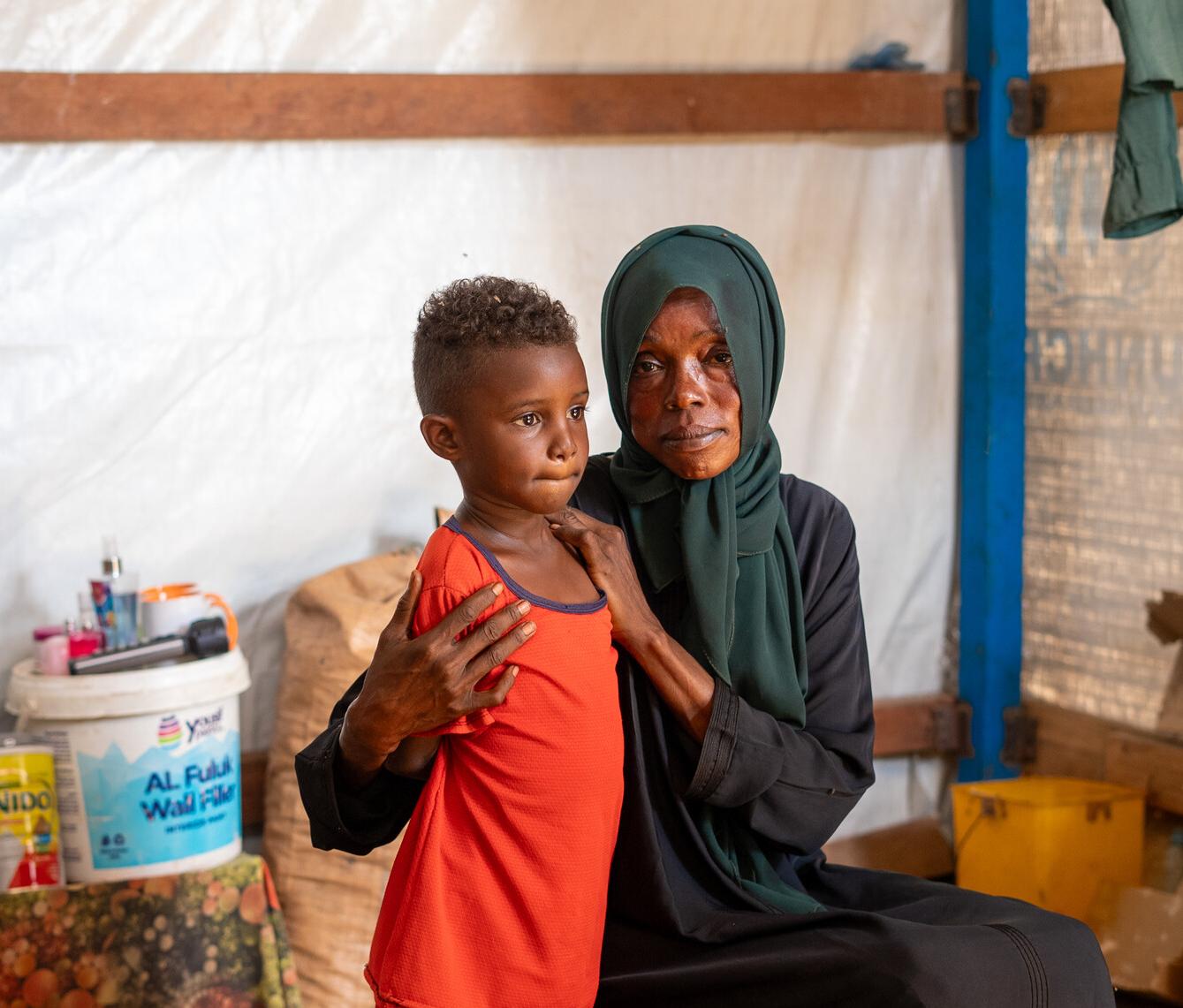
South Sudan: 35-year-old Nadia Zahad, a refugee from the Sudan war, with her son at their makeshift home in Renk. Photo: Herison Philip Osfaldo/Oxfam
Refugees
For the first time in recorded history, more than 100 million people have been forcibly displaced from their homes. These men, women and children are currently living as internally displaced people, asylum seekers or refugees.
Understanding refugees rights, their challenges, and Oxfam’s support
A refugee is a person who has fled their country because the threat of war, conflict or persecution is so great that they fear for their safety. While waiting for official refugee status, someone seeking safety in another country is known as an asylum seeker. A person who flees their home because it is unsafe, but stays within their country, is known as an internally displaced person.
Losing your home, community and even your family is a devastating trauma that few of us can understand. Even after fleeing their homes in a desperate search for safety, many people face ongoing discrimination in their new community, where resources may be scarce or prejudices may exist.
All refugees have the right to receive assistance, the right to protection from abuse and the freedom to seek asylum. These rights are enshrined in the 1948 Universal Declaration of Human Rights, which is the basis of all human rights laws and conventions and applies to everybody, regardless of who they are or where they come from.
Oxfam is working to uphold these rights by delivering humanitarian aid during times of disaster, conflict or war, when people’s lives are threatened. We support displaced people around the world to seek safety.
Refugees seeking safety amid persecution, war, and climate change
No-one chooses to be a refugee. Refugees are forced to flee their home because of the grave fear they hold for their life in their country of origin. Right now, there are around 35 million refugees around the world, and more than half of them are from just three countries: Afghanistan, Syria and Ukraine. Each of these refugees has experienced enormous loss and a difficult journey to a new land.
A person may become a refugee if they flee war, violence or persecution because of their race, religion, nationality, political opinion or membership of a particular social group. Increasingly, climate refugees are also fleeing their homes to escape extreme weather and human induced climate change.
Everyone has the right to seek asylum, which means seeking safety in another country. Often, asylum seekers will flee to refugee camps in neighbouring countries while they apply for refugee status. Conditions in these camps can be harsh, with millions of people living in crowded areas.
Even if an asylum seeker is granted refugee status, they will often face a new set of difficulties in their new country. More than three quarters of all refugees are hosted in low- or middle-income countries, where opportunities may be limited. Too often, refugees will face discrimination in their new country, particularly if food, water, shelter or job opportunities are scarce. Refugees may also experience discrimination or abuse targeted at their race, religion or nationality.