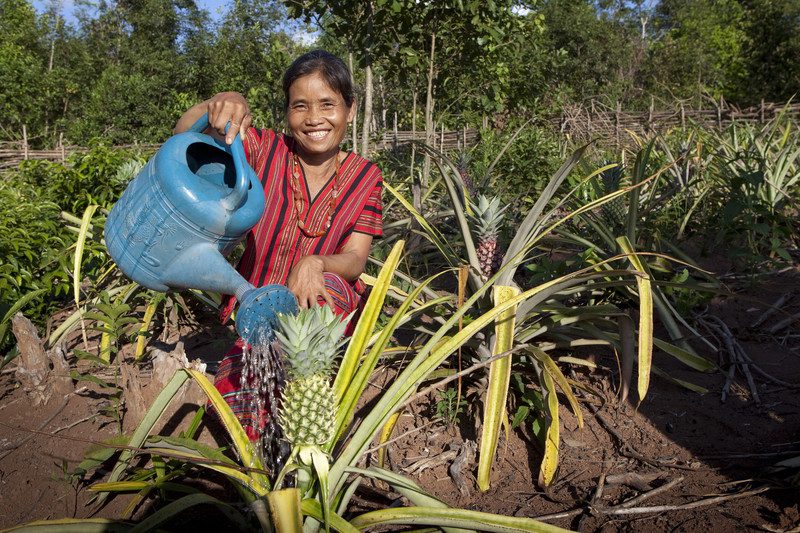
Laos
Laos, once home to Southeast Asia’s most untainted environment, is developing rapidly after years of isolation. But this development is doing little to improve the lives of 80% of the population living in remote rural areas.
Pristine forests are diminishing through deforestation for commercial plantations, and infrastructure development. Changing weather patterns are causing droughts, flash flooding and low-yielding crops. And all are factors which impact greatly on the lives of rural Laotians, reliant on small-scale agriculture for survival.
Oxfam is helping communities cope with natural disasters and the effects of rapid development. We’re also improving access to food, income, healthcare and education.
Improving livelihoods and food supplies
Most people in Laos live by growing their own food or fishing but unstable weather patterns and unregulated development have made this practice increasingly unreliable.
We’re assisting communities to improve crop yields and are establishing rice banks to provide rice during months of food shortage. We also train communities in animal husbandry and disease prevention to improve the health of livestock.
We also help villagers develop alternative sources of income to reduce their dependence on agriculture.
Our life is better now. The [Oxfam] project has helped my family get more rice and also take care of my health
Aum Chang, a rice farmer from Saborng village, Ta Oy district.
Working with riverside communities we’re finding ways to protect fish resources and ensure that communities have future access to secure food supplies.
Improving healthcare
By building clean water systems and latrines, disease is reduced and hygiene improved. We also train village volunteers in basic healthcare so people don’t have to travel far to get help.
We also raise awareness on the prevention of HIV and AIDS and other sexually transmitted infections.
Supporting women
Many women in remote communities cannot speak Lao. In Ta Oy district we’re helping by supporting a local radio station which broadcasts information in local languages. Women are also encouraged to participate in village committees and training to builds their skills and confidence.
Improving education
In remote parts of Laos, education opportunities are severely limited. In Ta Oy district more than 80% of villages have no schools. We are helping children access education by building schools and house for teachers who need to relocate. We’re also highlighting the importance of education to parents.
“Before we had this school, children would go to the fields with their mother and work, or look after younger children at home while their parents go to the field. Now most children come to school,” village leader Gia Gio La says.
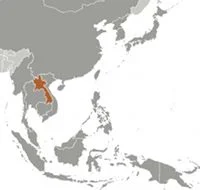
Fast facts
- Population below the poverty line:
- 38.6%
- Literacy (age 15 and over can read and write):
- 68.7%
- Infant mortality rate:
- 79.61 deaths/1,000 live births (2008)
- Life expectancy:
- 56.29 years (2008)
Source: CIA World Factbook, UNDP