A price on pollution? Check. A $10 billion investment in renewable energy? Check. This is a great start but Australia must do more if we are to play our part in tackling the global challenge of climate change.
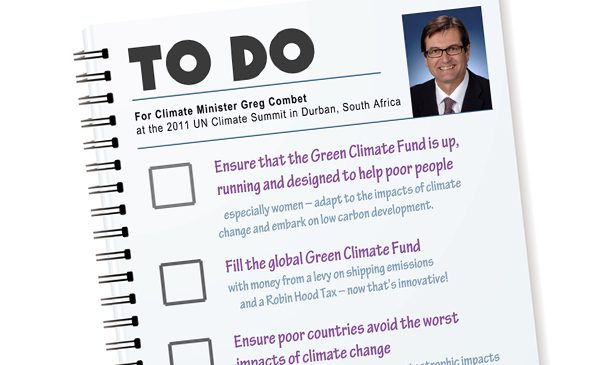
Here at Oxfam we have put together a “to do” list outlining the four things we would like Climate Minister Combet and the Australian government to commit to at this year’s UN Climate Summit. Add your suggestions to our list and we’ll present it to Minister Combet when he arrives in South Africa for the climate negotiations. Or send him an email with your ‘To Do’ list right now.
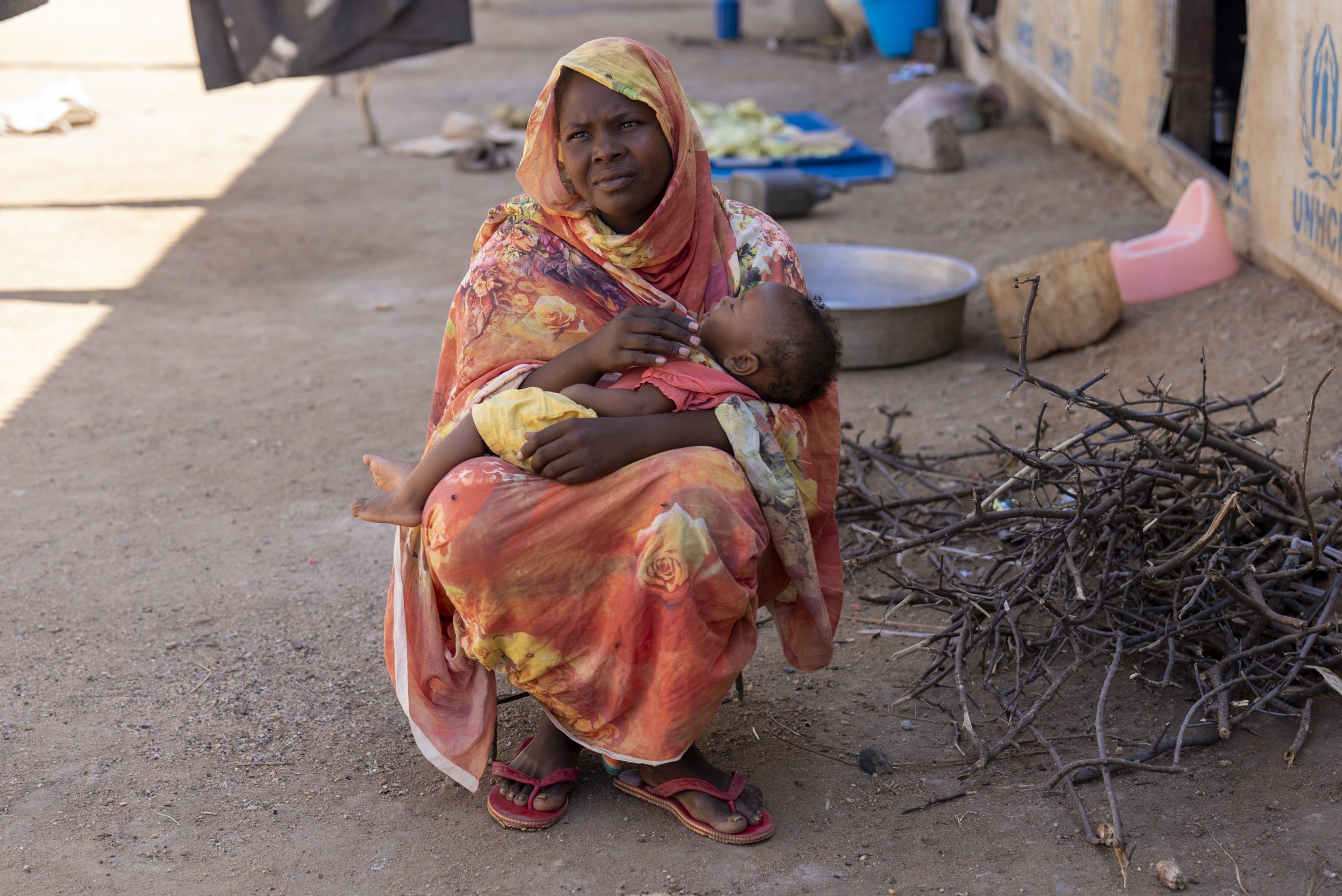
Across Africa, where this year’s UN Climate Summit are taking place, many people, especially women, rely on being able to grow their own food to survive. But the changing climate is having a devastating impact on their crops. Changing rainfall patterns, longer and more severe droughts, floods and rising temperatures all are presenting real challenges to farmers. It’s making it harder for them to produce adequate food supplies for their families and communities and to know when it’s best to sow, cultivate and harvest their crops.
At the UN Climate Summit there are some obvious and achievable steps that the Australian government must take to ensure progress is made to address climate change.
TO DO: For Climate Change Minister Combet at the UN Climate Talks in Durban, South Africa.
- Ensure that the Green Climate Fund is up, running and designed to help poor people – especially women – adapt to the impacts of climate change and embark on low carbon development. The way for this was prepared last year – now it just needs to happen.
- Support new ways to raise much needed climate finance to support developing countries to tackle climate change now and into the future, including a levy on global shipping emissions and a tax on financial transactions, now that’s innovative!
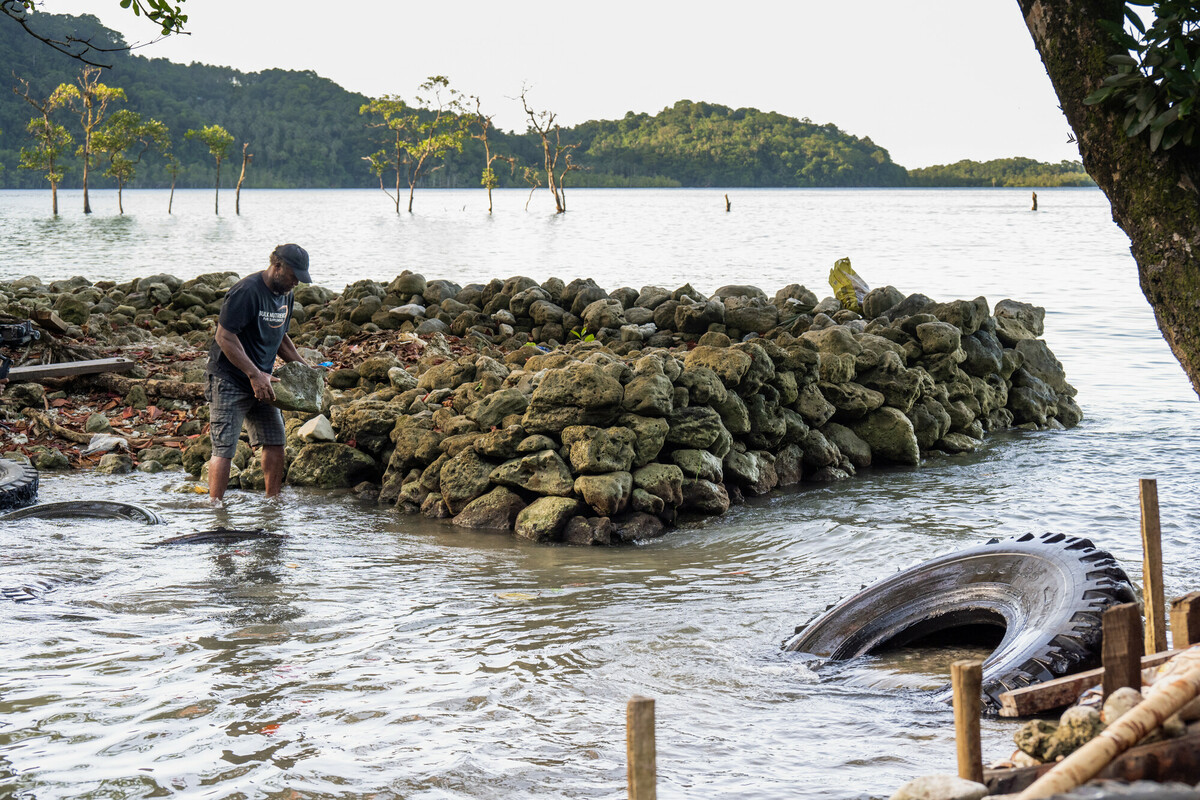
- Ensure poor countries avoid the worst impacts of climate change. Global warming above 1.5 degrees Celsius will mean catastrophic impacts for Pacific Island and African nations – Australia and other nations must reduce their emissions to help avoid this.
- Keep the Kyoto Protocol alive. The first phase of the Kyoto Protocol, the current global agreement to tackle climate change, is swiftly drawing to end of its life. As the only legally binding framework it needs to continue into a second period, as the stepping stone towards a fair ambitious and binding global climate agreement.
Have your say
- Add your own ask to our “Climate To Do” list by making a comment below. What steps do you want to see Australia take to address climate change?
- Vote for which task you think is most important (or add your own) on our Facebook poll