This month, the King Tides, what we refer to as the highest tides of the year, will wash over much of my homeland in the small Pacific Island nation of Tuvalu.
The King Tides are known as the new King for the people of Tuvalu. However, this King is not a benevolent one. He does not look after people’s welfare, but aims to destroy and harm the lives of many. The King Tide comes with the momentous power to wash away much of our land, our traditional crops, our fresh water supplies, our well-being and in time could wash away our homeland.
The impact of the King Tides on my home country of Tuvalu, which at its highest point sits at just 4.5 metres above sea level, is dramatic. Unless you have experienced it yourself, it is hard to comprehend what happens. During the King Tide our island is inundated by sea water, the salt water bubbles up through the ground, flooding our land, destroying our food crops. We are worried that in the future we will have no option but to relocate.
Last year to mark the King Tide we hosted a festival to draw international attention to the impacts of the King Tide on our beautiful country and unique culture. During the two-day festival there was much signing, and dancing of fatele, our traditional style of dance. But it made me think, what about when our time is up? What about when the King Tides and sea level rise so high that we can no longer live here? Will we be able to sing and dance our fatele (traditional dance) in foreign lands? Will our songs change if we are not in our own land, our fenua? I worry that if the tides keep rising that my children and future generations won’t get to grow up on their home land, they won’t get to experience the wonderful Tuvaluan way of life.
It is not just the impact of the King Tides that are hurting our country. Over the past decades the weather patterns have changed dramatically. Storms are more intense and frequent, we have long periods of drought followed by heavy rain. The tides come higher each year and each time taking away more of our coast line. It’s getting very dificult to catch fish now, people must travel further out to sea to get a good catch.
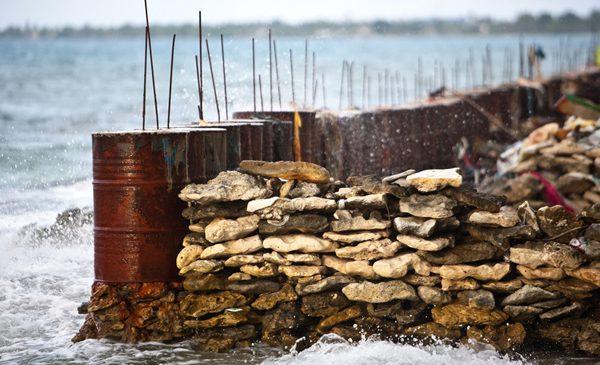
We are doing our best to adapt. People are building sea walls out of old oil drums. We are planting mangroves. People are planting our staple food crop, taro, in metal buckets because the soil is too salty to grow it in.
For many years the government and the people of Tuvalu have been calling on wealthy nations, who have contributed most to the problem of climate change to take action to reduce their greenhouse pollution. Unfortunately, our cries have not yet been answered. Here in Tuvalu we look up to our Australian and New Zealand neighbours as our big brothers. But in our time of need they are not helping.
We are not seeking monetary compensation, we are not seeking relocation nor migration, because nothing in this world can compensate our fenua (land) —our life—our identity. All we are asking, is for industrialised countries to take action by reducing their greenhouse pollution and help us to adapt to the impacts that we are already feeling. Climate change is bigger than religion, it’s bigger than science, it’s about the future of our world, and the beautiful countries and unqiue cultures that inhabit it. This week as the King Tide wash over our coastline, I ask you to rememberthis one fact: it is better to be part of the solution than to be a part of the problem.
Maina Talia is the climate change officer for the Christian Church of Tuvalu
First published on New Matilda
Photo: Rodney Dekker
Oxfam is currently in Tuvalu to record the impact of the King Tide. You can ask a question of the locals or check out our pictures as they come in.