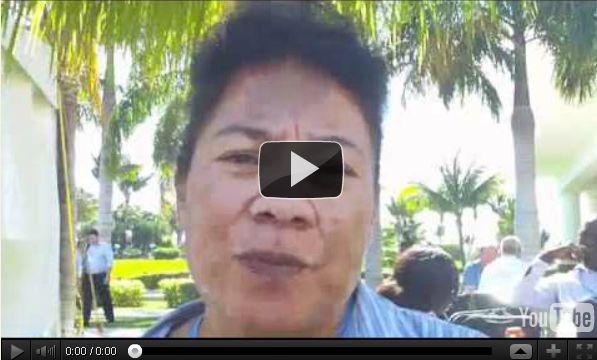
Ministers and heads of state are beginning to arrive in Mexico for what looks set to be an intense final week of negotiations. The halls are buzzing with delegates running between official and informal meetings (I learnt today that there are also ‘informal informals’… what creativity). Amidst the coordinated frenzy I had the privilege of catching up with Pelenise Alofa from Kiribati and Fiji to hear about her story and reflections upon the climate negotiations in Cancun.
Pelenise’s family comes from some of the most vulnerable Pacific islands to climate change. Her father is Tuvaluan and her mother was born in Kiribati. After World War II Pelenise’s family was moved from Kiribati to Fiji because of mining interests. After many years they were able to return and now live on the island of Banabi. Their lives and livelihoods are now being threatened by climate change.
As we talked Pelenise reflected upon how life is already changing in Kiribati:
“People are already being moved and resettled. Just recently some friends of mine were forced to leave their islands because all the sea water comes over the land and poisons our food crops and fresh water holes with salt”.
Pelenise said that many of the taro and coconut tress are dying because of salt-water inundation from more frequent and intense storms and cyclones – “we have not seen these things before. It is hard for us to cope.”
Many communities on Pacific islands are leaving their land, in part due to the pressure of climate change. Pelenise stressed:
As we talked stories kept emerging about the struggles of women in the community. Pelenise said that it is the women who are at the front line of climate change:
Now they often need to boil the water because it’s dirty, which means looking for firewood, adding another burden:
One of the key things Pelenise is interested at these negotiations is climate finance to support the most vulnerable:
Pelenise talked of many practical actions that could help them better cope with the impacts of climate change. One example was water tanks:
Pelenise lamented that even her local community where there are five homes and many people they cannot afford a water tank. Reflecting on her own struggles she commented:
Pelenise’s story reminds us that its very core these negotiations are about people. The negotiations are about real lives and livelihoods. It is vulnerable people like Pelenise and her community who stand to loose the most as a result of climate change – a problem their people did not cause. It is the rights of the poor and vulnerable which should be at the heart of any climate agreement.
Strong action on climate change is absolutely necessary if the lives and livelihoods of people like Pelenise are to be protected. The voices of people like Pelenise need to resonate throughout the halls of these talks so that all are reminded of the urgency for strong progress towards a fair, ambitious and binding international treaty.
TAKE ACTION – Ask your MP to watch the stories of people in the Pacific who are being impacted by climate change