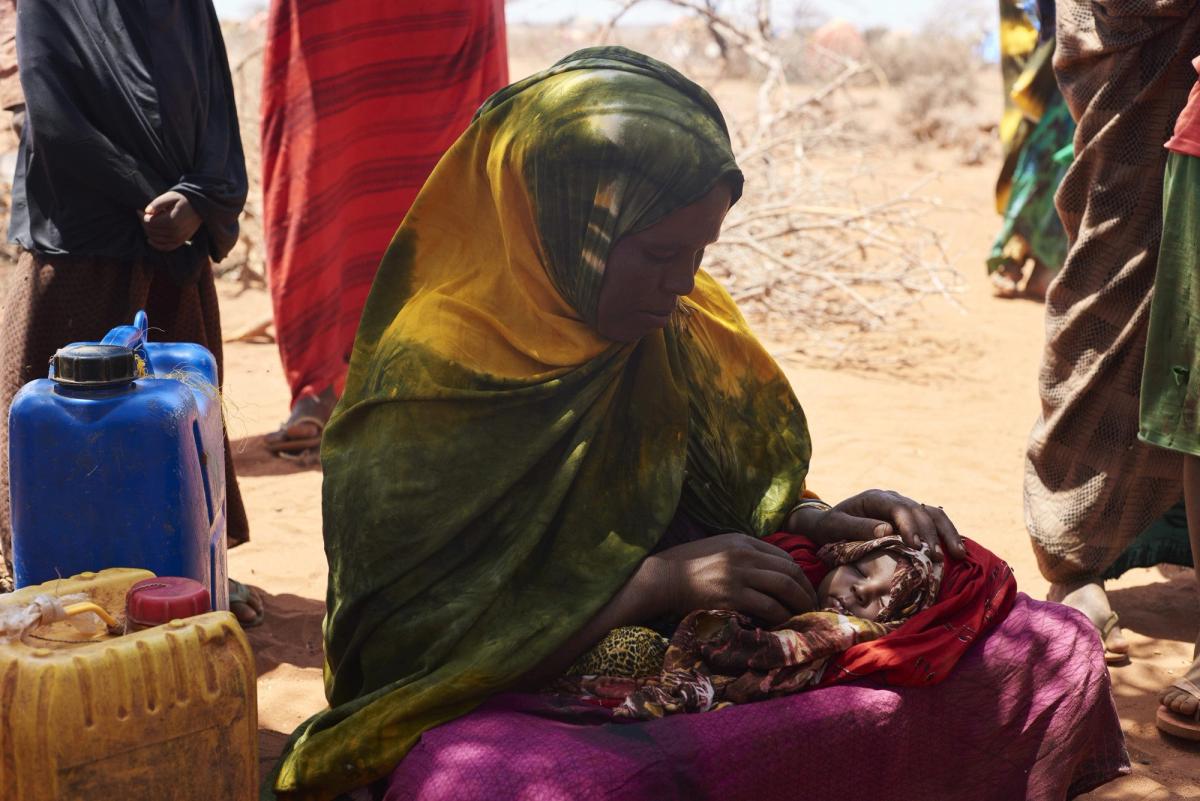
Bisharo’s baby girl doesn’t have a name.
When Oxfam visited them in the Korile temporary settlement camp in Ethiopia, her little daughter was already a month old.
This is because in Bisharo’s culture, the naming of a child involves a ceremony where a goat is sacrificed. But because of the worst drought in 30 years, exacerbated by climate change, they hadn’t been able to do this. Bisharo and her family had fled her home in search of food and water, and almost all of their animals had died along the way.
Bisharo and her baby are just two of 20 million people currently at risk of starvation – nearly as many people as live in Australia. But the current hunger crises confronting people across Africa and the Middle East is about more than people just being hungry.
People’s entire lives are disrupted, with many abandoning their homes, friends and entire lives, often risking their life. Nothing – not even having and naming a baby – is happening as normal.
With so many people, including children, in need Australian schools can play a very important role by joining with Oxfam to support them and raise awareness about global hunger.
Understanding the causes of famine is incredibly important for Australia’s young people, so current and future leaders know how to prevent such devastating crises reoccurring. While droughts and other natural hazards can lead to food shortages, famines are a human-made crisis and only occur when people and institutions don’t respond quickly and appropriately to the warning signs.
Famine and hunger is complicated and there is no single ‘right’ way to respond. But here’s a list of powerful ways Australian students can make a difference, both here in Australia and in the places that need it most.
1. Learn more about it
Watch ‘Hunger in a World of Plenty’. To help explore the issue behind the headlines, Oxfam Australia has created a presentation and video for high schools students based on our work in South Sudan, the Lake Chad Basin, the Horn of Africa and Yemen. It’s aligned to the Year 9 and 10 Australian Curriculum Geography, but can be used in schools in many ways including at assemblies, in social justice groups and more.
2. Share what you’ve learnt with your community
Hold a Hunger Banquet. Share what you’ve learnt with other students and the school community by organising a lunchtime experience that gives people a taste (literally!) of the inequalities in the global food system.
3. Work with us to reach those most in need
Support Oxfam’s work in countries in crisis. Hold a fundraiser at your school to help us reach more people more quickly, and prevent famine from spreading.
4. Talk to those with political power
Write to your Federal Member of Parliament. Use our SGDs letter writing kit to tell your local politician what you’ve learnt and ask them how Australia is working towards SDG 2: Zero Hunger.
Download Oxfam’s Schools Famine Resource
Through Oxfam Schools Program education resources, together your students and Oxfam can help tackle global hunger.
DOWNLOAD