By Danielle Domersan, a water and public hygiene promotion worker for Oxfam
Promoting health and hygiene is a major challenge in Haiti. In addition to barriers such as inadequate sanitary conditions and limited access to clean water, popular beliefs are one the most difficult barriers to overcome.
Generations have grown up repeating phrases like: “Mikwòb pa touye Ayisyen” (Germs do not kill Haitians). Being survivors, we started to believe that we were invincible, until the cholera outbreak. Disbelief, panic, and anger drown the information messages and outreach efforts. Bad habits are hard to break. Hygiene lessons are far from being a new concept. In fact, they are an integral part of the school curriculum and I still remember that blue book with endless lessons that I had to learn “word by word” in primary school. From time to time, signs on the importance of water and washing hands were displayed. Results: little change or none at all. Why? Probably for the same reason that, despite advertisements on the adverse effects of tobacco and the warning clearly printed on cigarette packs, the cigarette industry is still thriving. Mass media is useful to spread messages. But to succeed in our fight to change habits, personalized interactive sessions are essential.
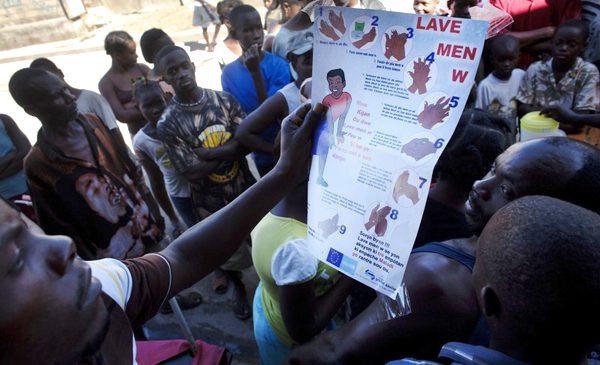
Our health team, assisted by members of the community (mobilizers, camp committees…) is constantly on the ground and uses all possible resources to get out messages about safe drinking water, personal hygiene, diarrheal diseases and prevention (through door-to-door tours, group discussions, films).
With the arrival of cholera, we are reinforcing the education sessions: cholera basic information, how to prevent it, how to protect oneself and family, what to do if in spite of everything it still reaches us. The same messages are transmitted to children but using fun methods. These are so well received and are the best ambassadors for hygiene promotion I’ve ever seen. I’m watching a little girl sit on her father’s knees who is about to feed her, telling him, singing, “papi, lave men avan manje” (Daddy, you should wash your hands before eating).
It is a glimmer of hope in this whirlpool of numbers the authorities are throwing at us: from 2,000, to 5,000, to now nearly 90,000 cases of cholera. Hope, we really need it – it’s almost a victory. And this: cholera has so far generally avoided the camps where probably more than a million of Haitians are still living. Why? Precisely because in these camps there were hygiene measures implemented through chlorinated water provision, awareness and hygiene promotion.
Tomorrow, we will be back on the ground, in both camp sites and neighborhoods, continuing the fight we began almost a year ago.