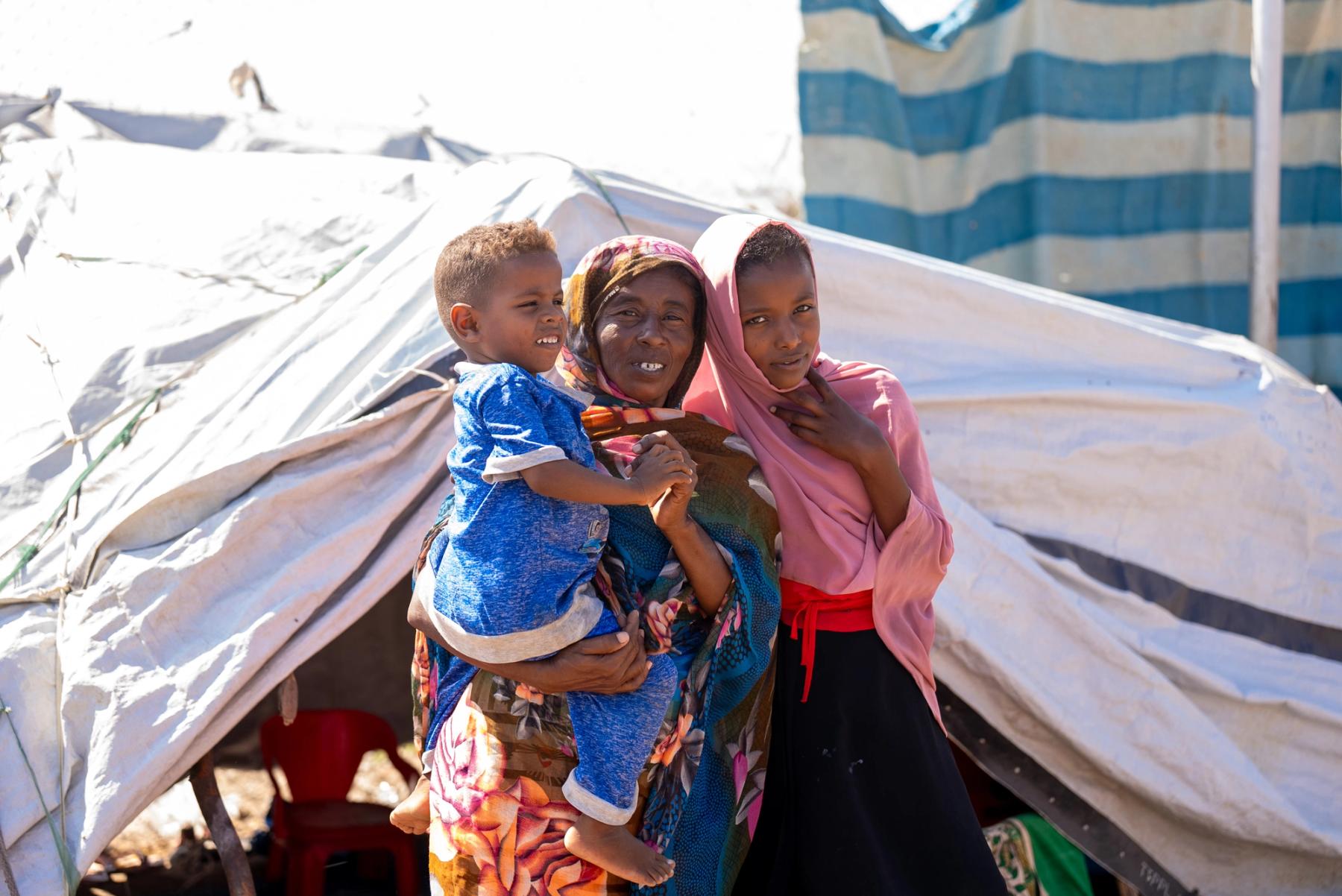
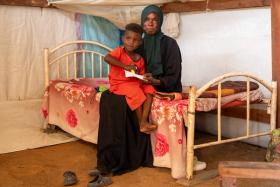
South Sudan: Asia Ahmed* stands with her mother, Suat, and her cousin at their home in Renk, South Sudan. They are among nearly a million people displaced by the ongoing conflict in Sudan.Photo: Herison Philip Osfaldo/Oxfam
Donate to help Sudanese Refugees
After fleeing war in Sudan, families living in South Sudanese refugee camps now face new threats like cholera.
Donate today
Your information is in safe hands with us. All transactions are 100% SSL secure and encrypted, and we never store your credit card information.
Having problems donating?
- Call us at 1800 088 110
- Email us at enquire@oxfam.org.au
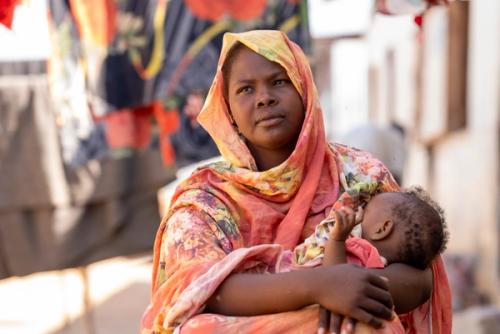
South Sudan: Shaima Ali, a refugee from Sudan in Renk, South Sudan speaks on her experience relocating after being displaced from the conflict in Sudan while holding her baby Fahima during feeding time. Photo: Herison Philip Osfaldo/Oxfam
In 2023, conflict broke out between the Sudanese Armed Forces and the paramilitary Rapid Support Forces in Sudan. Nearly 13 million people, including Shaima, made the difficult decision to flee their homes seeking safety and security.
Shaima was six months pregnant when she arrived at the transit camp in Renk, South Sudan. She and her family have now been there for over a year.
The camp is four times over capacity which is contributing to the spread of cholera, a water-borne disease that can be deadly. The cholera outbreak, coupled with the lack of clean water and essential supplies, is putting thousands of people at risk.
The good news is cholera is preventable with the right sanitation, clean water and hygiene. But urgent humanitarian aid is needed now for Sudanese refugees living in overcrowded camps.
Donate to help provide people like Shaima with the clean water, hygiene kits, essential supplies and cash assistance they need to survive.
13M
people have had to flee their homes, making this one of the largest displacement crises in Africa
3.8M
refugees have been forced to flee the violence seeking safety and security
Voices from the crisis
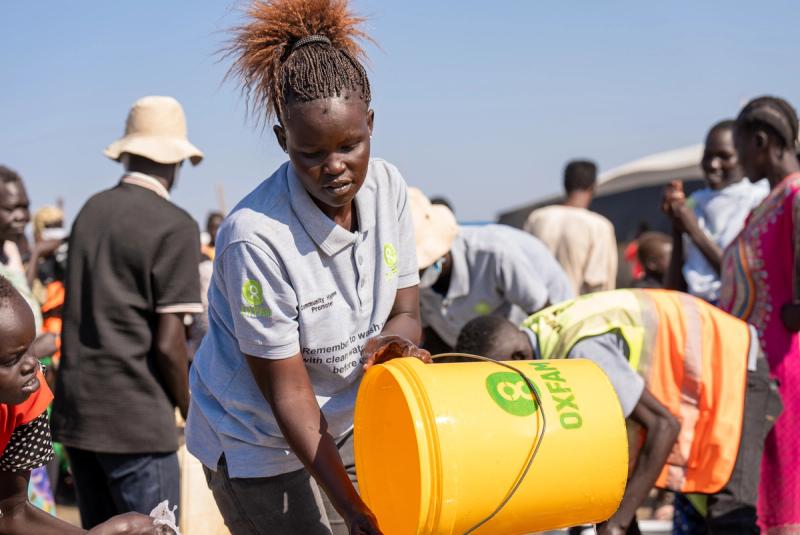
South Sudan: Jun Ajuk, Oxfam health promoter speaks to Sudan refugee and returnees on the importance of maintaining hygiene to avoid spread of disease. Photo: Herison Philip Osfaldo/Oxfam
South Sudan: Jun Ajuk, Oxfam health promoter speaks to Sudan refugee and returnees on the importance of maintaining hygiene to avoid spread of disease. Photo: Herison Philip Osfaldo/Oxfam
How your donation can help
Your assistance is critical in addressing this growing crisis and providing long-term support to the people in these overcrowded refugee camps in South Sudan. Without urgent funding, people will continue to live in unsafe conditions, where they lack access to clean water and sanitation, and are at greater risk of waterborne diseases, like cholera. Here’s what your gift can help achieve:
Hygiene kits
$80 can help provide hygiene kits to keep families safe from illness and disease
Learn more about this crisis
Oxfam has been able to construct more than 260 latrine stances which has served the population all through this time. We have installed the emergency water supply and distribution systems. The blader behind us, is just one of the many bladders that we have installed. Oxfam has also done a lot of shower facilities ensuring that refugees and returnees are able to shower with dignity. Including also installation of lighting to allow refugees and returnees to be able to use sanitation points at night.
– Vincent Ogira, Sudan Crisis Response Lead, Oxfam
Frequently asked questions
The mass displacement from Sudan is primarily due to the ongoing civil war between the Sudanese Armed Forces and the paramilitary Rapid Support Forces (RSF), which erupted in April 2023. Since then, homes, schools and hospitals have come under attack, amid extensive looting and burning. The health system is rapidly deteriorating. Clinics are struggling to cope with a life-threatening shortage of staff and supplies. Famine has been confirmed in 10 locations, with more areas at risk.
The violence has resulted in over 8.6 million internally displaced persons and 3.8 million refugees, making it one of the largest displacement crises in Africa.
While most people are displaced inside Sudan, over three million have escaped as refugees to neighbouring countries such as South Sudan, Chad and Egypt.
Conditions in refugee camps are dire. Many camps suffer from overcrowding, inadequate sanitation, and limited access to healthcare and education. These challenges are exacerbated by funding shortages and logistical constraints. In South Sudan, the number of new arrivals far exceeds the absorption capacity of existing transit and reception centers. Transit sites designed for a few thousand people are hosting up to four times their intended capacity, resulting in overcrowding, poor sanitation, and rapid disease transmission.
With the conflict ongoing and no clear resolution in sight, many refugees face an uncertain future. While some may seek resettlement in third countries, the lack of sufficient international support and resettlement opportunities leaves many in a state of limbo. The protracted nature of the conflict means that durable solutions, such as voluntary repatriation or local integration, remain elusive for most.
The humanitarian crisis persists due to a combination of sporadic armed clashes, intercommunal violence, food insecurity, public health challenges, and climate shocks. These factors have severely affected people’s livelihoods and hindered access to essential services such as water, sanitation, education, and healthcare.
The influx of Sudanese refugees has further strained the country’s resources, complicating efforts to address the needs of both host communities and newcomers. The situation along the South Sudan-Sudan border remains critical. The continuous arrival of refugees, coupled with inadequate infrastructure and resources, poses significant challenges to humanitarian efforts.
Oxfam leads water and sanitation efforts in the camps and currently supports water trucking, operations and maintenance of water and sanitation facilities, construction of new latrines, hygiene promotion.
As of April 2025, we have supported 247,857 people with access to safe water, sanitation, hygiene and protection services.
Where your money goes

For every $1 we spend,
67c goes to life changing work

Your donation will help people and communities survive today, prepare for tomorrow and change their future for the better.

20c is invested to raise the next $1
13c goes towards vital support costs
Stay up to date with our news, programs and appeals.