Sri Lanka
Since the 1980s, ongoing civil conflict in Sri Lanka has severely affected poor communities who are living in a culture of violence and fear.
We've been working with these communities for more than 30 years to build peace, reduce poverty and stand up for people's rights irrespective of their gender, class, caste or ethnicity.
Building peace
Conflict is an unfortunate reality of everyday life in Sri Lanka. As with most conflicts, the burden of war has fallen disproportionately on the poor.
Together with local partners, we're working to defend people's human rights, help people who have been displaced from their homes, and lobby for essential government services where they are desperately needed.
Our partner Nonviolent Peaceforce Sri Lanka works with different ethnic communities to provide protection, supports them to learn each other's language and encourages the groups to discuss ways to overcome the conflict.
Helping people help themselves
We're working to ensure Sri Lanka's poorest people have access to enough food throughout the year through environmentally friendly initiatives such as SRI rice cultivation (a system that speeds up the rate at which rice grows), organic farming and home gardens.
We don’t buy any vegetables from the shops now. “All our vegetable needs are met right here in our garden. If we have any extra, we sell them. Our life has improved.
Quintos Andesing
Quintos established his home garden with support from our partner Development Communication Foundation which is working across Sri Lanka to reduce poor families’ day-to-day food expenses.
The Sustainable Community Marketing Program we support is also helping people provide for their families by bringing poor small-scale farmers and consumers together to buy and sell products directly, minimising the exploitation of middlemen and reducing household debt as a result.
Empowering women
Poor and marginalised women are gaining the skills to bring about big changes in their lives with our support.
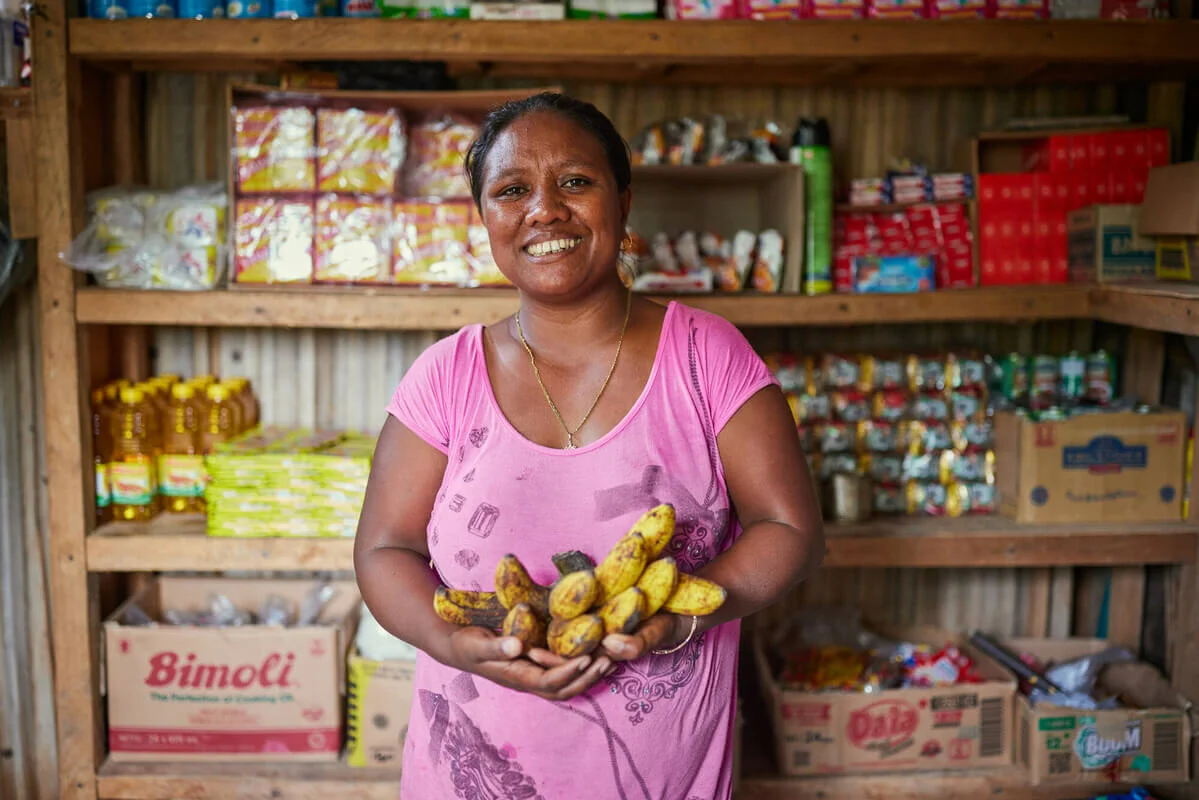
Kalaimani, age 43, runs her grocery shop from her house in Thivukkalai village in eastern Sri Lanka. As a women’s self-help group member, Kalaimani received a small loan from us through local partner Affected Women’s Forum (AWF) to start up her business.
“Running the shop has made a positive change," Kalaimani says, "it’s easier for me to look after my family and ensure that I am here to cook for my children.”
AWF supports about 150 women’s self-help groups across Sri Lanka with small loans, savings schemes and training programs that help the women earn an income. This in turn builds their confidence and independence so they can participate in community decision-making, take up leadership roles and address issues such as domestic violence.
Fast facts
- Adult literacy:
- male 92.2%, female 86.6%
- Life expectancy:
- male 71.5 years, female 76.8 years
- Population living below US $2 a day:
- 50.7%
- Infant mortality rate:
- 19.45 deaths/1,000 live births
Source: UNDP Human Development Report 2005, CIA: The World Factbook