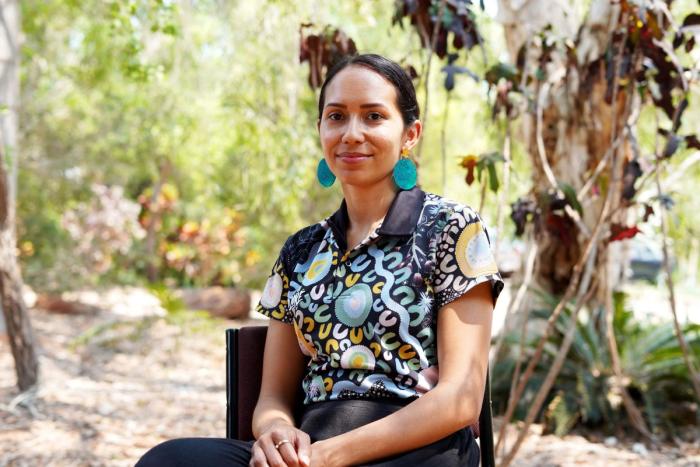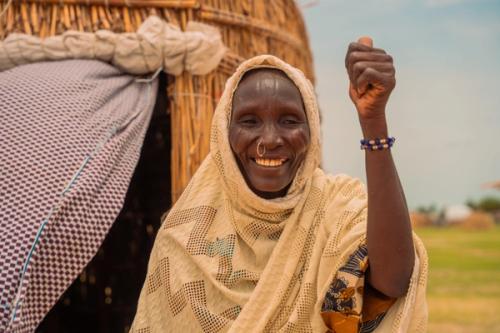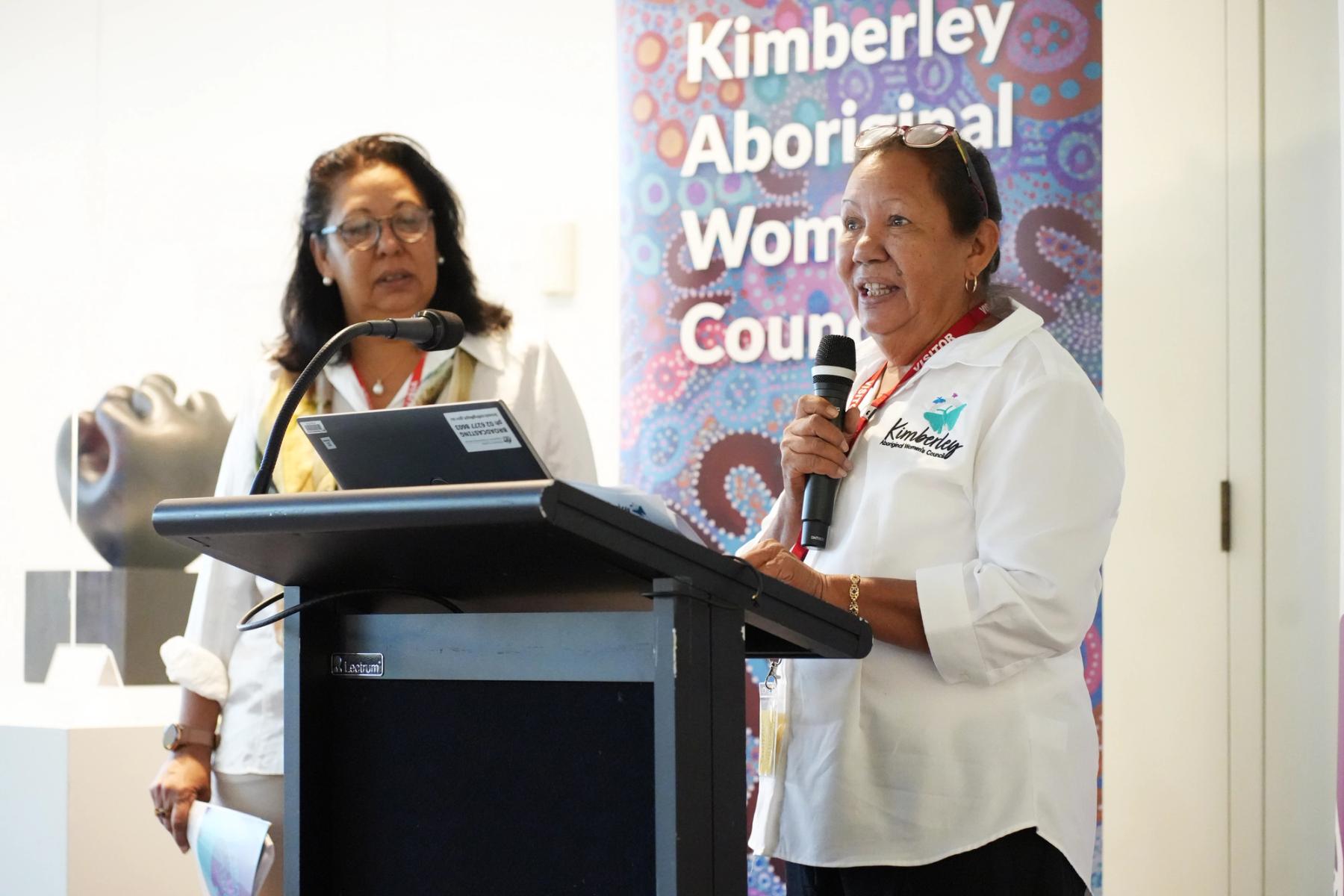
Australia: The Kimberley Aboriginal Women’s Council launched their 2025-27 strategic plan at Parliament House in Canberra on 10th Feb 2025. The Council’s initiatives are designed to create social, cultural, and economic benefits for communities.
What is feminism?
What feminism means, where it came from, the forms it takes and why the work is still unfinished.
Feminism is a movement for fairness. The central idea is pretty simple: everyone deserves equal rights and opportunities, regardless of gender (hers, his or theirs).
It is not a movement against men. Feminism challenges the patriarchy — the system of social organisation in which men hold primary power in political, economic, cultural and family life. Patriarchy shapes who leads, who earns more (or at all), who is safe and whose labour is valued.
Feminist work is the work of dismantling it. The fight for equal rights. For things to be fair, people of all genders must have the same rights and opportunities as men.
This page looks at what feminism means, where it came from, the different forms it takes, and why the work is still unfinished.
What is feminism?
UN Women defines feminism as the belief that everyone, regardless of gender, should have equal rights and opportunities.
At its core, feminism challenges the harmful idea that access to power, your value and the opportunities you have should be decided by your gender.
Feminism fights for a world free from gender inequality. And the fight for equal rights, opportunities and respect for people of all genders continues, even today, because gender inequality is not natural or inevitable — it is shaped by social systems, cultural norms and long-standing power imbalances. Feminism is the work of changing those systems and norms.
You can use a feminist lens to ask a specific question about any situation: who has power here, who doesn't, and why? You can apply it to anything; workplaces, households, parliaments, supply chains or climate negotiations.
Today's feminism is intersectional, meaning that gender doesn't exist in isolation from race, class, disability, sexuality, age and location. Equality that works for some women and gender diverse people but not others isn't equality at all.
What is a feminist?
A feminist is someone who holds and acts on that central belief of feminism (that all people deserve equal rights regardless of gender). Anyone can be a feminist. Feminism is a value and it has never been the exclusive domain of women.
Core principles of feminism
Gender equality
Gender equality is feminism's foundational demand. Equal rights, opportunities and respect regardless of gender, in law and in practice. In households, workplaces and public life.
Formal legal equality is important, and it has taken enormous struggle to win. But true equality requires changing the systems that sustain inequality even where laws have technically changed.
Intersectional inclusivity
Gender doesn't exist in isolation. Race, class, disability, sexuality, age and location all shape how people experience gender inequality. Intersectional feminism recognises that the most marginalised people often face the compound effects of multiple overlapping systems.
In Australia, for example, this includes the intersection of gender with colonisation, a system that has compounded gender inequality for First Nations women in specific and lasting ways.
Challenging patriarchal structures
Patriarchy is reinforced through institutions, cultural norms, economic systems and everyday expectations. And it distributes not just resources, but safety, time and freedom unevenly.
It persists because unequal power tends to justify itself as the natural order. Feminism refuses that justification. That means advocating for laws and policies that redistribute power, yes, but also changing the norms that make unequal power feel so normal.
Restrictive gender roles harm everyone, and they’re part of how patriarchy maintains itself. They constrain what women are permitted to do, and narrow what is expected and permitted of men. Changing the structures changes the possibilities.
A brief history of feminism
The waves of feminism metaphor was coined by journalist Martha Weinman Lear in 1968. It describes the major surges of feminist organising in Western countries.
A key phrase there is ‘Western countries’. Feminist movements in Africa, Asia, the Pacific and Latin America have their own distinct histories, shaped by anti-colonial struggle, economic justice and community leadership that don't always map onto this framework. In Australia specifically, First Nations feminist thought argues that colonisation and patriarchy reinforce each other.
Professor Aileen Moreton-Robinson, a Goenpul woman of the Quandamooka people, is one of Australia's most significant feminist scholars. Her work Talkin' Up to the White Woman (2000, revised 2020) challenged mainstream Australian feminism to reckon with its own role in perpetuating colonial power, and to understand that First Nations women face the compounding effects of both colonisation and patriarchy, not gender inequality alone.
First wave: the fight for the right to vote (mid-1800s to early 1900s)
The first wave was primarily a legal battle for the right to vote, own property and stand for election.
In 1902, Australia became the first nation to give white women the dual right to vote and stand in federal elections. It was the result of decades of campaigning by large numbers of women. Aboriginal and Torres Strait Islander women and men only gained the same right in 1962.
The Australian suffrage campaign provided a practical template for the British movement.
Second wave: equal rights beyond the ballot (1960s-1980s)
Women's liberation expanded the political agenda to include equal pay, reproductive rights, domestic violence and sexual harassment.
Betty Friedan's The Feminine Mystique (1963) named the problem many women felt but had no language for. Kate Millett's Sexual Politics (1970) and Shulamith Firestone's The Dialectic of Sex (1970) argued that the systematic domination of women by men — patriarchy — had to be dismantled at its root.
Third wave: intersectionality and individual expression (1990s-2010s)
Rebecca Walker named the third wave in 1992. This wave centred the question of whose feminism it was, and pushed the movement to reckon with race, class, sexuality and disability as inseparable from gender.
Legal scholar Kimberlé Crenshaw's concept of intersectionality (1989) became the theoretical framework for understanding how systems of oppression overlap.
Fourth wave: digital activism and renewed urgency (2010s-now)
The fourth wave is defined by online mobilisation: #MeToo, #TimesUp, global organising across borders at a scale previously impossible. It has brought renewed attention to sexual assault, gender-based violence, LGBTQIA+ rights and the rollback of feminist gains (including significant cuts to funding for women's organisations globally). The fourth wave is still happening.
Types of feminism
Different feminist traditions have emphasised different causes and strategies.
Liberal feminism
Works within existing legal and political systems to achieve equal rights and representation. The focus is on removing formal barriers: discriminatory laws, exclusion from education, unequal pay, barriers to political participation.
Betty Friedan and the National Organisation for Women in the US are defining examples. Liberal feminism produced many concrete legislative gains, but is sometimes criticised for stopping short of more systemic change.
Radical feminism
Argues that gender inequality stems from patriarchy itself. Not just unfair laws, but a system of male power that shapes social structures, culture and institutions.
Radical feminists argued that this system must be dismantled at its root. Kate Millett's Sexual Politics and Shulamith Firestone's The Dialectic of Sex are foundational texts. The radical feminist movement brought domestic violence, sexual assault and reproductive rights into the centre of political debate.
Socialist feminism
Links gender inequality to capitalism and class. The idea that women's oppression can’t be understood or addressed separately from economic exploitation. That the unpaid care work women perform at home raising children, caring for elders and maintaining households subsidises the formal economy without being counted or compensated. Real gender equality requires recognising and redistributing that labour.
Intersectional feminism
Legal scholar Kimberlé Crenshaw coined the term "intersectionality" in 1989 to describe how systems of oppression overlap and interact. A Black woman doesn't face racism and sexism as two separate problems she can address one at a time; she faces their combination, which creates its own distinct form of discrimination.
Intersectional feminism argues that any analysis of gender that doesn't account for race, class, disability, sexuality and other axes of identity is incomplete.
Intersectionality has become the dominant framework in contemporary feminist thought, and it shapes how Oxfam designs its gender equality work.
Cultural feminism
Cultural feminism argues that traits traditionally associated with women (like care, cooperation, nurturing and relationality) have been systematically devalued by patriarchal societies and need to be recognised as legitimate, essential contributions.
Psychologist Carol Gilligan's In a Different Voice (1982) is a key text, arguing that an ethic of care is as morally serious as an ethic of individual rights. Rather than asking women to succeed by adopting masculine norms, cultural feminism asks societies to revalue what they have long dismissed.
These different feminist traditions are not competing teams. Most contemporary feminists draw on several at once, recognising that legal equality matters, and that class and race shape women's experiences, and that the economy must stop treating care work as invisible.
Download Oxfam’s ebook: What is feminism, really?
How poverty is gendered
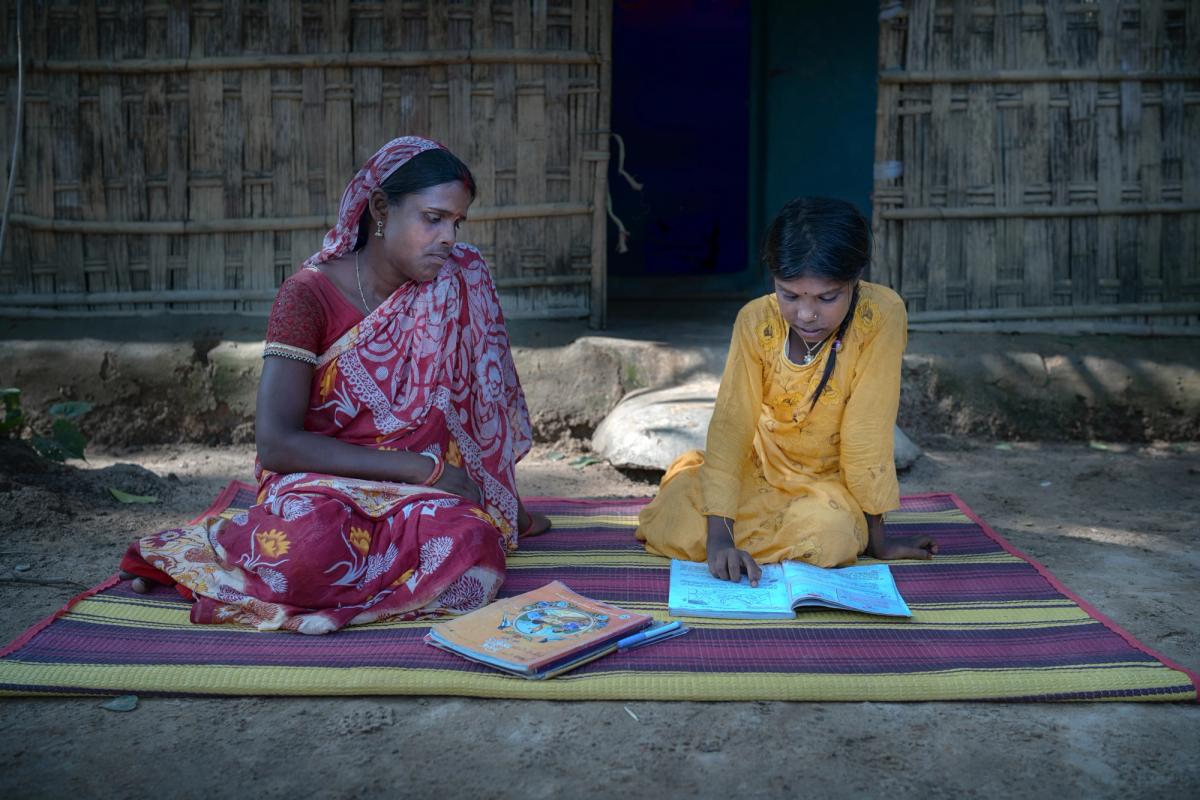
Bangladesh: Munni with her daughter. Munni is a tea garden worker and earns just 170 Taka [AU$2.30] per day. She has to take out loans in order to buy groceries and then struggles to pay these loans back. Munni attended training run by Oxfam partner organisation, Breaking the Silence, and says she has gained courage through this training. Photo: Fabeha Monir/Oxfam. Oxfam acknowledges the support of the Australian Government through the Australian NGO Cooperation Program (ANCP).
If feminism asks who has power, poverty shows what happens when power is denied. The two are inseparable.
Women don’t experience poverty more because they work less. They experience poverty more because economies often value their labour less, protect it less and pay it less. And poverty is more than low income. It’s a shortage of time, safety, options, rest and control over daily life.
Globally, women perform more than three-quarters of all unpaid care and domestic work. Cooking, cleaning, caring for children and elders, fetching water, supporting sick or elderly relatives.
This work is essential. It holds families and communities together. Yet it is rarely counted as economic contribution. The women who do it often have less time for education, paid work and leadership.
Gender norms compound this: restrictions on where women can go, what work they can do, and what assets they can own. Less access to land, savings, credit, transport and information. Fewer safety nets when crisis hits. When conflict or crises strike, women are often the first to absorb the shock by skipping meals, taking unsafe work, or withdrawing girls from school to help at home.
UN Women estimates that if women's unpaid work were assigned a monetary value, it would exceed up to 40% of GDP in some countries. Climate change could push up to 158 million more women and girls into poverty by 2050. Gender inequality is one of poverty's structural causes, shaping who faces poverty first, hardest and longest.
Why feminism still matters
No country in the world has fully achieved gender equality.
In Australia, the national gender pay gap sits at 11.5%, which is down from a record high of 18.6% a decade ago, but still a gap. In the private sector, the CEO gender pay gap is 26.2%. Women do 32 hours of unpaid work and care every week, nine hours more than men. Thirty-seven women were killed by a current or former partner in Australia in 2024.
Globally, 1 in 3 women experience physical or sexual violence in their lifetime. One in ten women is living in extreme poverty. At the current pace, women will wait 250 years for economic equality. This data describes a world still shaped by patriarchy.
And the gains that have been made are under threat. UN Women research confirms that some governments are actively rolling back feminist progress, cutting funding to women's organisations and targeting the rights of gender-diverse people. The fourth wave of feminism exists partly in response to this.
Progress is possible. In Australia, sustained feminist advocacy has helped drive women's representation in federal parliament from 26% in 2004 to 50% at the opening of parliament in 2025. The generational shift shows what organised, sustained pressure can achieve.
And through Oxfam's work in the Pacific, community climate networks in five nations now ensure women’s voices are heard in the halls of power, where decisions about the Pacific’s future are being made.
Learn more about Oxfam Australia's gender equality work.
Oxfam's gender equality work
Economic empowerment
In Bangladesh, Munni works on a tea plantation earning AUD $2.30 a day. After attending training with Oxfam partner Breaking the Silence about her basic rights, she started an insurance package and found her voice. She described what changed: "Previously I had a fear inside my mind. Now, there is no fear."
In Indonesia, the WE JET program supports women to map renewable energy potential in their own communities and lead the transition to clean energy, connecting feminist economic empowerment directly to climate justice.
Oxfam continues to advocate for fair wages and safe conditions across global supply chains. This work will be represented by a new campaign launching in 2027.
Women's leadership and participation
Real women's leadership means having a voice in the decisions that shape your life. In communities, governments and the global forums where the biggest choices are made.
In Australia, Oxfam partners with the Kimberley Aboriginal Women's Council to support gender equality for First Nations women and girls in the Kimberley region.
In Cambodia, Siphon learnt from Oxfam partner 3SPN to advocate with local authorities for the rivers and land her community depends on. And through the PACCCIL program, community climate networks across five Pacific nations ensure women's voices reach the regional and global forums where decisions about their futures are made.
Women's leadership and women's safety are both feminist issues. And they’re connected, too.
Ending violence against women and girls
Gender-based violence is one of the ways that inequality is enforced, restricting where women can go, what they can do and who they can become. Addressing it is central to feminist work.
In Bangladesh, Oxfam partner Breaking the Silence works directly with communities to ensure women and children are safe from violence, exploitation and abuse. In Vanuatu, Oxfam partner Vanuatu Pride educates, advocates for and mobilises LGBTQIA+ people, helping people of all genders to fight inequality, poverty and violence.
Advocacy for systemic change
Through the PACCCIL program, Oxfam supports community climate networks across Tuvalu, Kiribati, Fiji, Solomon Islands and Vanuatu to ensure women's voices reach regional and global climate negotiations. Women are 14 times more likely than men to die during a climate disaster, yet are consistently underrepresented in the rooms where climate decisions are made. Feminist advocacy works to change that.
A more just world, built together
At its core, feminism is a simple idea: that everyone deserves equal rights and opportunities regardless of gender. The work of making that simple idea real is complicated, ongoing and urgent.
Gender inequality is one of the most persistent structural causes of poverty in the world. And it is one that Oxfam works to change every day, alongside communities and partners across more than 30 countries.
Download our ebook, What is feminism, really?, to learn more.