• All
  • Stories
  • Appeals
  • Petitions
  • Blog
  • Media Releases
  • Other pages
  • PDF

    ImageImage

    Adnate x Oxfam 'Tax the Super-Rich' Mural in Fitzroy. Photo: Oxfam

    Tax the super rich


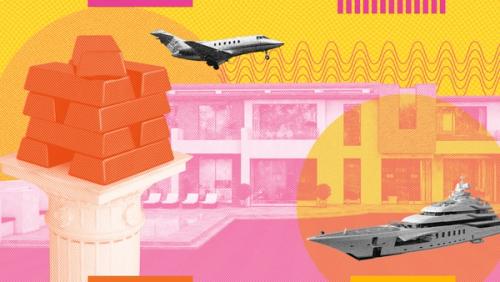
    While everyday Australians struggle, the super rich continue to accumulate hoards of wealth.

    Australia now has its highest number of billionaires on record – 178.


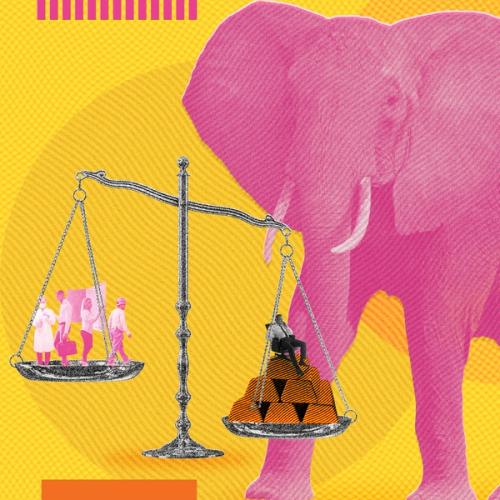
    In 2026, the total wealth of Australian billionaires is nearly $700 billion. The 20 richest Australians hold more wealth than the bottom three million households.


    Every billionaire is a policy failure. The very existence of booming billionaires is evidence of an economic system that fails to deliver for humanity.


    This bumper year for billionaires, whose staggering wealth grows by $50,000 per minute, comes at a time of ongoing cost-of-living crisis, with millions of households struggling with rising rents, grocery prices and energy bills. We cut back, while billionaires accumulate extraordinary wealth at extraordinary speed.


    The existence and rapid growth of billionaires and the super rich is a sign of an economy where too much wealth and power are concentrated in too few hands.


    We must challenge the tax system that even allows such hoarding of wealth. Demand the government tighten the tax rules and enforce them properly.

    The collective wealth of Australia’s billionaires increased by $25.67 billion over the past year.

    The increase alone  could have:


    ImageImage

    Lifted nearly one million Australians out of poverty.

    ImageImage

    Covered electricity bills for every single Australian household for more than one year.

    ImageImage

    Funded Australia’s entire aid budget almost five times over.

    ImageImage

    Covered the cost of grocery bills for almost three million households for a year.

    Tax the Super Rich

    A 5% wealth tax


    on billionaires in 2026 alone could raise $33.7 billion.

    A modest tax on extreme wealth is one of the fairest and most effective ways to reduce inequality, strengthen public services, and ensure our economy works for everyone – not just those at the very top.


    Revenue from a wealth tax would help fund relief from the cost of living, investments in healthcare, education, public and affordable housing, humanitarian aid, infrastructure and climate action.


    The Albanese government must effectively tax the super-rich to reduce their power. Our federal government can take clear and concrete, practical steps to radically reduce inequality and give themselves the fiscal firepower to provide essential public services for all.


    Regular workers earning a wage pay income tax every pay cycle, with ordinary households carrying more of the country’s tax load. Yet multi-millionaires at the top use tax tricks to structure their affairs to avoid paying their fair share of tax. Tax wealth, not work.

    ImageImage

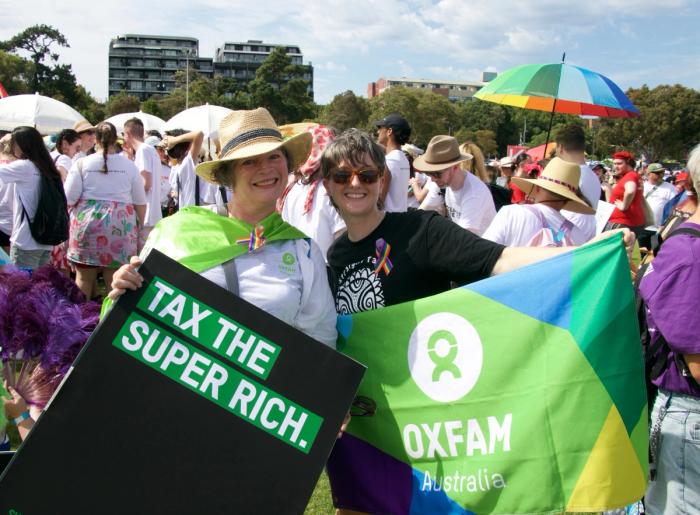
    St Kilda, Victoria: Members of OxGlam (Oxfam’s LGBTQIA+ and allies workforce group) walked loud and proud down Fitzroy Street, St Kilda as part of the 2025 Midsumma Festival. Photo: Oxfam

    Oxfam believes billionaires should be abolished altogether. Taxing the super rich is one critical element to challenge their power, and to curb their constant accumulation of money and assets. Reducing the numbers of billionaires and the super-rich won’t be achieved by tax alone; other measures are needed to construct an economy that does not produce such extreme disparities of wealth in the first place.


    A modest tax on extreme wealth would ensure that individuals with extraordinary fortunes make a proportionate contribution to the communities and systems that helped create them.

    Wealth inequality

    $18.3 trillion


    The global wealth of billionaires last year — the highest in history.

    Inequality is a fundamental driver of poverty and injustice, in Australia and globally. Wealth inequality is the result of deliberate political choices and a tax system rigged in favour of billionaires and big corporations against the rest of us. The system allows for unimaginable fortunes in the hands of a tiny few and excludes ordinary people from participating fully in society.


    An economy that delivers extraordinary gains to a tiny elite while half the world lives in poverty and millions struggle to afford basics, is failing.

    Extreme concentrations of wealth undermine economic growth, corrupt politics and the media, corrode democracy and propel political polarisation.


    For too long, governments, international financial institutions and elites have misled the world with a fictional story about trickle-down economics, in which low tax and high gains for a few would ultimately benefit us all. It is a story without any basis in truth.

    The super rich distort democracy

    Billionaires are 4,000 times


    more likely to hold political office than ordinary citizens.

    Extreme wealth does not remain purely economic. It increasingly translates into political power. When wealth buys influence, democracy distorts and society warps.


    When billionaires hold office, they wield outsized influence through donations, lobbying and privileged access to decision-makers.

    ImageImage

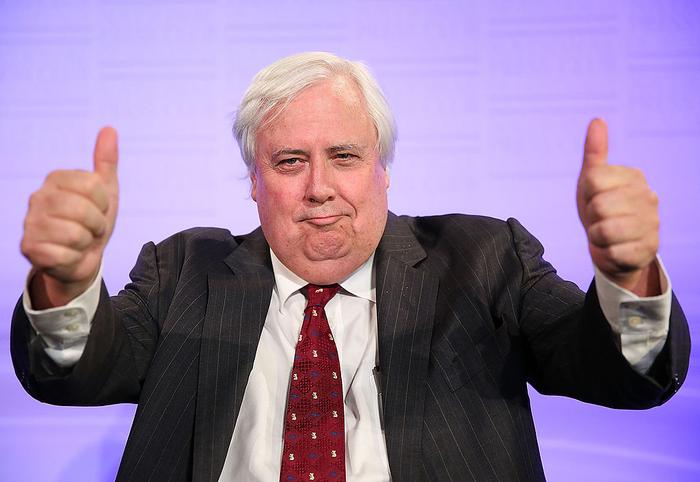
    Clive Palmer gives a double thumbs up. Photo: Getty

    Clive Palmer, mining magnate and former Member of Parliament, spent more than $250 million over five federal elections, including around $60 million during the 2025 election alone. When one billionaire can spare hundreds of millions of dollars to shape political conversations, it shows how extreme wealth can translate directly into political power – undermining a fair and healthy democracy.


    Governments also allow the super-rich to dominate traditional media and social media companies, shaping what we see and hear, and what we don’t. Billionaires control information – they own more than half the world’s largest media companies and all the main social media companies.

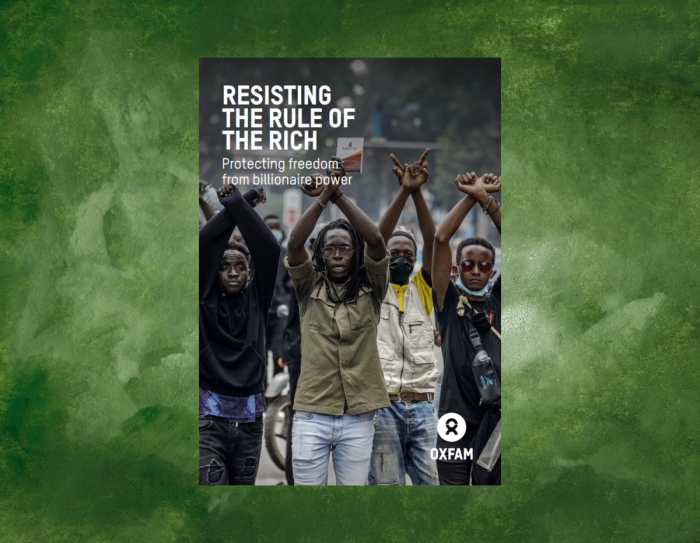
    Resisting the Rule of the Rich: Defending Freedom Against Billionaire Power report


    This report analyses how the super-rich are securing political power to shape the rules of our economies and societies for their own gain and to the detriment of the rights and freedoms of people around the world.


    ImageImage

    Multinational corporations

    Many big corporations pay little or no tax in Australia and yet receive cash handouts from the government, despite making gob-smacking profits year on year. Multinationals earn billions from Australian customers and then shift profits offshore, so they avoid paying the tax they should.


    Big corporations are at the heart of our inequality problem – through price gouging practices, market concentration, low wages, tax minimisation, or driving increased inflation through their super profits.  It’s only fair that they are also at the core of the solution.


    Multinationals must provide public information on revenue, profits and taxes paid in each country they operate in (public country-by-country reporting). The Australian government must close loopholes allowing corporations to get away not paying their fair share. Plus, we need global agreement on minimum corporate tax rates of 25%.