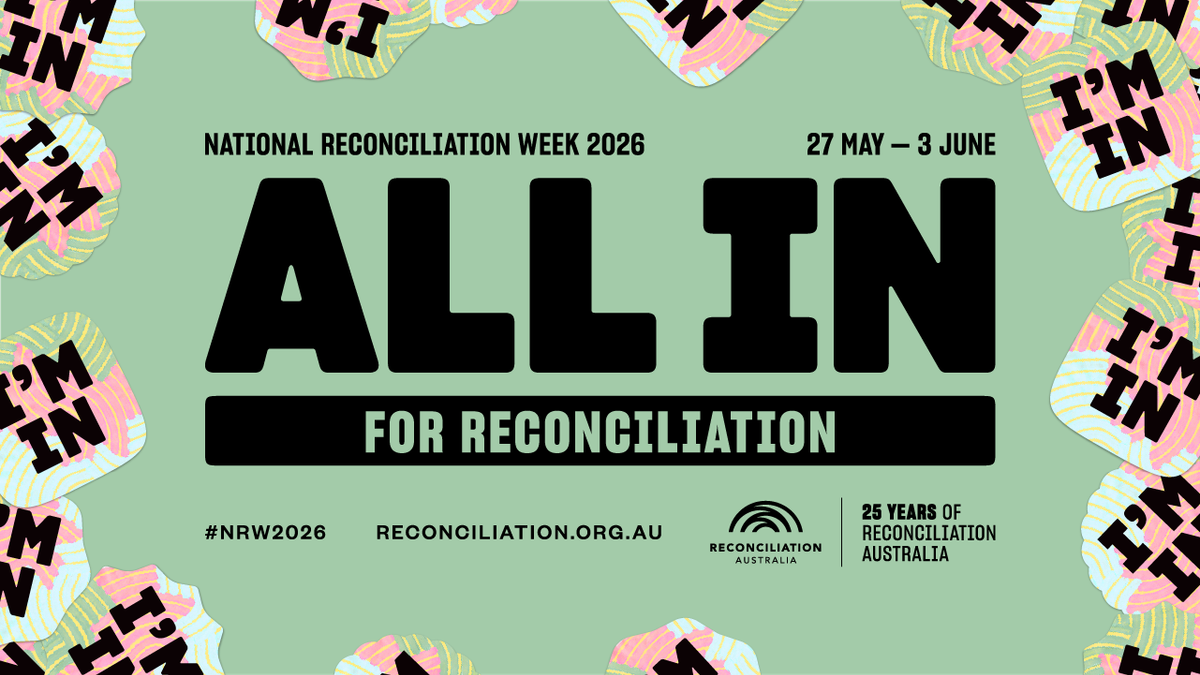
Kicking off with National Sorry Day on 26 May, Oxfam is recognising National Reconciliation Week 2026, which this year carries the theme, All In, a call for all Australians to commit wholeheartedly to reconciliation every single day.
All In makes clear that reconciliation is not a spectator sport and that all of us must step away from the sidelines and take action to make change.
The theme also reminds us that reconciliation and advancing Aboriginal and Torres Strait Islander peoples’ rights isn’t a passive activity, and it is not solely the responsibility of First Nations people, who have carried the weight of championing, explaining and acting for far too long.
Reconciliation will not happen by itself, and it will not happen without all of us.
Over the past year, there have been notable steps towards First Nations justice. These include the passage of Treaty in Victoria (a first in Australia) and the Victorian Government’s formal apology, a landmark legal ruling for the Gumatj Clan of the Yolgnu people (“Commonwealth v Yunupingu”) and a formal apology from the government of Western Australia for the Pinjarra Massacre. These milestones represent important steps towards equity, respect and recognition of First Nations’ inherent rights.
Amidst these milestones, we were also reminded how much more there is to be done to realise true justice for First Peoples. The Kumanjayi Walker inquest, Cleveland Dodd inquest and a record level of Aboriginal and Torres Strait Islander deaths in custody in 2025 reflected the pervasiveness of racism within Australia’s justice system.
Oxfam started National Reconciliation Week early this year by supporting Get Your Reconciliation On in March, a family day by the bay at Frankston staged by First Peoples’ Health and Wellbeing, including a fun run, market stalls and live music.
We used our pre-budget submission to call on the Australian Government to invest in First Nations-led solutions and self-determination. Real change means investing in self-determination, from justice reinvestment and community-led economic development to Indigenous-led climate action, so that First Nations people can shape the future on their own terms.
Find out about events in your local area by checking the calendar on the Reconciliation Australia website. Keep an eye on the SBS and NITV programming with a great selection of documentaries and films curated specially for the week.