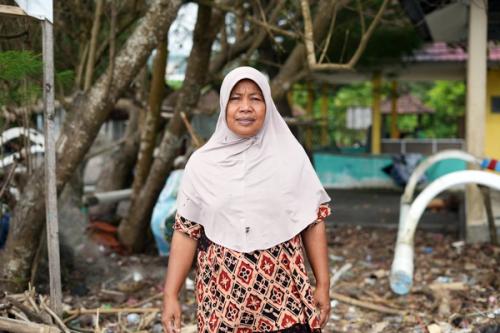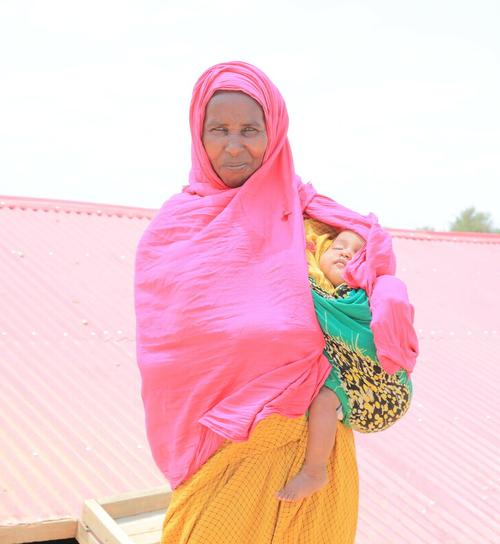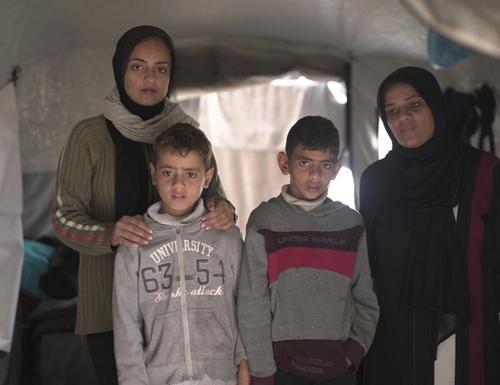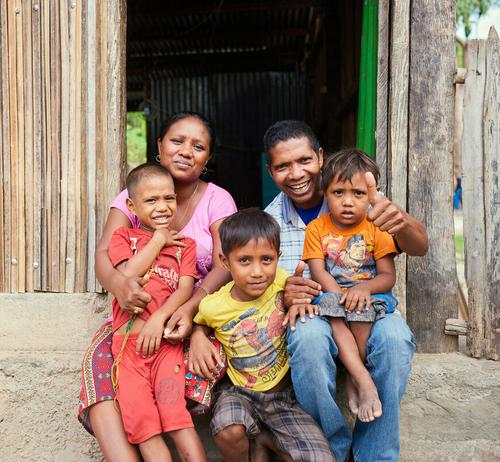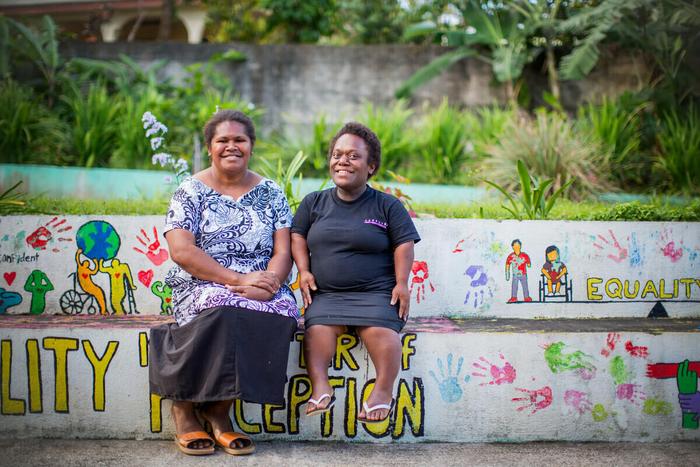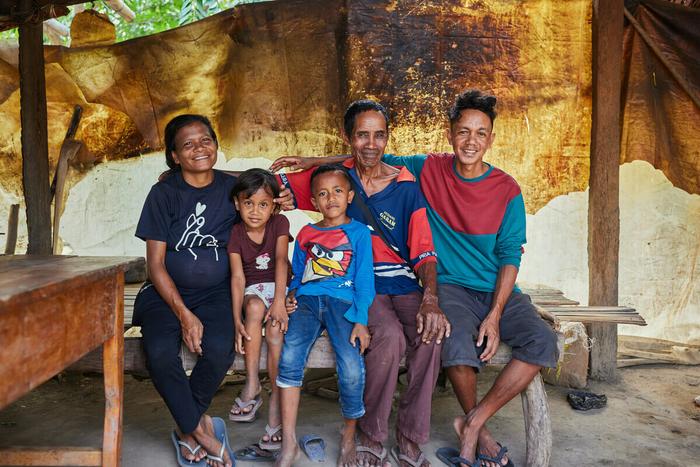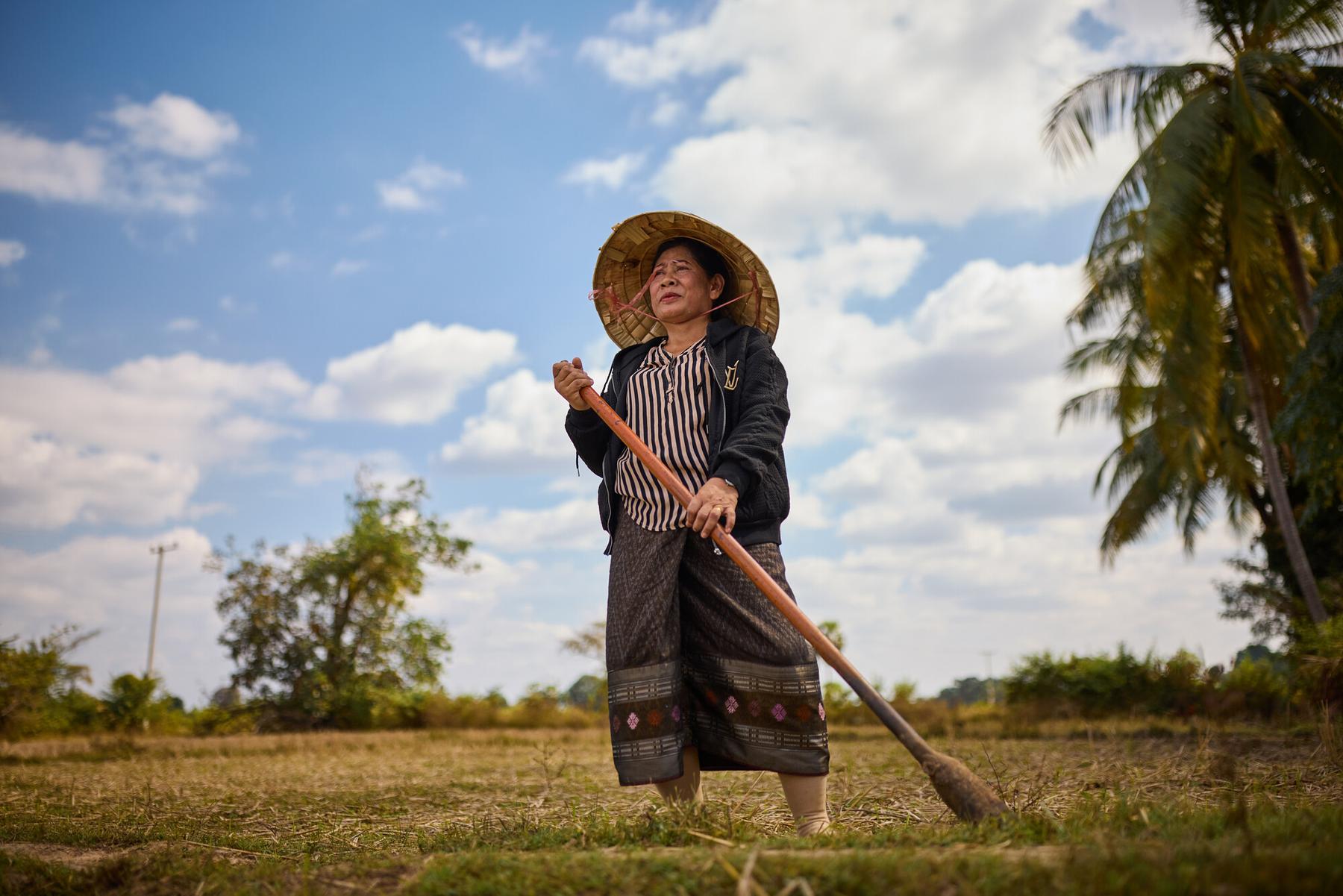
Lao People's Democratic Republic: Sone was a former middle person buying fish from fisher people in her village and selling to external buyers. Since the dam construction, she has turned to duck raising with the help of Oxfam local partner, CLICK. Oxfam acknowledges the support of the Australian Government through the Department of Foreign Affairs and Trade (DFAT). Photo: Patrick Moran/Oxfam
What is Social Justice? A Complete Guide
Social justice is one of the most important ideas of our time. At its core, social justice is the pursuit of a world where every person has equal rights, equal access to opportunity, and equal protection under systems that too often favour the powerful over the rest.
Achieving social justice requires us to recognise that the inequality shaping our world isn't accidental. It's the result of economic, political and social systems deliberately built to distribute power and resources unfairly. But do you know what? Systems built by human choices can be changed by human choices.
At Oxfam Australia, we've been working for social justice for decades. Not just through aid and emergency relief, but by challenging the structures that make aid necessary in the first place.
This guide explains what social justice means, how its principles work in practice, and why it matters now more than ever.
What is social justice: definition
In brief, social justice is the pursuit of fairness and equal opportunity across society, regardless of someone’s background or identity.
Let us take you on a quick detour through time, because the social justice definition has evolved over two centuries. The current framework for understanding and addressing inequality across society has origins in Enlightenment philosophy (the idea that science and reason should be the primary source of authority, rather than tradition or religion).
By the time the Industrial Revolution had reshaped economies and deepened inequality, legal scholars and social reformers had adopted the term to describe the fair distribution of society's benefits and burdens.
Today, the social justice meaning has expanded to encompass race, gender, sexuality, identity, environment and more. Every arena in which power imbalances create unfair outcomes for people.
The United Nations describes it as "an underlying principle for peaceful and prosperous coexistence within and among nations."
The University of New England (UNE) ties social justice in Australia to our women's rights movement, disability rights activism and LGBTIQIA+ advocacy. Dr Somayeh Ba Akhlagh, a lecturer at UNE, says social justice "challenges stereotypes and discrimination and focuses on understanding issues of power, privilege, and prejudice."
Various discussions include the same core elements: a world grounded in equality and solidarity, where human rights are understood and the dignity of every person is recognised. Equal rights, opportunity and treatment.
Oxfam's own framing adds a critical dimension. Social justice defined through Oxfam's lens means more than equal treatment — it means recognising that poverty and inequality are not natural states. They’re the outcomes of systems that can and must be changed. That understanding is what drives everything we do.
The five social justice principles
Social justice principles provide the operational framework. The scaffolding that turns an ideal into a practice. There are five core principles.
Equity
Equity is not the same as equality. Equality gives everyone the same thing. Equity gives each person what they need, recognising that people start from very different positions.
Focusing on equity leads to targeted approaches that address specific barriers rather than one-size-fits-all solutions.
Take Oxfam’s work in Indonesia and Bangladesh as an example. We work with women farmers who face land ownership barriers that their male counterparts don't, addressing the specific structural disadvantage, not just the general one.
Access
Access means ensuring that everyone can reach the essential services and opportunities that make a decent life possible: healthcare, education, clean water, legal protection, economic participation.
Barriers to access are systemic, not personal failures. There are more than a million Rohingya refugees in Cox's Bazar who struggle to access clean water because of conflict, displacement and discrimination. That's a lack of access with systemic causes.
Participation
Participation holds that the communities most affected by injustice must have a real voice in the decisions that affect their lives. Social justice is not done to people. It's built with them.
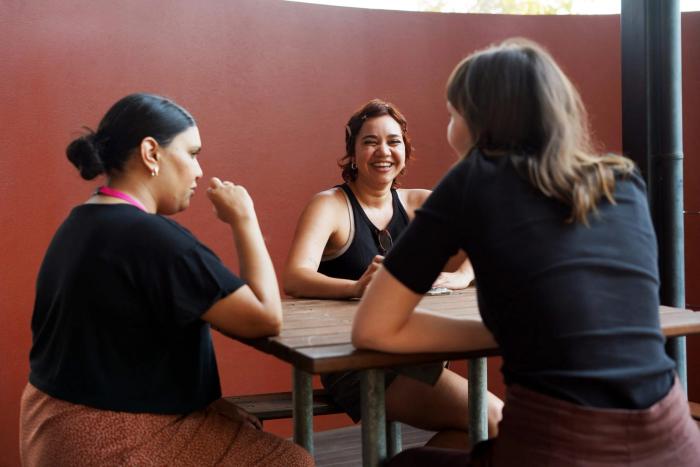
Oxfam's Straight Talk program brought Aboriginal and Torres Strait Islander women from across Australia together with female Ministers and parliamentarians to explore ways to advance reconciliation, justice and equality for Indigenous Australians. Aboriginal and Torres Strait Islander women get involved not just to be heard, but to learn how political systems work and use that knowledge to drive change in their own communities.
Rights
Rights ground social justice in the understanding that human dignity isn’t a privilege to be earned, but a right to be protected. Every person has the right to safety, health, education, a liveable environment and freedom from discrimination. When rights are violated — by conflict, by poverty, by discriminatory law — social justice demands accountability and reform.
Diversity
Diversity means recognising and respecting difference as a strength. Oxfam takes an intersectional approach: gender, identity, class, ability, culture, sexuality. These factors overlap and compound.
An Aboriginal woman experiencing both racial discrimination and gender-based economic exclusion is facing a double injustice that can't be addressed by targeting only one dimension. Tackling the inequality that drives poverty requires seeing the whole person and the whole system.
It’s not enough to look at what social justice is, we also need to know how to take action.
Social justice in practice: four areas that matter most
These key principles are important. But principles alone don't change lives. Let us explain now exactly how these principles translate into the work we do at Oxfam Australia.
Let’s look at the four dimensions of injustice we work to address, and why each one is inseparable from the others.
Economic justice
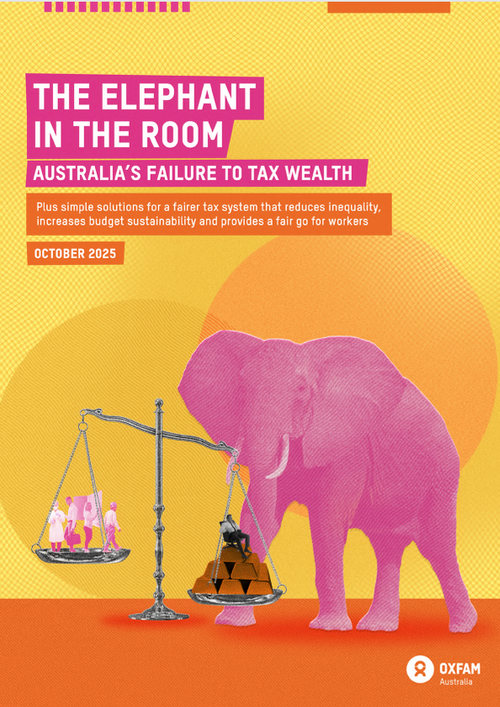
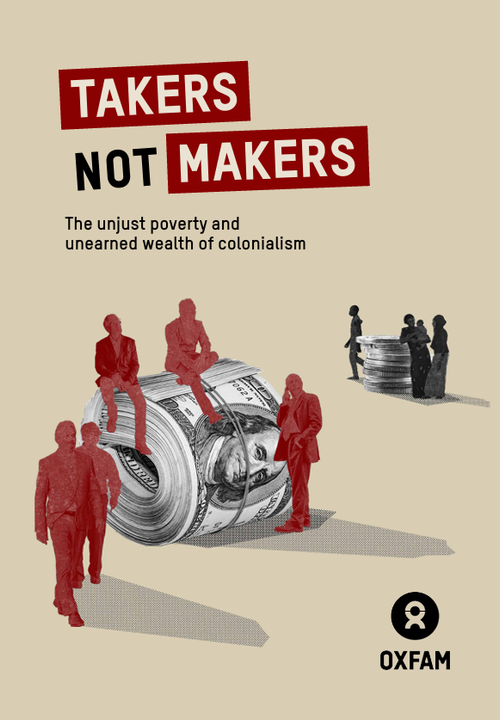
The growing gap between the richest and the rest is the result of deliberate policy choices. Purpose-built tax systems that favour wealth accumulation, corporate structures that extract value from communities without returning it, and trade rules written by and for the powerful.
In 2025, global billionaire wealth jumped to $27.7 trillion, its highest level in history. Today, Australia's 48 billionaires hold more wealth than the bottom 40% of the population combined, almost 11 million people.
The number of Australian billionaires has more than doubled over the past decade, while the average wealth of someone in the bottom 50% has flatlined at around $28,000. Meanwhile, more than 3.7 million Australians, including 757,000 children, live in poverty.
Pursuing economic justice means changing those systems.
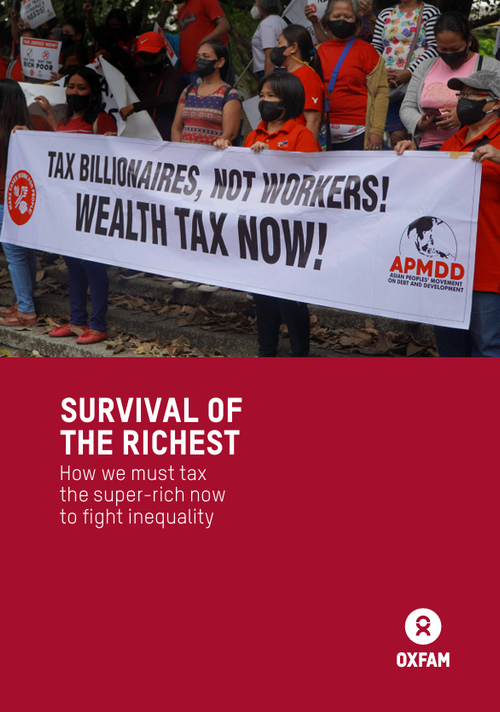
Oxfam campaigns for a wealth tax on Australia's super-rich, an end to corporate tax loopholes that allow profitable companies to pay little or nothing, and fairer global trade rules that allow producers in low-income countries to benefit from their own labour and resources.
The economy should work for everyone, not just those who already hold the most. Learn more about Oxfam Australia's economic equality work.
Gender justice
Gender inequality is a human construct. That means it isn't fixed and it can be dismantled, one system at a time.
Globally, women, girls and people of diverse genders are more likely to face discrimination, violence and poverty, and less likely to hold the power to change their circumstances.
Gender inequality is caused by gender bias in our systems, structures and attitudes, which creates an environment where women, girls and people of diverse genders and sexualities are denied their rights to learn, earn equal pay and hold leadership positions.
Oxfam works with local partners across the Asia-Pacific region to support women's economic participation, challenge harmful gender norms, end violence against women and girls, and ensure that the people most affected by gender injustice are leading the solutions.
Gender justice isn't a separate stream of work for Oxfam; it's central to every dimension of our approach, including climate and economic justice.
Climate justice
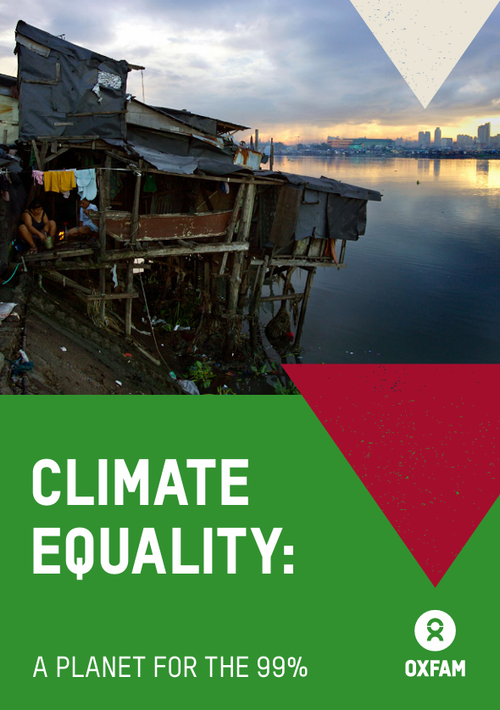
The climate crisis is a social justice crisis, and one of the starkest examples of systemic inequality on Earth. The people who contributed least to climate change are being affected by it the most, and are least able to protect themselves from its impacts.
Across the Pacific, communities face the potential loss of their homelands. Across South and South-East Asia, climate disasters compound poverty and displacement.
The World Bank estimates that 32–132 million additional people could be pushed into extreme poverty by 2030 as a direct result of climate change. People who did almost nothing to cause the crisis they're now living through.
The richest 1% of the global population emit as much carbon pollution as the bottom two-thirds of humanity combined. The same economic system concentrates wealth and strips the political power of communities least able to respond to a crisis they didn't create.
Oxfam campaigns for climate finance that flows to the communities who need it, holds the biggest carbon emitters accountable for the damage they cause, and supports community-led adaptation programs that build genuine long-term resilience. Learn more about Oxfam Australia's climate change work.
First Peoples justice
In Australia, the oldest continuous living culture on Earth — spanning more than 65,000 years — continues to face systemic exclusion from the resources, rights and opportunities of the country it has always called home.
Oxfam's First Peoples programs work in partnership and genuine solidarity with First Peoples communities. Not for them, with them.
We support their right to self-determination, advocate for the Uluru Statement from the Heart's calls for Voice, Treaty and Truth, and campaign through Change the Record to redirect funding from prisons to community-led programs that actually reduce harm and rebuild lives.
Explore Oxfam Australia's advocacy and campaigns for social justice.
Why social justice demands systemic change, not just charity
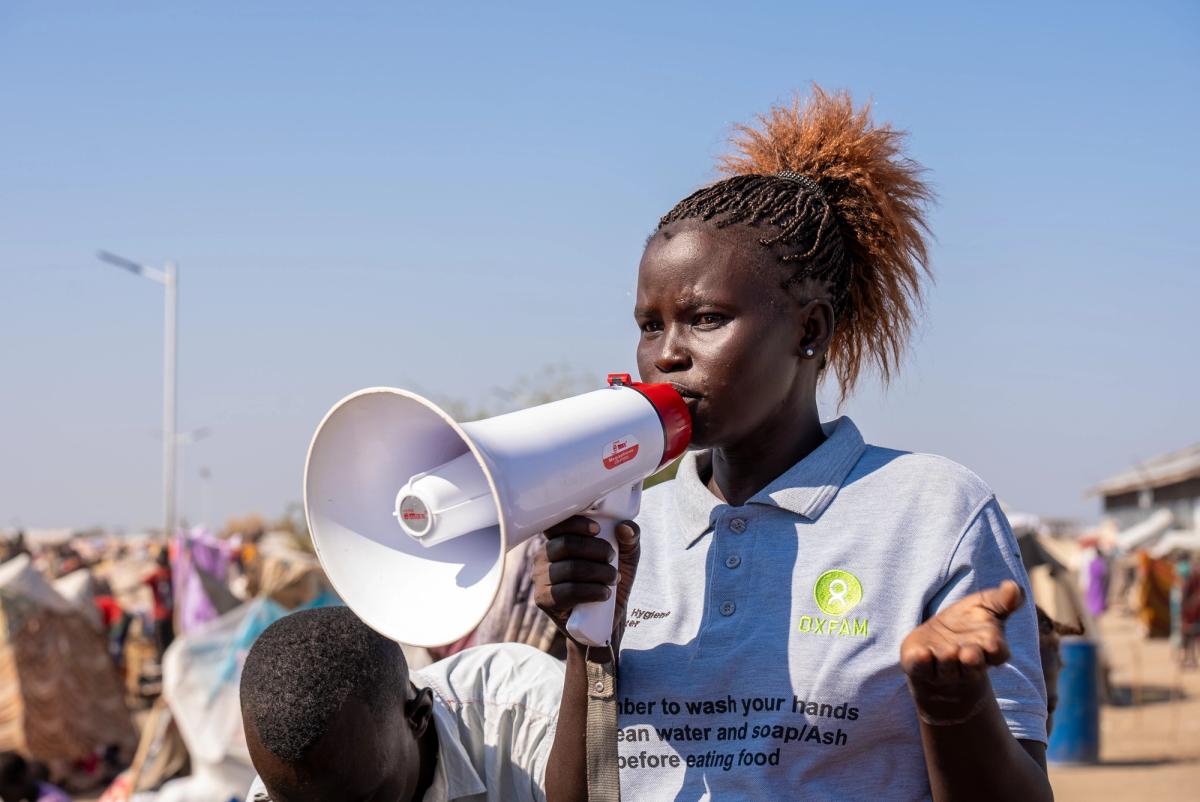
South Sudan: Jun Ajuk, Oxfam health promoter speaks to Sudan refugee and returnees on the importance of mantaining hygiene to avoid spread of dieases. Photo: Herison Philip Osfaldo/Oxfam
Emergency relief is vital. When people are displaced by conflict, facing famine, or losing their homes to a climate disaster, immediate aid saves lives. We deliver that aid.
But if aid alone could end poverty, poverty would already be ending. It isn't.
The reason is systemic. Poverty is not the result of a shortage of resources (the world produces enough food to feed everyone). It's not the result of a shortage of wealth (global wealth has never been higher).
Poverty persists because the systems that distribute resources — economic rules, tax policies, corporate structures, political institutions — are skewed in favour of those who already have the most.
Social justice demands we address that through policy and reform.
In practice, that means a wealth tax that ensures Australia's super-rich pay their fair share, generating billions for healthcare, education and humanitarian aid. It means climate finance that flows to the communities bearing the heaviest costs of a crisis they didn't cause.
It means justice reinvestment by redirecting money into community programs that actually work. It means trade rules that give workers in low-income countries a fair price for their labour.
Extreme inequality is a policy choice. It can be undone, but only if governments are willing to challenge extreme wealth and rebalance an economy that has drifted far from fairness.
What is social justice like in Australia?
Australia is one of the wealthiest countries in the world, but the gap between those doing well and those doing it tough has widened dramatically.
More than 3.7 million Australians live in poverty. The number of billionaires has more than doubled in a decade, while median household wealth has barely moved. Over 99% of rentals are unaffordable for people on a full-time minimum wage, and two million households struggle to put food on the table.
First Peoples continue to face systemic barriers in health, education, employment and justice outcomes.
Gender inequality in Australia is also real and measurable. We see evidence in the gender pay gap, in the distribution of unpaid care work, and in the unacceptably high rates of violence against women.
And as one of the wealthiest nations in the Asia-Pacific region, Australia has a particular responsibility in a region where climate impacts are severe, inequality is deepening, and the need for fair international support has never been greater. Social justice isn't just a domestic issue for Australia. It's a question of our role in the world.
If this makes you angry, it should. If it makes you feel hopeless, try not to — there’s so much you can do.
How to take action for social justice
Add your voice
Sign petitions. Contact decision-makers. Support campaigns pushing for a wealth tax, First Peoples rights, climate finance, and fairer economic systems. One voice is brave. Thousands of voices become impossible to ignore. Visit our advocacy and campaigns page to find out what's happening right now.
Learn and share
Understanding how systems create and sustain inequality is itself an act of resistance. Explore Oxfam Australia's reading library and resource hub and share what you learn with the people around you. Awareness builds the collective pressure that makes political change possible.
Donate
It should be clear from this guide that social justice isn't an abstract ideal — it's a practical demand. It asks us to look clearly at who benefits from the current system, who pays the price, and why.
It asks us to hold in mind that poverty isn't accidental and inequality isn't inevitable. Both are the result of choices — political choices, economic choices, social choices — made over time by people in positions of power.
Those choices can be changed. They can be challenged, reformed, and replaced with ones that distribute power and opportunity more fairly. That is the work of social justice. And it is exactly the work of Oxfam. Will you make it your work, too?
Donate today. Then add your voice. An equal world is always worth fighting for.