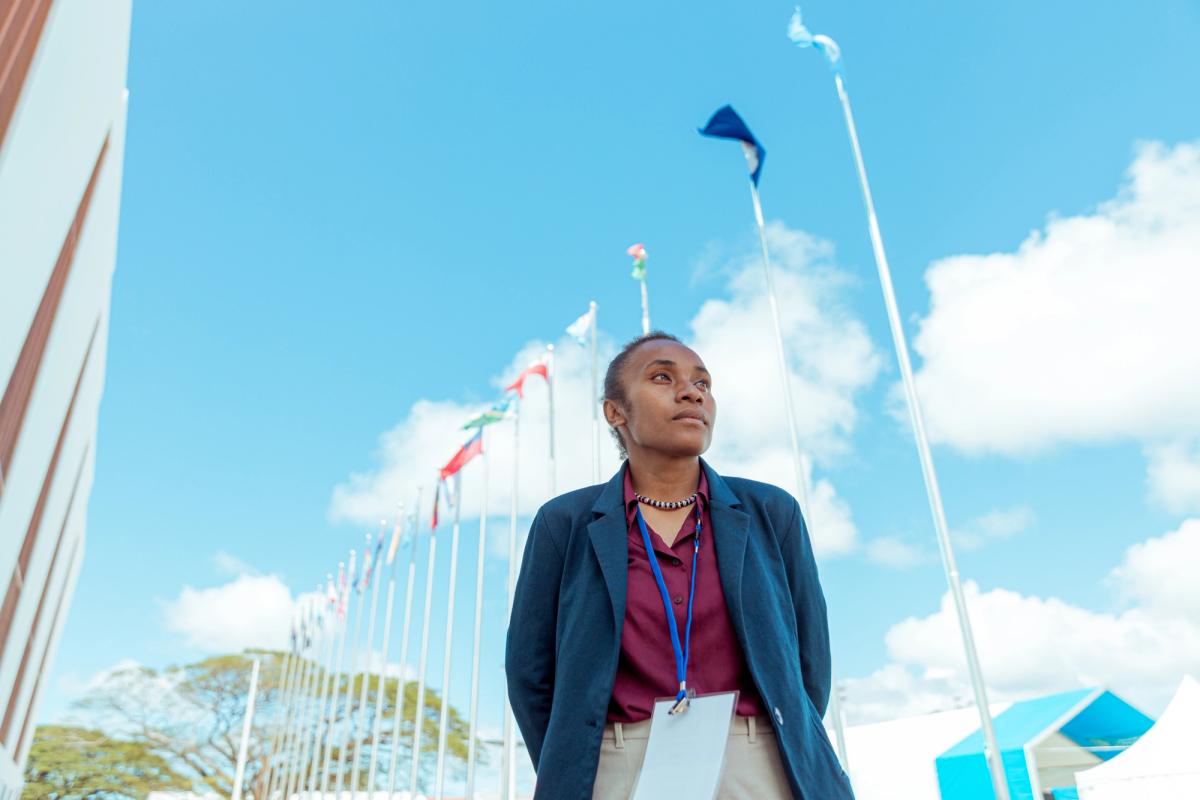
From 30 August to 4 September 2026, heads of government from 18 nations gathered in Palau for the 55th Pacific Islands Forum Leaders Meeting, which includes Australia as a founding member.
On the agenda: the Pacific’s most urgent priorities. At the top of that agenda is the climate crisis and the existential threat it poses to the Pacific.
This year’s gathering carried extra weight because Australia and the Pacific are co-hosting global United Nations climate negotiations, COP31, later in 2026. What leaders agreed on in Palau in August will help shape what we take to the world stage.
Australia is a member of this Forum, President of Negotiations of COP31, one of the world’s highest per-capita emitters of climate pollution and the biggest exporters of coal and gas, regularly approving new coal and gas mines. We are also the biggest provider of climate finance to the region.
Australia is walking a tightrope on climate change, trying to reap the financial returns from expanding extraction of fossil fuels, which threatens the Pacific region, while also being the Pacific’s closest security partner, donor and friend.
This article explains what the Pacific Islands Forum is, why the 2026 meeting matters so much, what our Pacific neighbours are facing, and how Oxfam Australia is working with Pacific partners to demand climate justice.
What is the Pacific Islands Forum?
The Pacific Islands Forum is the region’s premier political and economic policy organisation. The body through which 18 Pacific nations set their collective agenda and speak with a shared voice to the world.
Founded in 1971 as the South Pacific Forum, it brings together 18 members: Australia, Cook Islands, Federated States of Micronesia, Fiji, French Polynesia, Kiribati, Nauru, New Caledonia, New Zealand, Niue, Palau, Papua New Guinea, Republic of Marshall Islands, Samoa, Solomon Islands, Tonga, Tuvalu and Vanuatu.
Its aims are regional cooperation, security, and the economic and social wellbeing of Pacific peoples. Decisions are made by consensus and recorded in a Forum Communique, the document that signals where the Pacific stands. The Pacific Islands Forum Secretariat is based in Suva, Fiji.
The apex event is the annual Pacific Islands Forum Leaders Meeting, getting heads of government in the same room and setting the region’s shared agenda.
The Forum is guided by the 2050 Strategy for the Blue Pacific Continent, a framework that positions the Pacific as a connected force with collective power. Climate resilience sits at the highest priority. The 2050 Strategy frames the climate crisis not as one issue among many but as the defining challenge of the region’s future.
The Forum has also been the Pacific’s platform for nuclear-free advocacy since the 1980s; a history that shows the Forum’s capacity to name existential threats clearly and press the world to respond.
Why the 2026 Pacific Islands Forum matters
The Pacific has an influential role in COP31 this year
Australia is President of Negotiations at the COP31 United Nations climate negotiations this year. COP31 will be hosted by Turkiye, who will be President of the meeting. Australia has formed a Pacific Partnership with the Pacific and co-hosted a Pre-COP meeting in Fiji and Tuvalu from 5 to 8 October. This means the Forum in Palau is a direct precursor to the most important climate negotiations of the year.
Through the COP31 Pacific Partnership, Australia and the Pacific are working together to elevate the region’s key priorities, including:
- keeping the 1.5°C temperature goal within reach
- improving access to climate finance
- elevating the ocean as central to the world’s climate and a critical pillar of climate resilience
- amplifying Pacific voices and leadership.
What Pacific leaders agreed on in August will also help shape the commitments Australia takes to COP31. The Pacific’s unified climate position is built in the Pacific Islands Forum.
The law is catching up with the injustice
In 2024, the International Court of Justice delivered its Advisory Opinion on climate change, confirming that states have legal obligations to prevent climate harm. The campaign to secure this Advisory Opinion was led by a group of law students from the Pacific — the Pacific Island Students Fighting Climate Change.
Pacific leaders seized on the Advisory Opinion’s findings at the Pacific Forum in 2025. It confirms that climate accountability is not just a moral argument but a legal one. Forum leaders are using it to press for binding obligations and adequate finance, not just voluntary pledges.
In early 2026, the Advisory Opinion was also welcomed by the United Nations General Assembly resolution and is changing the legal landscape across the world.
Climate finance is still falling short
Pacific nations need significant climate finance to adapt to the changes already underway, and it isn’t arriving at the scale or speed the crisis demands.
The 2025 Forum endorsed the Pacific Resilience Facility, the region’s first Pacific-owned financing mechanism for climate and disaster resilience. At the 2026 Pacific Island Forum the Facility treaty will enter into force, marking the beginning of its operations. At COP31 Australia will also be hosting a pledging event for the Pacific Resilience Facility to help it reach its initial goal of US$500 million.
The climate reality Pacific nations face
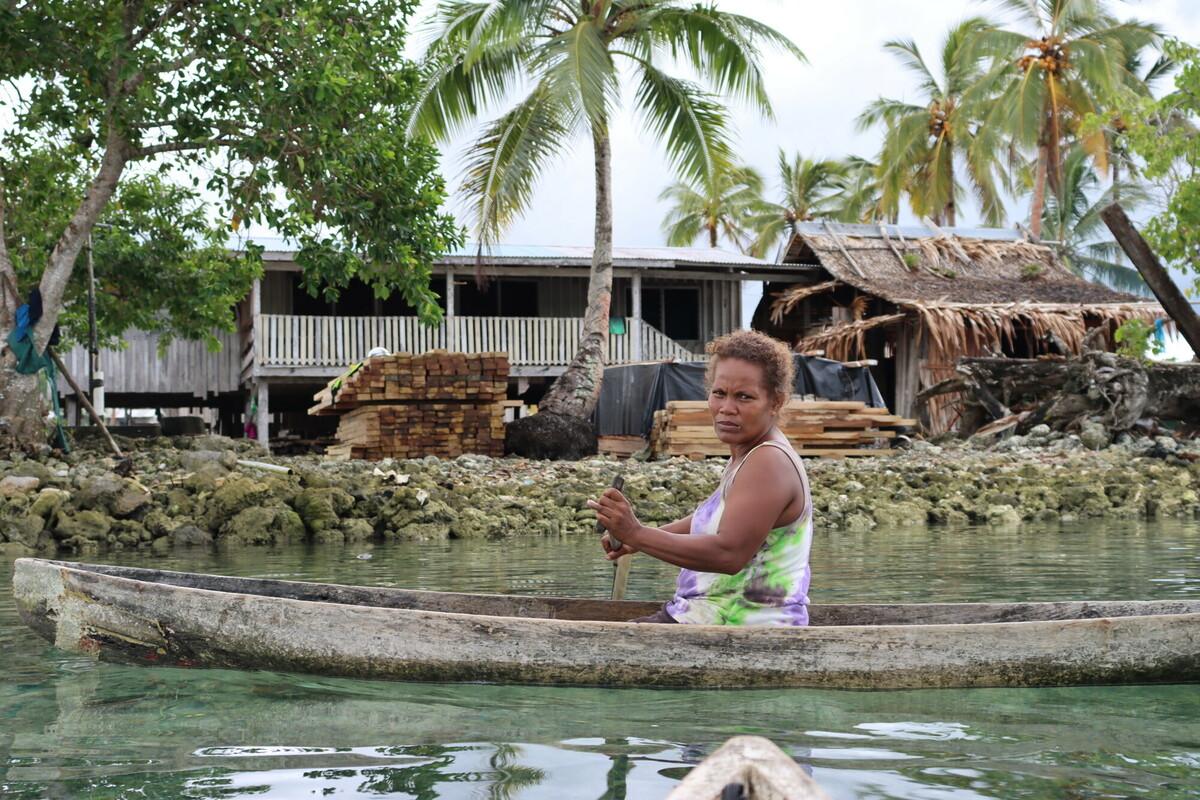
Solomon Islands: Joyce Kasiwai (45) lives in Aiarai village, West 'Are'are region in rural Malaita in Solomon Islands. She is a participant in Oxfam's Kōtui programme. The farmland in her village has been repeatedly inundated with king tides from rising seas, leaving the land soaked with salt water. The women who used to rely on gardens next to their homes must now paddle to other locations on the island to grow food. Photo: Rachel Schaevitz/Oxfam
Pacific island nations account for just 0.02% of global climate pollution. These communities are bearing the highest cost of climate change, yet have contributed almost nothing to the cause.
Oxfam research shows the number of people impacted by climate disasters in the Pacific increased 700% on average in the last decade, compared to the previous decade. Total costs from climate disasters have increased eight-fold in the last decade.
The average GDP losses of Pacific countries are also increasing from decade to decade, with average yearly loss from climate disasters increasing four-fold — from 3.2% between 2004 to 2013, to 14.3% of GDP in the last decade. By comparison, Australia’s most expensive climate disaster, the QLD-NSW floods of 2022, resulted in damages equivalent to just 0.4% of GDP in Australia for that year.
Understanding what that cost actually looks like for our Pacific neighbours requires us to understand the three compounding pressures, the triple threat, of sea level rise, ocean warming and acidification.
Sea level rise: faster, higher, sooner
In much of the western tropical Pacific, sea levels have risen approximately 10–15cm since 1993. That’s nearly twice the global average rate.
Coastal flooding events have escalated dramatically: Pago Pago in American Samoa went from zero such events per year in 1980 to 102 in 2021; Cook Islands went from five to 43 times a year.
Rising seas mean flooding, erosion and saltwater intrusion into crops and freshwater wells; the same wells that communities depend on for drinking water and food production.
Ocean warming and acidification: the reef economy under threat
The WMO reports that sea surface temperatures in the Pacific have risen three times faster than the global average since 1980.
Marine heatwaves have roughly doubled in frequency. In 2023, mass bleaching of coral reefs occurred across Fiji, Vanuatu, Tuvalu, Kiribati, the Samoas and French Polynesia. Coral reefs aren’t just important ocean ecosystems; they underpin the fisheries and tourism that communities depend on for food and income.
According to the Asian Development Bank, ocean acidification could eliminate up to 54 million jobs and jeopardise $180 billion in annual fisheries output across the Asia-Pacific region. It threatens the very foundations of Pacific marine food systems. When reefs die, livelihoods die with them.
Extreme weather: infrastructure, food and water under pressure
More frequent and intense cyclones, storm surges, droughts and flooding are damaging vital infrastructure. They’re destroying crops, contaminating freshwater supplies and cutting off communities for days (and longer) during severe events.
Pacific nations with limited financial reserves face a compounding cycle: each climate disaster leaves communities worse off before the next one arrives. They have fewer resources to rebuild, less land to farm, and less certainty about what the next season holds.
Together, these three pressures are driving food insecurity, accelerating displacement and pushing communities already living with limited resources deeper into poverty.
Pacific communities are living this reality now, but they’re fighting back, too. You can help them in that fight — support Oxfam Australia’s climate work in the Pacific.
What climate justice demands
These communities are contributing the least to the climate crisis, but are on the frontline of its consequences. This is deep structural inequality, the same inequality Oxfam works to challenge in every context.
The 0.02% of global climate pollution produced by the Pacific is not just a statistic. It’s the moral and now the legal case for climate justice.
The United Nations Framework Convention on Climate Change and subsequent agreements have been founded on the principle that countries with high historical emissions and a high capacity to pay — developed countries like Australia — must take a lead on reducing their climate pollution and pay climate finance to developing countries to respond to climate change in their countries.
The ICJ’s Advisory Opinion now also confirms the states most responsible for the climate crisis have legal obligations to prevent further harm. For Pacific nations, this shifts the conversation from asking for help to demanding accountability.
What climate justice actually requires isn’t aid, but climate finance at the scale the harm demands. Investment in the locally-led, Pacific-owned mechanisms and Pacific-led advocacy are already showing what a fair response looks like.
This connects directly to poverty. Climate disasters strip communities of the livelihoods, land and infrastructure they depend on. Each season of failed crops and each flooded home pushes families further from economic security. Climate justice and economic justice are deeply connected, each reinforcing the other, and Oxfam’s work in the Pacific addresses both. Learn more about Oxfam Australia’s climate justice work.
What climate justice looks like for the Australian Government
Australia’s previous pledge for the provision of climate finance to our region expired in 2025, along with the pledges of other developed countries.
In 2024, developed countries collectively committed to a new global climate finance goal of US$300 billion per annum by 2035, but few countries have made pledges beyond 2025.
It’s critical Australia, and other countries, make new pledges at the global climate summit this year to get funding and certainty to low-income countries facing these huge climate change risks.
Along with other experts and leaders, Oxfam has been calling on the Australian government to triple its climate finance contributions in line with the tripling of the global climate finance goal from US$100 billion to US$300 billion per annum.
We are calling for a new goal of $11 billion over 2025-2030. This should be delivered primarily as public, grant-based finance, particularly in light of the need to prepare for and recover climate change impacts in our region.
Australia can fund its fair share of international climate finance, as well as increase funding for First Nations communities and the domestic fossil fuel phase out and just transition, if the Australian Government does three things:
- introduce a climate pollution levy on coal, oil, and gas corporations
- End the fossil fuel subsidies it provides, which are about $14.5 billion per year
- redirect public spending toward climate solutions.
Sign the petition now calling for more funding for countries and communities impacted by climate change.
How Oxfam Australia is responding
Amplifying Pacific voices in global negotiations
Through PACCCIL (the Pacific Climate Change Collaboration, Influence and Learning project), Oxfam works alongside community climate networks in Fiji, Solomon Islands, Vanuatu, Tuvalu and Kiribati to support everyday people to have a voice in climate negotiations. We aim to bridge the gap between what communities experience and what decision-makers discuss in regional and global forums — including the Pacific Islands Forum itself.
These community organisations collaborate with their neighbours to form a stronger community presence in local, national, regional (like the Pacific Islands Forum) and global climate talks (like COP31).
Their collaborative work shapes global climate discussions and shows what climate justice can look like when it starts with communities themselves.
Read more about Oxfam’s work in Fiji, Solomon Islands and Vanuatu, or support Oxfam with a donation to work collaboratively with the Pacific.
Holding big polluters accountable
Oxfam Australia’s Make Big Polluters Pay campaign is calling on the Australian Government to introduce a 25% gas export levy, a Climate Pollution Levy, and a Climate Compensation Fund — with revenues flowing to communities in Australia and the Pacific that are already bearing the costs of climate disasters, as well as driving Australia’s renewable energy transition.
Climate disasters now cost Australia $38 billion per year. In the Pacific, the impact is even more devastating. As President of Negotiations at COP31, Australia must guide and inspire agreement to ensure climate finance is provided to vulnerable countries and communities, and ensure we make progress on the transition away from fossil fuels.
Sign the petition now.
The Pacific Islands Forum is where the Pacific speaks
The Pacific Islands Forum is where countries on the frontline of the climate crisis — countries that contributed almost nothing to it — come together to demand that the world responds with the scale and the urgency the crisis demands.
What happened in Palau in August will help shape what Pacific nations bring to COP31 and what climate finance flows to communities in the years ahead. The decisions made there are not abstractions. They determine whether families in Tuvalu can stay on their land, whether farmers in Solomon Islands can grow food next season, whether children in Kiribati have freshwater to drink.
Oxfam stands with those communities; in our advocacy work, in the regional networks, and in our campaigns calling on Australia to do more. You can stand with them too.