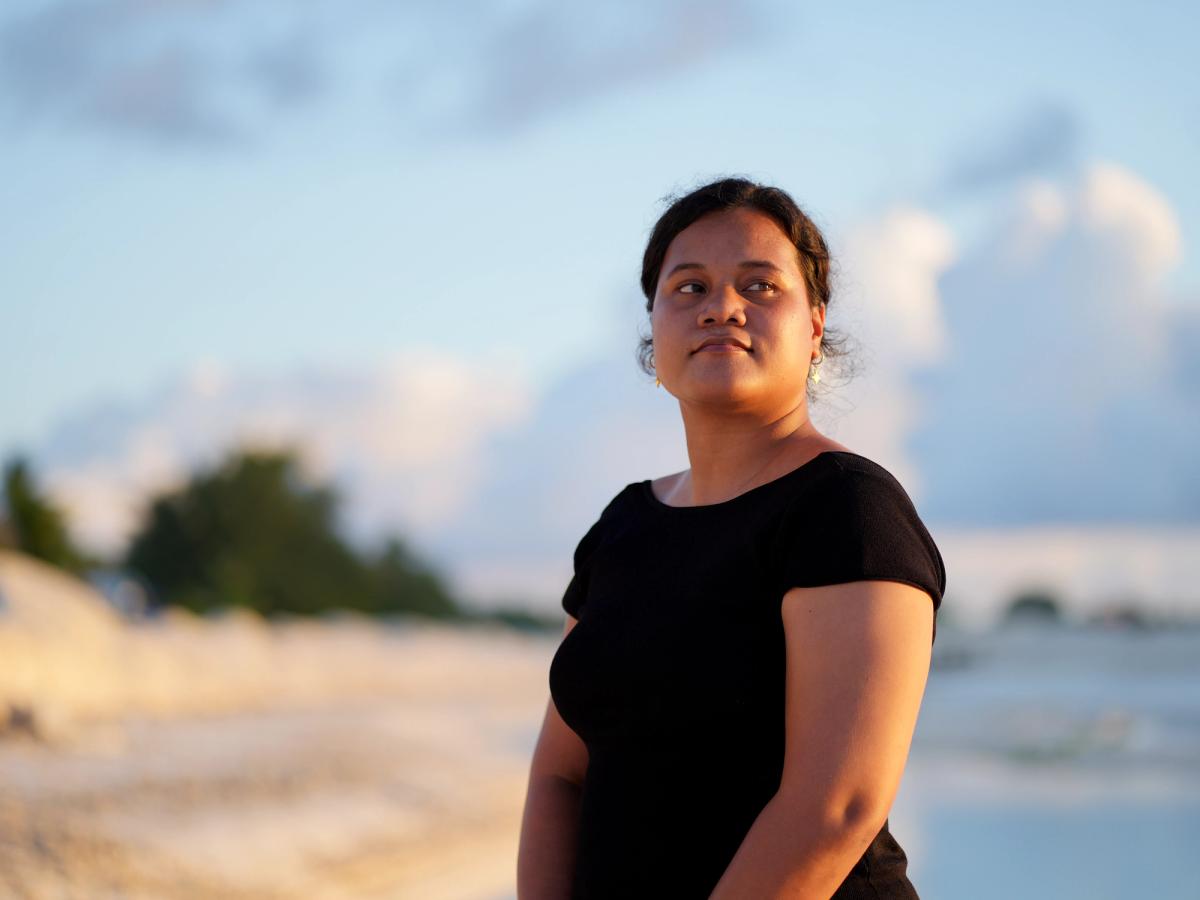
COP31 is the 31st Conference of the Parties to the UNFCCC (United Nations Framework Convention on Climate Change) — the world's annual climate summit. It will be held in Antalya, Türkiye, from 9 to 20 November 2026, with nearly 200 nations participating.
What makes COP31 distinctive is who's in charge. Türkiye is hosting the summit, while Australia and the Pacific are co-hosting the negotiations through a formal Pacific Partnership.
Australia is President of Negotiations, meaning Australia will be responsible for facilitating negotiations and guiding countries towards agreements and outcomes. This is a significant leadership role, where Australia can inspire progress by setting a strong example, and through its actions and shepherding role.
What happens in COP31 will help determine whether the world's most climate-affected communities receive the action and accountability promised in decades of climate negotiations. Oxfam is at COP31 to help make sure they do.
What is a COP, and how does it work?
COP stands for Conference of the Parties. The "parties" are the 198 countries that have ratified the United Nations Framework Convention on Climate Change (UNFCCC), which is the 1992 international treaty that committed the world to addressing climate change.
Every year since 1995, these countries gather for two weeks to assess progress, negotiate new commitments and make decisions about the global response to climate change.
Landmark agreements like the Kyoto Protocol (1997) and the Paris Agreement (2015) came out of COP processes. The Paris Agreement was arguably the most significant. It set the goal of limiting global warming to 1.5°C above pre-industrial levels, and committed countries to submitting Nationally Determined Contributions (NDCs). These are individual plans for each nation to cut emissions and adapt to climate impacts. COP is where those plans are reviewed, challenged and, ideally, strengthened.
The summit itself is divided into two zones. The Blue Zone is where the official negotiations happen; only open to accredited government delegates, UN bodies and registered civil society organisations (like Oxfam).
The Green Zone is open to the public, business and civil society more broadly, hosting exhibitions, discussions and partnerships that run alongside the formal talks.
Civil society organisations like Oxfam attend COPs to advocate for communities bearing the brunt of the impacts of climate change, making sure the voices of these people reach the rooms where decisions are being made. We highlight how climate change impacts are deepening poverty and inequality, and how the right responses to this dire problem can create a more equal world without poverty.
What is COP31 and what makes it different?
COP31 brings together the world's governments in Antalya, Türkiye, from 9 to 20 November 2026. But its governance structure is entirely new. It’s the result of a compromise between separate countries that wanted to be in charge.
Türkiye's role
Türkiye is the formal COP31 host. It is responsible for the physical summit — the venue, the logistics, the Green Zone — and leads the Action Agenda, the programme designed to turn existing climate commitments into concrete projects and measurable results. COP31's Action Agenda covers ten priority themes including clean energy, oceans, food security, climate-resilient cities and youth.
Australia and the Pacific's role
Australia is the President of Negotiations, a distinct and substantive role. It holds what the Australian Government has described as "exclusive authority in relation to the negotiations": preparing draft texts, managing talks, building consensus among nearly 200 countries and driving the summit's cover decision. This is the role that determines what governments actually commit to.
The world will be looking to Australia in this leadership role to inspire progress by setting a strong example with its own actions and commitments, and by shepherding discussions towards strong agreements.
Australia and the Pacific are co-hosting the negotiations through the COP31 Pacific Partnership. The partnership is a formal arrangement that puts Pacific climate priorities at the centre of the presidency agenda: keeping 1.5°C within reach, improving access to climate finance, elevating the ocean's role in climate resilience, and amplifying Pacific voices in global negotiations.
Before Antalya, Australia and Pacific partners are co-hosting a leaders' Pre-COP event in Fiji and Tuvalu from 5 to 8 October 2026. The event will bring global attention to Pacific climate impacts and open pledging for the Pacific Resilience Facility, a Pacific-led climate finance fund.
Why this COP matters so much
2026 has seen an unprecedented level of climate change impacts flow across the world. It is set to be the hottest year on record, breaking previous record breaking years set over the past decade.
High temperatures and extreme weather has been destroying harvests, homes and livelihoods across the Pacific, Africa, Asia and Latin America. An exceptionally strong super El Niño, supercharged by climate change, is intensifying the climate impacts communities are already experiencing.
And this is happening while coal, oil and gas corporations are generating record profits from a fossil fuel system that is also driving energy insecurity and rising costs for households and economies worldwide. All while wealthy governments have been cutting the international aid budgets communities rely on to respond.
Current national climate plans put the world on track for approximately 2.3 to 2.5°C of warming, far above the 1.5°C goal the Paris Agreement set. In the lead up to COP31 and the Pacific PreCOP, the United Nations releases a landmark report Limiting overshoot, which confirms that the world will exceed the 1.5 degree limit agreed to in the coming years.
This has underscored the need for urgent action now to limit the overshoot and return the temperature rise to 1.5 degrees as soon as possible. This can only be achieved by Australia and other countries immediately stopping approvals for new coal, oil and gas projects and fast tracking the phase out of these fossil fuels. Developed countries, with high historical emissions and wealthy economies, must take the lead in this, while also funding low-income countries to make the transition to renewable energy.
COP31 outcomes must reflect the urgency of action required in this moment of escalating impacts, unprecedented heat and the revelation that we are exceeding limits agreed to prevent cascading and catastrophic climate change impacts.
Read more: What is climate change?
The Pacific Partnership, putting frontline voices at the centre
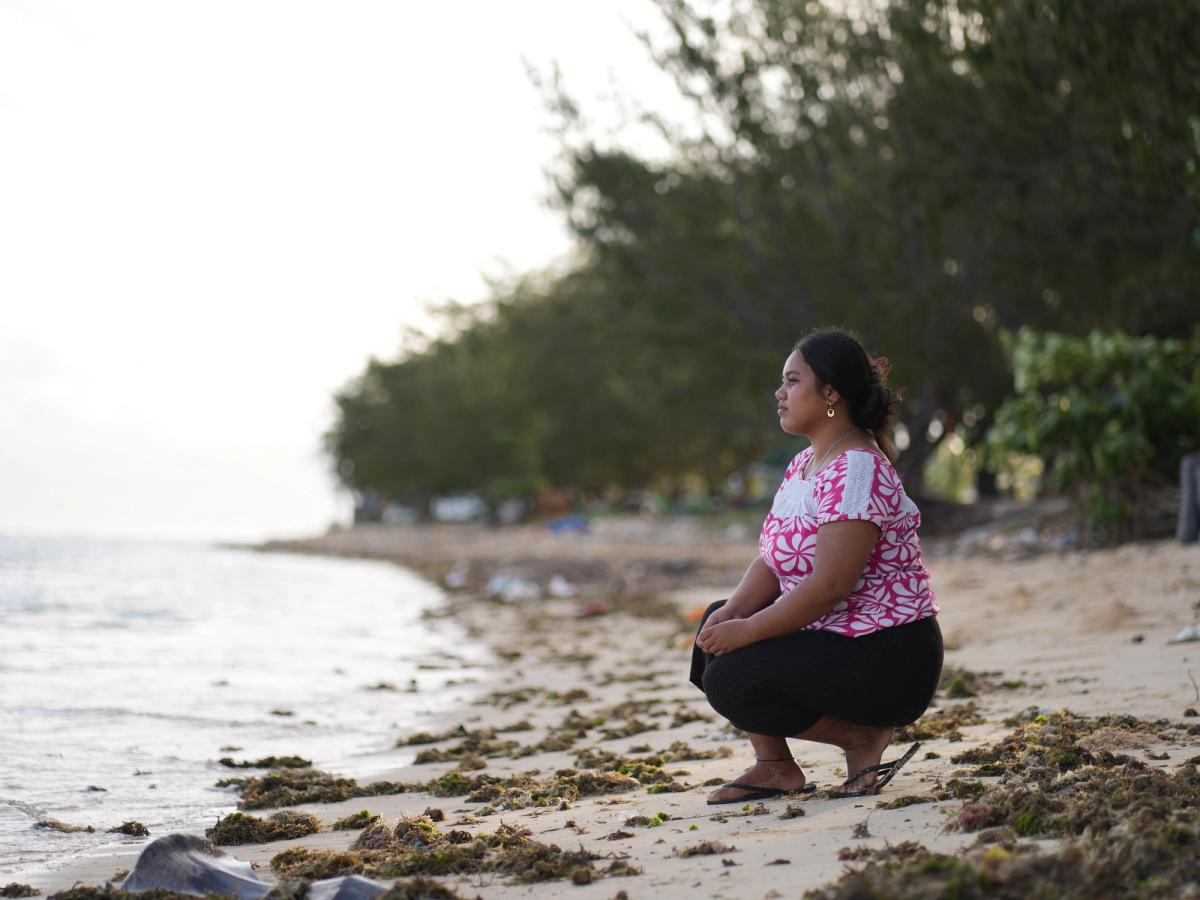
Kiribati: Miriam is President of the Rotary Youth Club and volunteers as KiriCAN’s Project officer. She used to frequently fish with her brothers before the rising sea levels made it too dangerous to travel so far out. Oxfam acknowledges the support of the Australian Government through the Australian NGO Cooperation Program (ANCP). Photo: Aimee Han/Oxfam
"I believe we as Pacific Islanders, we are Wayfinders. Our livelihood is very much dependent on the ocean and its resources. We are connected, really interconnected with the ocean."
Tiein is the vice president of Tungaru Youth Action in Kiribati, a youth organisation working on climate change, employment and skills. She's been taking her community's story to international platforms, but she is clear that storytelling alone isn't enough.
Tiein wants the world to do more than listen. The COP31 Pacific Partnership is the institutional expression of that demand. For the first time, Pacific nations are formally shaping the agenda of the summit that decides what the world does about the climate crisis.
Pacific island nations produce less than 0.02% of global greenhouse gas emissions, yet are on the frontline of the climate change’s worst impacts. They face rising sea levels, ocean warming and more frequent and intense storms and droughts. Scientists project that some Pacific nations could become unliveable by 2050 if warming continues unchecked. That’s just 24 years away.
The COP31 Pacific Partnership priorities (1.5°C, climate finance access, ocean-climate recognition and Pacific leadership) are policy positions to some, but survival requirements for these Pacific communities.
Through Oxfam's PACCCIL program, community climate networks across Tuvalu, Kiribati, Fiji, Solomon Islands and Vanuatu are working to ensure that the lived experience of communities like Tiein's reaches the regional and global forums where climate decisions are made.
Support Oxfam's Pacific climate work
What COP31 must deliver
Fair and just climate finance
Under the United Nations global climate agreements, Australia, like all developed countries, has agreed to provide climate funding and finance to developing countries who are vulnerable to climate change impacts and who need support to transition to renewable energy. This is in recognition that developed countries are high historical climate polluters who have benefited from the use of coal, oil and gas, and who have financial means to support vulnerable countries who are bearing the brunt of impacts due to their environmental and economic conditions.
Between 2020-2025, developed countries agreed to a goal of US $100 billion dollars to be provided per year to low-income countries for action on climate change. Developed countries claimed to have met this goal, albeit a few years late.
However, Oxfam's own analysis reveals that developed countries systematically inflate their climate finance figures with total loan values counted when low income countries are expected to repay them, and official development assistance (international aid) rebadged as new climate money. The figure on paper is far larger than the real support communities receive, with only about a third of the promised finance being delivered.
Over the 2020-2025 period, Australia provided $3.88 billion in climate finance to our region, with the Pacific being the biggest recipient. This was welcome, but well short of Australia’s fair share of the $100 billion goal, which was $4 billion per year.
Importantly, most of Australia's climate finance comes out of the international aid budget and is not new money to meet this huge new threat to sustainable development and poverty eradication efforts. Often it is also not dedicated climate funding, often coming as a secondary objective in aid projects dedicated to other outcomes.
At COP29, countries agreed on a new global climate finance goal of US $300 billion per year by 2035 that developed countries must provide to developing countries. But few countries, including Australia, have announced pledges to this new goal so far, despite the previous goal expiring in 2025. Australia's fair share of the new goal is AUD$14 billion per year.
As President of COP Negotiations, Australia has both the authority and the responsibility to lead on this. At COP31, Oxfam is calling for Australia to commit to at least AUD $11 billion in new, grant-based climate finance. We are also calling for them to guide and inspire other developed countries to make pledges that make progress towards the new global climate finance goal.
There is more than enough money in the world to meet the climate finance needs. Australia provides around $16.3 billion in fossil fuel subsidies per year, far greater than the $2.2 billion per year on average we are calling for to support our region. It’s time to end the subsidies for fossil fuels and invest the money in climate change action and support.
Real action on fossil fuels
At COP28 in Dubai, countries agreed to "transition away from fossil fuels" for the first time in 30 years of climate negotiations. At COP30 in Belém, more than 80 countries pushed for a formal fossil fuel transition roadmap, but the final outcome fell short when major petrostates blocked binding language. Australia signed the non-binding Belém Declaration on fossil fuel transition but didn't lobby for binding commitments in the main COP30 text.
At COP31, with Australia presiding over the negotiations, the question is: will the country leading the talks push for binding fossil fuel transition commitments? Or will it sign further non-binding declarations while approving new coal and gas projects at home?
And there’s a structural problem within the COP process itself. At COP30 in Belém, more than 1,600 fossil fuel lobbyists were granted access to negotiations (outnumbering almost every country delegation) according to the Kick Big Polluters Out coalition.
Oxfam is calling on the COP31 presidency to adopt strict conflict-of-interest rules that bar fossil fuel industry representatives from the rooms where fossil fuel phase-out is being negotiated.
Oxfam Australia is calling on the Australian Government to:
- Stop all new fossil fuel projects and sign the Fossil Fuel Non-Proliferation Treaty
- Introduce a 25% Gas Export Levy and Climate Pollution Levy, with revenues flowing into a Climate Compensation Fund for communities bearing the costs of climate disasters
- Commit to $11 billion in new, grant-based climate finance for 2025–2030 — new money, not rebadged aid
- Ensure that UNDRIP principles of free, prior and informed consent and self-determination are central to all climate decision-making for First and Pacific Peoples.
Justice for communities experiencing loss and damage
The Fund for Responding to Loss and Damage was established at COP28 to compensate nations for climate impacts that can no longer be mitigated or adapted to. It was one of the most significant breakthroughs in recent COP history. But after COP30 in Belém, it remains critically underfunded.
In the first funding round, US $350 million is available for countries deeply impacted by climate change, with allocations capped at US $20 million each. In response, they received hundreds of applications totaling $2.8 billion in funding requests.
Nepal has made an urgent request after the devastating flash floods of August 26, but with allocations capped at $20 million, the Fund can only make a small impact on the recovery costs estimated at up to US $5 billion, around 10% of Nepal's economy (GDP). Without hugely scaled up climate finance and pledges to the Fund, climate disasters will continue to destroy livelihoods and infrastructure across the Pacific, East Africa and South and Southeast Asia, with little hope of proper recovery.
Oxfam is calling for developed countries to make new pledges to the Fund for Responding to Loss and Damage, with contributions scaled to match the actual costs communities are bearing — and with Australia leading by example. This is about accountability for the damage caused by fossil fuel driven climate pollution.
You can read more about loss and damage, and sign our Make Big Polluters Pay petition.
The key tests for Australia's presidency
Australia's role as President of Negotiations is both an historic opportunity and a test.
Will Australia announce a new international climate finance commitment?
Australia's $3 billion international climate finance pledge (2020-2025) has expired. AUD$14 billion per year is its fair share of the new global goal. A meaningful, grant-based commitment at COP31 would signal that Australia's presidency is substantive, not symbolic.
Will Australia push for binding fossil fuel commitments?
Signing the Belém Declaration was a step, but a non-binding one. As the country presiding over negotiations, Australia has the authority to push for commitments with real force. The question is whether it will use it.
Will Australia lead on the Pacific Resilience Facility?
Australia committed to hosting a pledging event for the Pacific Resilience Facility at COP31. Leading by example with a significant Australian pledge would demonstrate that the Pacific Partnership is more than a photo opportunity.
Will First Nations and Pacific leadership be visible in the negotiating room?
The Australian government committed that its presidency will be "shaped by First Nations voices, knowledge and leadership — knowledge formed and passed down over 65,000 years of caring for Country." That's a significant commitment. Oxfam will be watching whether it translates from language to practice.
Australia has an opportunity at COP31 to show what genuine climate leadership looks like. That means matching the authority of the President of Negotiations with the ambition the moment demands.
Take political action on climate
Why isn't COP31 in Adelaide?
Australia originally bid to host COP31 in Adelaide, in partnership with Pacific nations. It would have been the first COP in the Southern Hemisphere. It would have brought global attention to Pacific climate vulnerability in an unmissable way.
Türkiye also bid for the hosting rights. Despite Australia holding the support of 26 of the 28 members of its regional group, Türkiye blocked consensus and refused to give way despite overwhelming support for Australia's bid.
The compromise reached at COP30 in Belém in November 2025 was that Türkiye hosts the physical summit in Antalya; Australia is President of Negotiations; and Australia and the Pacific co-host the negotiations through a formal Pacific Partnership, with Pacific priorities central to Australia's entire presidency agenda; Pacific nations co-host the pre-COP leaders' event in Fiji and Tuvalu in October 2026. As Oxfam Australia noted at the time: while not hosting COP31 in Australia is disappointing, it does not change what is required.
The location of the summit matters less than what it delivers. And the presidency role Australia and the Pacific secured still carries significant authority over what COP31 actually decides. The question is whether Australia uses that authority well.
Help us demand the Australian Government takes real action
COP31 is a chance to turn thirty years of climate commitments into real climate action. The communities most affected by climate change can't absorb another decade of inadequate responses.
Oxfam stands with those communities: in our advocacy work, in the Pacific partnerships that bring community voices into global negotiations, and in our campaigns calling on Australia to use its power to deliver climate justice.
- Sign Oxfam’s COP31 Safe Climate, Equal Future petition
- Sign the Make Big Polluters Pay petition
- Learn more about Oxfam's climate justice work
- Donate to Oxfam's climate appeal
Frequently asked questions about COP31
What is COP31?
COP31 is the 31st Conference of the Parties to the United Nations Framework Convention on Climate Change. It will be held in Antalya, Türkiye, from 9 to 20 November 2026, with nearly 200 nations participating. Australia and the Pacific are co-hosting the negotiations through a formal Pacific Partnership, with Pacific climate priorities central to the presidency agenda.
What does "COP" mean?
COP stands for Conference of the Parties, with the parties being the 198 countries that have ratified the UNFCCC, the 1992 international treaty on climate change. COPs have been held annually since 1995 and produced landmark agreements including the Kyoto Protocol and the Paris Agreement.
Where is COP31 being held?
COP31 is being held at the Antalya Expo Center in Türkiye. Australia originally bid to host in Adelaide in partnership with Pacific nations, but a compromise was reached at COP30: Türkiye hosts the physical summit, Australia and the Pacific co-host the negotiations through a formal Pacific Partnership, and Pacific nations also co-host a pre-COP leaders' event in Fiji and Tuvalu in October 2026.
What is Australia's role at COP31?
Australia is the President of Negotiations, not the conference host, but the country with authority over the negotiating process: preparing draft texts, managing talks and issuing the summit's cover decision. This gives Australia significant influence over what COP31 actually commits to.
Can Australians attend COP31?
The Blue Zone, where official negotiations happen, requires UNFCCC accreditation. The Green Zone is open to the public, business and civil society. Australians can also engage by signing Oxfam’s COP31 Safe Climate, Equal Future petition calling on the Australian Government to show real climate leadership at COP31.
What does Oxfam want from COP31?
Oxfam Australia is calling on the Australian Government to halt all new fossil fuel projects and sign the Fossil Fuel Non-Proliferation Treaty; introduce a 25% Gas Export Levy and Climate Pollution Levy with revenues flowing into a Climate Compensation Fund; commit to $11 billion in new, grant-based climate finance for 2025–2030; and ensure that UNDRIP principles of free, prior and informed consent and self-determination are central to all climate decision-making for First and Pacific Peoples.