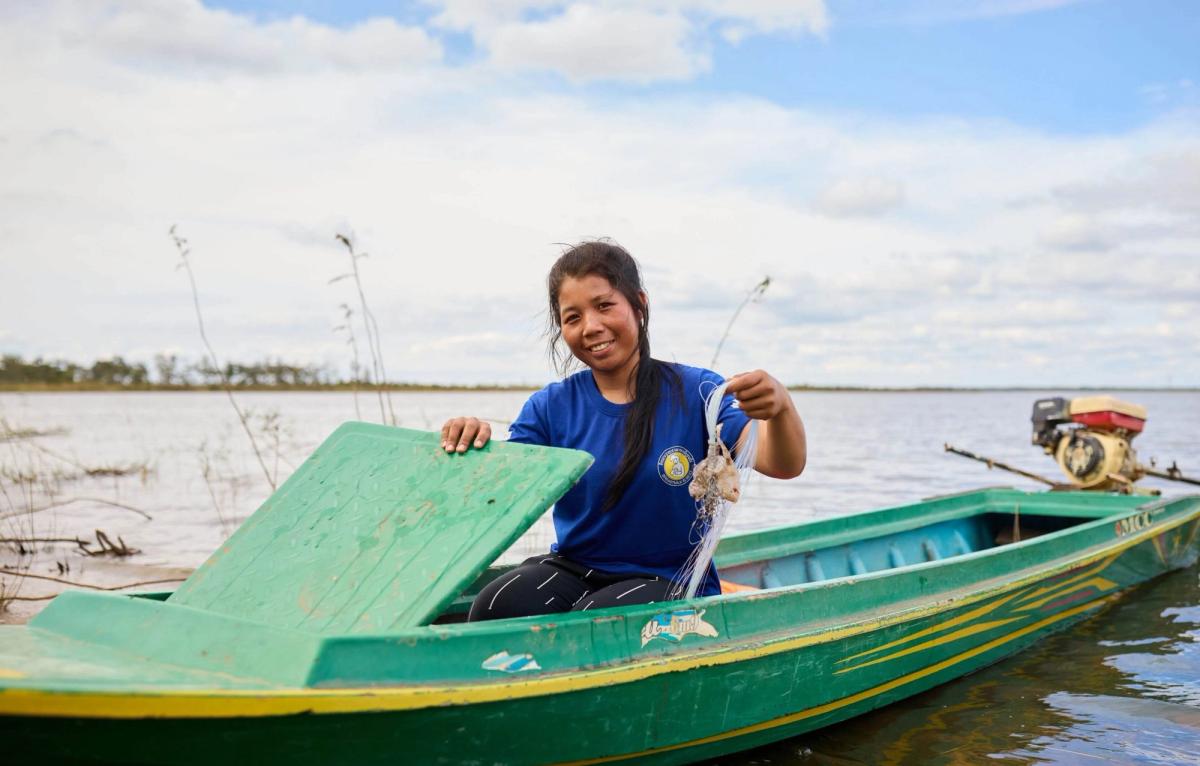
- Chhorvy is a community fishery activist in Cambodia.
- Oxfam, together with local partner My Village (MVi), supports indigenous and local communities in Cambodia to have a say in how their natural resources are managed.
- Chhorvy now participates in climate advocacy, monitors fish catches and conducts eco-training sessions for fellow fishers to share her knowledge.
Chhorvy is a community fishery activist in Cambodia. The local waterways have been an important part of her whole life, and her community’s livelihoods.
“I used to see fish swimming in the water in front of my house on the river, and when I put out a little net, I would get a lot of fish. There were a lot of trees when I was young, and when the river was not closed off … it was different from now.”
“After the dam was constructed, I feel that I have lost something.”
“Since they constructed the hydropower dam, there are no more bamboo groves, no rivers, no riverbanks," Chhorvy said. "We can just see the water. There are fewer trees like before. Many of the farmers, since the hydropower dam construction, now go fish at the reservoir.
“I heard there was a plan about the dam, but we did not understand, there’s power and water power supply — so I wanted to have it, but after the dam was constructed, I feel that I have lost something. Loss of animal habitat and loss of fish population, so it’s a lot different from before. The forest has disappeared, and the weather is hotter.”
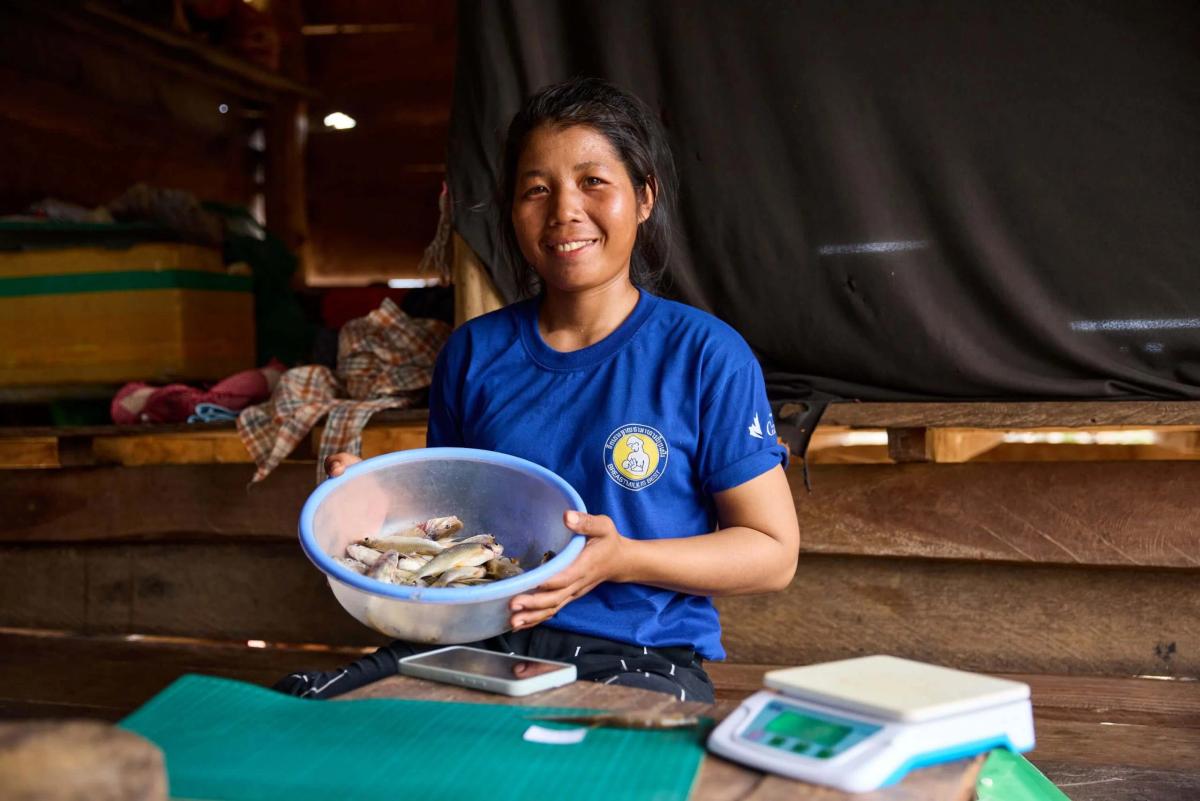
Cambodia: Chhorvy recording her catch for the day. Monitoring the catch of fish is important for the management and conservation of communities who depend on the lake for their nutrition, as well as providing indicators on ecological health of the water due to how sensitive fish are to water changes. Oxfam acknowledges the support of the Australian Government through the Department of Foreign Affairs and Trade (DFAT).Photo: Patrick Moran/Oxfam
Climate advocacy and poverty
People all over the world rely on the earth for food and livelihoods. But too often, the communities who’ve spent generations nurturing their lands and waters are denied their fair share of its natural resources. This puts their very survival at risk and threatens to push communities into poverty.
These communities are rarely involved in the decisions and policies that affect their lives and lands. This is even more true for women, who can be excluded from decision-making in their communities just because of their gender.
Chhorvy, Oxfam and you
Oxfam, together with local partner My Village (MVi), supports indigenous and local people like Chhorvy in Cambodia to have a say in how their natural resources are managed.
MVi runs coaching on monitoring fish catches (which helps identify overfishing) and teaches communities about fishery laws and their rights. MVi also mobilises women to participate in fishery conservation and water governance, so they can be part of policy and decision-making.
“There were many classes such as on gender, fishery law, negotiation skills and training on fish ecology. And training on the effects of hydro power dam … I think that is good for the community.”
Chhorvy now participates in climate advocacy and monitoring fish catches. She also conducts eco-training sessions for fellow fishers, sharing her knowledge with the community. Over time, she’s seen more and more people participate in meetings.
“There are a lot of things that have been supported by MVi, like their help in establishing the committee, organising patrol groups. They did not exist before. During patrolling we can see that newcomers set up illegal fish traps, and we remove it.”
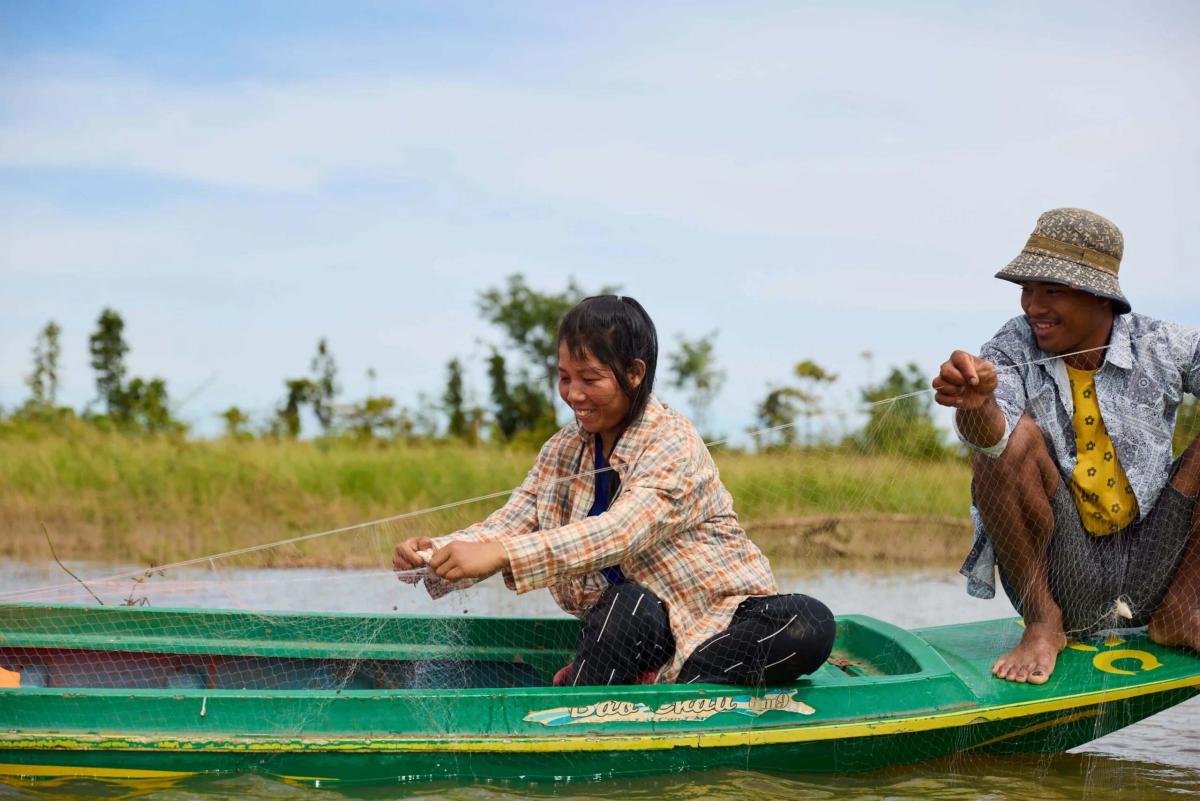
Cambodia: Growing up, Chhorvy and Kneoun used to be able to catch fish from their doorsteps. Since being forcibly relocated due to dam construction, they now have to take the boat out 10km to reach waters for fish. Oxfam acknowledges the support of the Australian Government through the Department of Foreign Affairs and Trade (DFAT). Photo: Patrick Moran/Oxfam
Chhorvy’s hope for the future
“My dream is that my husband will still support me to be involved in community work, that he doesn’t stop me. He will support me, even though this work has no salary. I want other women to join the community work as well, but their husbands don’t allow it.
“But if they want, they can. It doesn’t mean a lot of work, it can be participating in community events, like when they are living along the river, they can report to the community committee whenever there is illegal activity, that’s taking part, too.”
This work is only possible with support from people like you. Learn more about how you’re helping us alleviate poverty through our work on gender equality and climate change.
Donate now
Your donation will help tackle the inequalities keeping families in poverty so they can change their future for the better.
Your information is in safe hands with us. All transactions are 100% SSL secure and encrypted, and we never store your credit card information.
Having problems donating?
- Call us at 1800 088 110
- Email us at enquire@oxfam.org.au