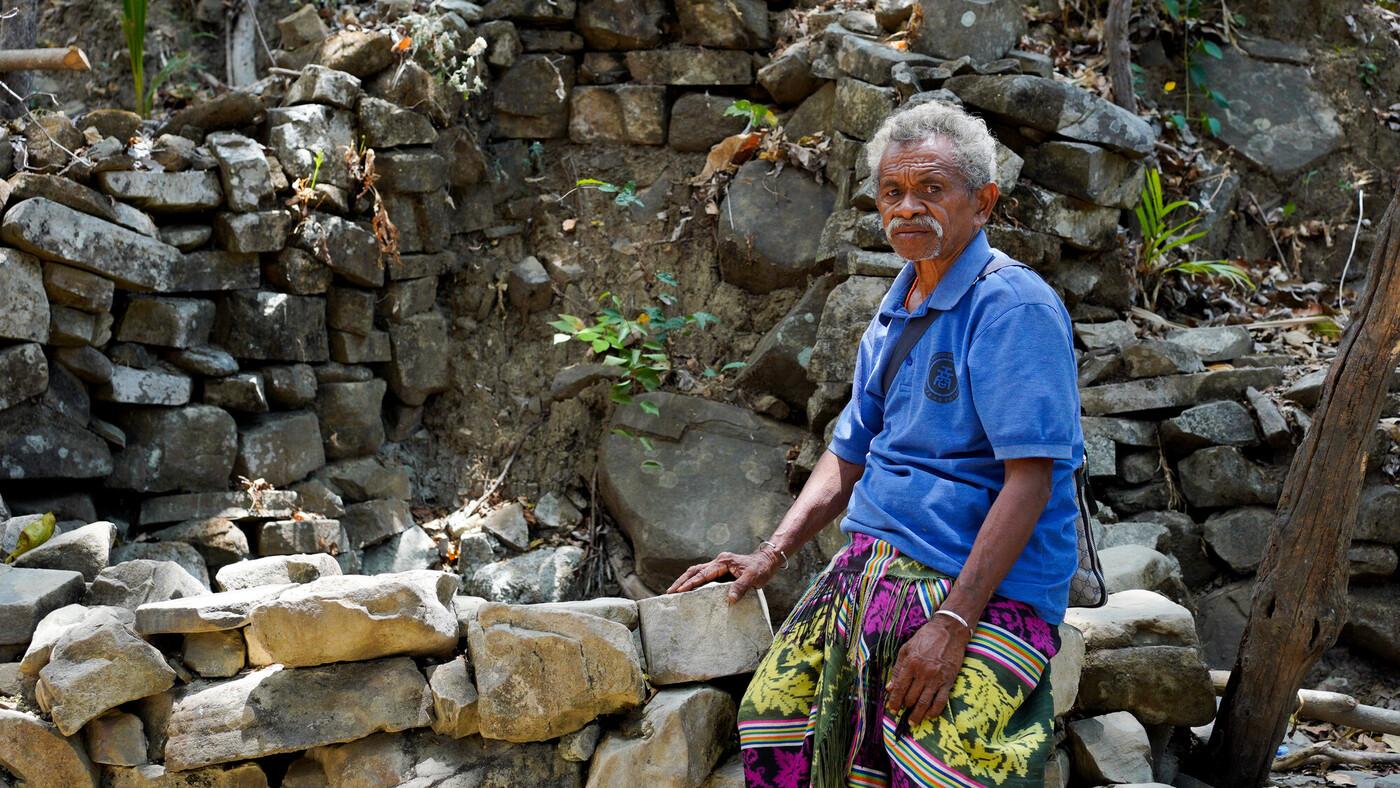
Timor-Leste: After undertaking training with Oxfam partner, AFFOS, Domingos helps to maintain the local water springs and pond reservoir as part of a Disaster Ready group in his community. The water from this pond is used to irrigate the community's vegetable garden. Photo: Aderito do Rosario da Cunha Mambares/Oxfam. Oxfam acknowledges the support of the Australian Government through the Australian Humanitarian Partnership (AHP).
Disaster risk reduction
Disaster Risk Reduction (DRR) aims to reduce the damage caused by natural hazards like earthquakes, floods, droughts, and cyclones, through prevention.
When disaster strikes
Each year, more than 55 million people have to abandon their homes as a result of war, crime, political unrest or a climate disaster. Many lose everything they own. And it’s communities already experiencing high rates of poverty who are hit hardest.
- Economic losses from disasters are now reaching an average of US $315 billion each year
- Between 1980 and 2012, 42 million lives were lost in disasters each year.
- Growing global inequality and the increasing frequency of climate disasters all now threaten to drive risk to dangerous and unpredictable levels (UN, 2015).
But hazards do not need to become disasters. By helping communities to better understand the risks they face and building their capacity to adapt to, cope with, withstand and recover from hazards and climate change, we can help them to not only survive, but thrive.
Oxfam’s approach
Oxfam’s approach to resilience involves working together with both our partners and the communities that are most at risk. The end goal is that the people who are most impacted by the climate crisis are equipped with the necessary skills, knowledge, and information to continually adapt.
Oxfam’s resilience work involves working with partners and vulnerable communities so that they are better able to:
- Manage risk and uncertainty
- Adapt to the predicted impacts of climate change
- Influence governments, donors and other decision makers to promote and enable disaster risk reducition through their policies, planning and funding
Underpinning all of Oxfam’s resilience work is a strong belief that the climate crisis and the system that created it are the biggest contributors to global poverty and inequality today. It’s these inequalities that also make marginalised communities disproportionately impacted by shocks and stresses from climate disasters.
Throughout all our work, we encourage communities to actively participate in creating their own solutions and for all individuals to participate in the decision making process, ensuring people are in charge of their own lives.
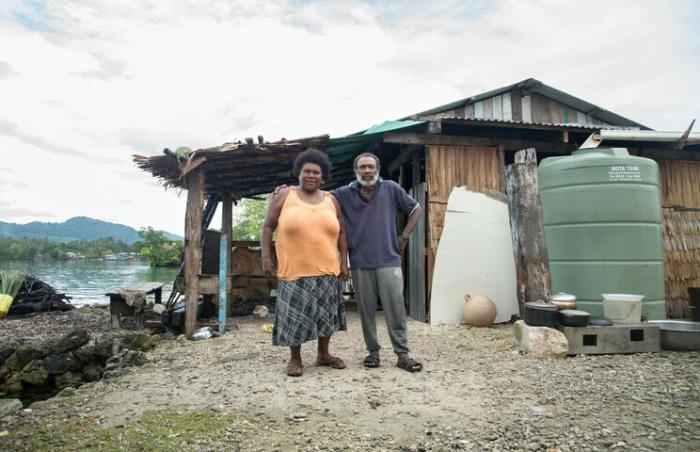
Solomon Islands: Judith Harry and her husband Michael Harry pose at their home on Loreto Island. The island is under threat from rising sea levels. Photo: Collin Leafasia/Oxfam