Nearly 60 people have died and more than 44,000 displaced after heavy monsoon rainfall continues to cause widespread flooding, waterlogging and landslides across Bangladesh.
1,722 emergency shelters have been opened, and Oxfam is supporting 10,600 affected people with food, hygiene and dignity kits and cash support as part of its flash flood response to reach the 1.1 million people across Bangladesh who have been badly affected.
Chattogram is the worst affected region, while Cox’s Bazar, including the Rohingya refugee camps, continues to face flooding, landslide risks and damage to essential services.
In Chattogram, Oxfam’s planned assistance includes emergency food, safe drinking water, hygiene & dignity kits containing soap, detergent, sanitary pads and oral rehydration salts. Multipurpose cash grants of BDT 8,000 (AU$90) per household are also planned so that vulnerable families can meet their urgent needs, including food, shelter repairs, healthcare, transport and livelihood inputs.
In Cox’s Bazar, Oxfam and partners are supporting assessments and repairing damaged facilities within operational areas. Oxfam has also provided personal protective equipment to 100 Rohingya volunteers serving as frontline responders.
“This is one emergency unfolding across two distinct contexts,” said Anil Pant, Country Director of Oxfam in Bangladesh.
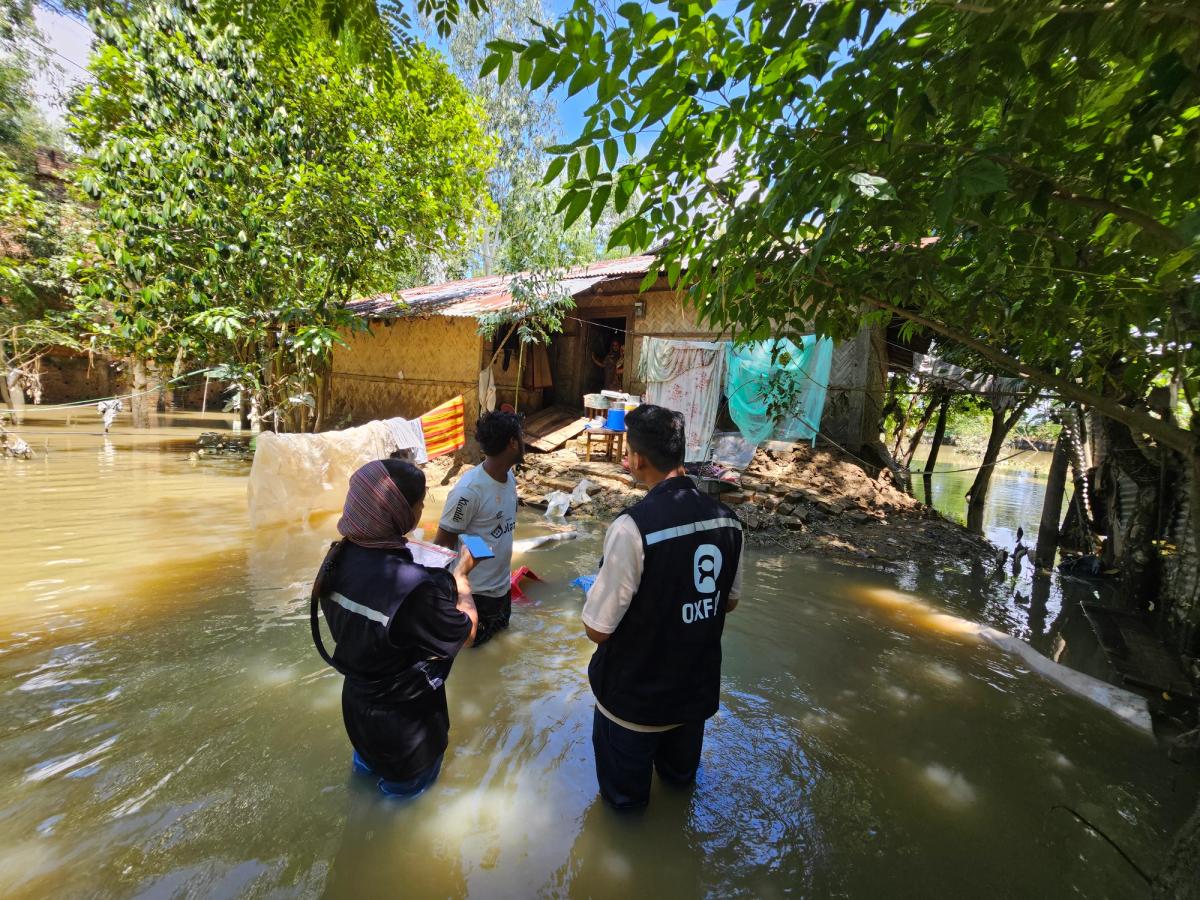
“The floods and their cascading impacts have severely disrupted people’s lives and livelihoods. In Chattogram and other affected districts, families have lost homes, income and access to safe drinking water and sanitation.
"In Cox’s Bazar, the danger is especially acute, as Rohingya families live in densely populated camps on fragile slopes, with limited space for safe relocation and heightened exposure to flooding and landslides.”
The floods have claimed dozens of lives, displaced thousands of people and damaged homes, roads, embankments, water points, latrines, cropland, fisheries and businesses.
Many families have lost food stocks, bedding, cooking utensils and household assets. Thousands remain isolated in submerged communities, while some households cannot cook because they have neither dry space nor fuel.
Safe drinking water, emergency food, shelter materials, hygiene and dignity kits, sanitation support and flexible cash assistance are among the most urgent needs. At least 3,500 water points and 12,400 latrines the damage to at least 3,500 water points and 12,400 latrines have heightened, heightening the threat of waterborne disease. Recovery will also require repairs to homes and WASH facilities and support to restore livelihoods.
“The water rose so quickly that we could save almost nothing. Our food, bedding and cooking utensils are gone, and finding clean water has become very difficult. We need food, safe drinking water and support to repair our home so that our family can start again,” said Akkas Ali, a flood-affected resident of Statkania, Chattogram.
In the Rohingya camps in Cox’s Bazar, 164 landslides and 42 flooding incidents have been reported. Fifteen Rohingya people lost their lives after shelters and facilities collapsed. A total of 9,707 people were displaced and temporarily relocated, while 482 weather-related incidents affected about 43,000 people across 9,463 households. Floodwater entered shelters and inundated WASH facilities, while prolonged cloudy weather left many households without lighting.
Women and girls, children, older people, individuals with disabilities, pregnant and breastfeeding women, and single-headed households face heightened protection and health risks. Limited relocation space, unstable slopes, damaged drainage and overcrowding are making the situation particularly dangerous and the vulnerabilities of the people living there reach the peak.
Oxfam in Bangladesh has initiated its emergency response and allocated BDT 12,065,000 (AU$140,000) to support the affected communities in Chattogram. Working with local partners, Oxfam is conducting rapid needs and gender assessments and coordinating with government authorities, the Needs Assessment Working Group, and UN clusters.
“We are already on the ground with our partners, listening to affected communities and acting on their most urgent priorities,” Anil Pant said.
“Our initial allocation is an important first step, but the scale of need is far greater. We call on donors, businesses, development partners and concerned citizens to provide flexible funding so that more families can receive life-saving assistance and rebuild with dignity.”
For more information and interviews, please contact Amber Ahmad: [email protected] / 0468802634
For more than 70 years, Oxfam has been working with local partner organisations and communities to eliminate inequality and poverty. Support Oxfam today and help provide immediate and long-term solutions to people around the world.