Field updates: Sumatra earthquake

Kate Thwaites

Kate Thwaites, Oxfam's International Programs and Emergencies Media Coordinator.

Updates from our correspondent on the ground in Padang, Indonesia, Kate Thwaites. View a slideshow of photos from the field.

Monday 12 October - Getting lives back together

School started again today in one of the villages that was worst hit by this earthquake. There's no school building, but classes will be held in the open air until something else can be set up. It's a small sign of lives getting back on track.

I'm really glad that the children start going back to school today, as one of the most distressing things I've seen when we've been visiting villages to assess damage and deliver water has been the children begging by the side of the road.

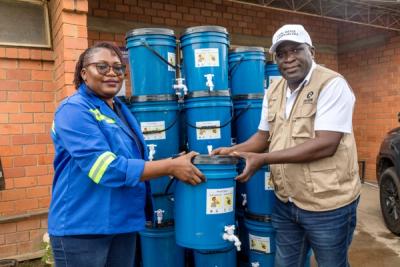
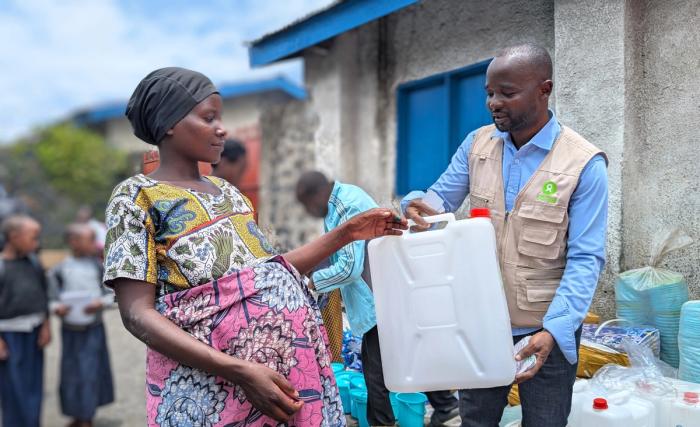
Oxfam is trucking around 9,000 litres of water each day to villages in Padangalai

Oxfam is trucking around 9,000 litres of water each day to villages in Padangalai. Photo: Laura Eldon/Oxfam

They're holding out cardboard boxes waiting for passing motorists to fill them, but the roads are narrow and damaged and the likelihood of an accident is high. One of our staff members told me that he was also worried that the children would get used to begging and start to think that was the natural way to make money, so it's good that they'll be able to begin to get back to a more normal way of life.

However, there's a lot to do when you're working to get things back to normal. One of the issues with setting up temporary schools is making sure that the students have decent toilets and clean water, so that they don't get sick. Oxfam's staff have been busy working out how we can help to provide clean water for schools, as well as dig toilets and teach children about the importance of good hygiene.

I've seen other signs of people starting to rebuild their lives in various ways. One man was carefully hauling the corrugated iron sheeting from the roof of his damaged house by the road one morning when we visited to deliver water. By the time we came back that afternoon he'd already removed all of the roof, and was knocking down the damaged timber frame with some mighty blows that sent us moving a bit further away.

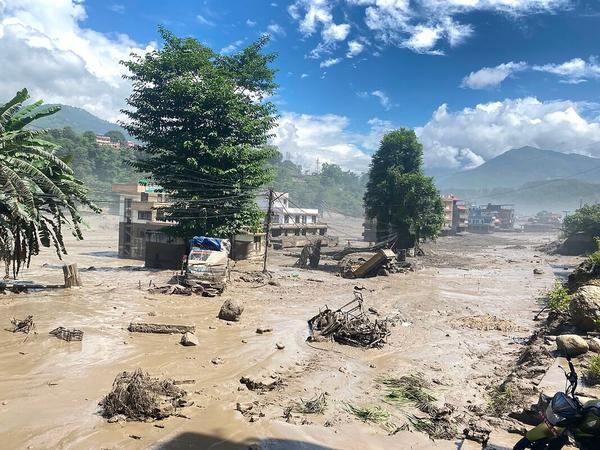
But there's still so much to be done. So many areas still feel unsafe - we had to hike for more than half an hour to reach one remote village yesterday because the road was still cut off, and some villages are still only accessible by helicopter. The danger of more landslides is real, particularly as it starts raining again.

If there are more landslides, many people will again be cut off and we won't be able to tanker in water as we are now. Oxfam's engineers are going from place to place trying to find ways we can ensure that people don't just have to rely on water being brought in - such as helping to clean wells and providing equipment to allow people to catch rain water.

Water supply continues to be an issue in the not so remote places as well. Here in Padang city many of the Oxfam staff have been experiencing water shortages alongside everyone else. During the times when water is available, I've learnt to appreciate the luxury of washing from a bucket. I'd be lying if I said there hasn't been some grumbling (mainly from me). But we've all chosen to be here, and that puts us in a very different situation from the many people who are now trying to rebuild their homes and their lives.

Friday 9 October

A house collapsed due to a landslide

This house collapsed from a landslide. Photo: Kate Thwaites/OxfamAUS

I’ve been thinking a lot today about preparing for disasters. It’s something we talk about a lot at Oxfam, but seeing it in action here in Padang after this earthquake has really made me realise just how essential it is.

Getting aid into a disaster zone quickly is incredibly difficult. Even getting immediate information about what’s happening is a challenge. In the hours after this earthquake, phone lines were down, roads were cut off and even though Oxfam and others were working flat out to try to respond, we all struggled to work out what had happened, and what was needed.

But while all this chaos was happening, aid was already being distributed. Staff from local groups that Oxfam has been partnering with to prepare for disasters got straight to work. Because they were already based in the affected communities, they were able to start handing out 2,500 tarpaulins and other essential items that Oxfam had stored in the area – giving people immediate shelter and help until more supplies and assistance could arrive.

I’ve seen those tarpaulins stretched out in front of destroyed houses in village after village here. I can only imagine how it must have felt for the people our partners managed to help in the confusion and devastation of the first 24 hours after the earthquake.

Now that we’re able to get extra supplies and staff into Padang, (including an incredibly experienced emergency team who have now dealt with something like 35 disasters in Indonesia), we’re able to back up those first efforts and start to work with our local partners to rebuild people’s lives. But seeing those tarpaulins in front of people’s ruined houses has made me realise how was crucial it was that we had that local presence here that meant we could start work helping people almost immediately.

Of course, no system is perfect, and a big part of what we’ll now try and do here in Padang will be to work with the local government and other groups so that the area is better prepared for future disasters. After all, this is part of the “ring of fire” – an area infamous for its earthquakes. I’ve just heard that seismologists have said that this earthquake wasn’t the big one they were predicting for this area. With that in mind, preparing as best we can ahead of the next big one seems to make a lot of sense.

Thursday 8 October

What strikes me the most is just how many people have had their lives  turned upside down by this earthquake.

Photo: Kate Thwaites/OxfamAUS

Eliwati stands in front of her damaged house in Sungai Durian village. Her mother was in bed in the room that collapsed when the earthquake hit and had to crawl out. Eliwati says they need blankets and tents.Photo: Kate Thwaites/OxfamAUS

I've just returned from two days in the field with an Oxfam aid team,  travelling through Agam, an area a couple of hours north of Padang. We travelled through village after village where the houses were either completely destroyed, or partially collapsed. In one village alone we were told that more than 1,000 houses had been destroyed. People have now set up home in front of the rubble, living in tents or under tarpaulins, or sheltering in the remaining parts of their damaged homes.

They were keen to show us around, and to tell us their survival stories. One woman told me about how her elderly mother had been in bed when the earthquake happened. I could see the bed from where I was standing outside the house - the front wall had completely collapsed, and there was rubble all around. Her mother had crawled out of the room on her hands and knees.

An elderly man brushed away tears as he told me about how the earthquake had pushed trees and mud down on his house. He said he still felt scared, but was just grateful that his family all survived the earthquake.

Almost 2,000 people are living in the marketplace in the centre of town

Amost 2,000 people are living in the marketplace in the centre of town after local authorities told them to leave their villages, because landslides had made them too dangerous. Photo: Kate Thwaites/OxfamAUS

Last night, we visited a large makeshift camp that had been set up in the middle of a marketplace. Almost 2,000 people are staying here - They'd been told to leave their homes by the local government because of fears of more landslides. Oxfam's water engineer wanted to make  sure that they had a decent water supply.

I was feeling a little grumpy before arriving at the camp. I hadn't  planned to spend the night in the field and so I hadn't packed a change of clothes. After seeing so many people sleeping on a concrete slab without grumbling I decided it was time to curb some of my  princess tendencies.

The other thing that's struck me over the past two days has been how stoic many of the people we've spoken with have been. They're not sitting around helplessly, and they are keen for their lives to return to some sort of normality. They are getting some support - Oxfam has started delivering clean water, tarpaulins and tents have been handed out, and there are food deliveries being made - but there's clearly a lot more needed to help the many people who have been affected.

Meanwhile, the children already seem to be doing their best to get on with having fun. I was the target of plenty of shouts of "Hello Mister" and lots of requests for them to have their photos taken in  front of their tents. I hope that their lives recover quickly.

Tuesday 6 October

Monica has been staying in these tents with her family since the earthquake, as their house is unsafe.

Monica, 9 years old, has been staying in these tents with her family since the earthquake, as their house is unsafe. Photo: Kate Thwaites/OxfamAUS

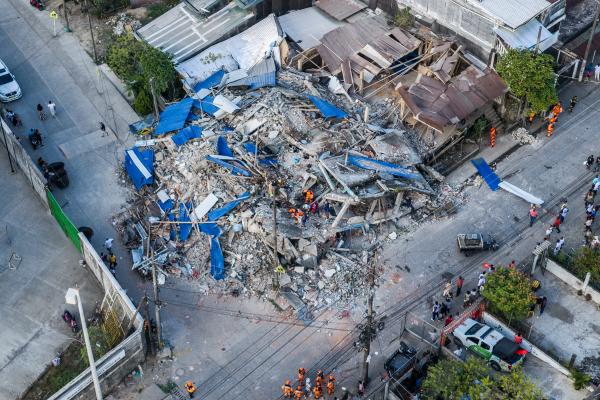
There’s a strange feeling in Padang as the city begins to pick itself up almost a week after the devastating earthquake. To a visitor like me, parts of the city look almost normal - houses are still standing, traffic seems to be moving again. But in other parts, where large buildings have collapsed leaving mounds of rubble, it’s clear that things are still far from normal.

Outside the city, in the villages closer to the epicentre of the earthquake, it seems like it will take much longer for things to even start to resemble normal. Here, many houses were damaged by the earthquake and some were buried by mudslides. People have lost family members and friends.

Water sources – mainly wells and rivers – are full of sand and dirt, and so people are struggling to find water that is safe to drink, and use for washing and cooking.

This is the first time I’ve been in the middle of such a big aid effort, and it’s impressive for me to see how quickly Oxfam’s staff swing into action.

A water tanker is found to begin carrying clean water, and a water purification system is dispatched to one of the more remote locations hit by the earthquake. Tarpaulins have already been handed out, and are being used by people whose houses have been damaged.

The logistics of all of this are complex and made more difficult by the fact we still don’t have a full picture of all the damage the earthquake caused, particularly in more remote locations. Staff from Oxfam and other agencies are surviving on very little sleep as they try to get the full picture and make sure help gets to where it’s needed.

The uncertainty of it all is affecting everyone. One of our staff members told me he’d been speaking to people in some more remote villages who were very worried that there would now be another earthquake. It’s difficult to imagine how hard it must be for these people to begin to recover when they are still afraid of more damage being done.

As an Australian, I can’t help but compare the situation to our most recent devastating natural disaster, the Black Saturday bushfires earlier this year. We’ve seen first hand how hard it is for communities to recover when they’ve lost so much, and how long that process takes. The people of Padang will need our support as they try to begin to get their lives back together.


Conditions of use

When you contribute content to our site, you retain ownership of the copyright. You also grant permission to Oxfam Australia to display and distribute your content, and to use it for any promotional purpose, without remuneration, compensation, or payment of royalties.

In addition, you are responsible for the content of your material. Oxfam Australia takes no responsibility for the content of any messages or information posted by contributors.

Oxfam Australia retains the right, in our sole discretion, to review, edit or delete any material which we deem to be illegal, offensive or otherwise inappropriate.