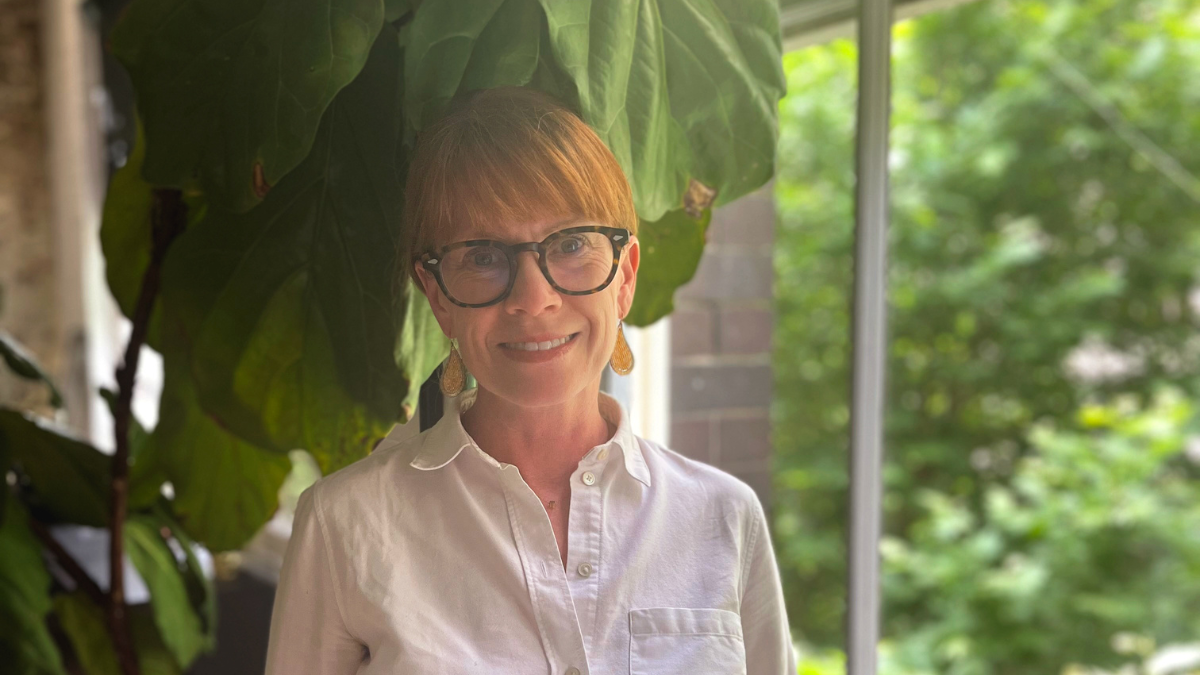
Oxfam Australia has a new Chief Executive, Jennifer Tierney. We’d like to officially welcome Jennifer aboard and thank Chrisanta Muli for acting in the position this year. Chrisanta’s leadership and dedication has been a huge asset to Oxfam, and we’re fortunate to have her resume her position as Director of Programs.
To learn more about Jennifer and her vision for Oxfam’s future, we sat down with her to chat about why she joined Oxfam, what she sees as our biggest challenges and opportunities for the international development sector, and what she hopes for our future.
What excites you about Oxfam’s mission and work?
For the last two decades I have worked with organisations that responded to the biggest humanitarian crises in the world, and organisations that focused on long term solutions to injustice and poverty. I’m excited to lead an organisation that takes on the challenge of doing both. Oxfam recognises that inequality worsens poverty and amplifies the negative impacts of crises like conflict and climate emergencies. I also love the way that Oxfam highlights and approaches the way poverty intersects with economic, gender, climate and First Peoples justice. It is not easy work, but it is the complex work that needs to be done to make lasting change.
What are the biggest opportunities and challenges facing Oxfam right now?
Globally, the changing humanitarian landscape is a massive challenge for organisations working in the international sector. The acceleration of climate change, the reduction of financial support from major governments, the escalation of conflict and declining respect for international humanitarian law mean that we are going to have to continue to find new ways of approaching challenges for years to come. But with this challenge comes an opportunity for us to do things differently. Working closely to learn from and respond to local partners is going to be essential for any organisation to be successful in the face of all these challenges, and Oxfam is already deeply experienced in this approach to working. Local partner organisations are going to be closest to rapid shifts that impact access to water, traditional food sources, people’s livelihoods and health, and will be best equipped to point out the levers that need to shift to create solutions. We are going to have to be ready to partner in the best way possible. I’m looking forward to learning more about how we are working today, and how we can strengthen our responses in this very unstable world of ours.
How do you think the international development space has changed in the past few years?
The shuttering of USAID and significant reduction in funding from UK, French and other governments and multilaterals has been a massive blow to the whole sector. USAID has been impactful in reducing mortality for people impacted by HIV, malaria and non-communicable diseases, so we will likely see spikes in the spread of those diseases and others. Food distribution is going to be disrupted as malnutrition crises spike. Economic development projects will come to a stop, and because so many of those projects focused on empowering women, they will suffer as a result. Governments so often provided data, security, and logistical support to development and humanitarian projects. Now that this support is declining, actors like Oxfam will have to step in to do work we may not have been doing in the recent past, which will require additional funding. There will be massive knock-on effects for the coming years, some that we don’t even see coming.
Where do you want to see Oxfam in five years?
I’ll be very humble in my response here as I feel strongly it is important that leaders do some serious listening before coming up with any plans. Some of the questions I will be asking when I start are: What is really needed to make lasting and impactful change for the communities we partner with? Are there barriers we are facing to get things done to create the most impact, and at the scale necessary? Those barriers could be any number of things — funding, access, communication to name a few. Understanding that, how might Oxfam Australia be best placed to support that change? And finally, are we operating optimally to help make that change and if not, what do we need to do to make that happen? Then, voila, we have a picture of where we want to be in 5 years!
What keeps you hopeful?
The people I work with. One of the reasons I work in this space is because the people I work side by side with, the partners we work with, and the supporters who back us, truly believe in a better world — in creating something just a little kinder for folks out there being forced to do it tough by unjust power imbalances. Knowing that we are in this project together, that there are thousands of us who care about making life a bit better for people, gives me hope. And of course, I must mention my two boys, who are 9 and 11 years old. Their view on the world — a sort of “well, duh Mom, of course inequity, racism, and sexism are awful and must be stopped” — stops me in my tracks some days. The fact that they just take that for granted gives me hope for them and their generation.
Why should people support Oxfam?
Oxfam leans into the hard challenge of not just mounting a response when crisis hits, but looking at the systems change needed to identify, prevent and alleviate crises and injustice in the first place. It might support a humanitarian response, but also tackle how to partner to strengthen the ability of people to respond when they have been made vulnerable by economic, cultural, environmental and other power imbalances. I am excited by how Oxfam partners with local leaders (especially women), community organisations, and civil society, to make lasting change, and think that other people should be, too.
What’s your go-to way to recharge outside of work?
I’m a big runner and athlete. If I have some free time to do anything, the first thing I try to do is squeeze in a run, lift some weights, or do yoga. Our work is often tough to face, and which is why it is so important to have a thing that you can do to support mental and physical health. But to balance out all that health, I am also a baker and have a baking session most Sundays. I might be making something so the kids have a healthy(ish) morning tea for the week like lunchbox muffins, or just something to satisfy the sweet tooth (blondies do that trick).
Jennifer Tierney is Oxfam Australia’s Chief Executive. Jennifer is a passionate leader with more than 20 years of experience in the international humanitarian sector, including more than five years in Executive Director and Chief Executive roles, most recently with Médecins Sans Frontières/Doctors Without Borders (MSF) Australia.