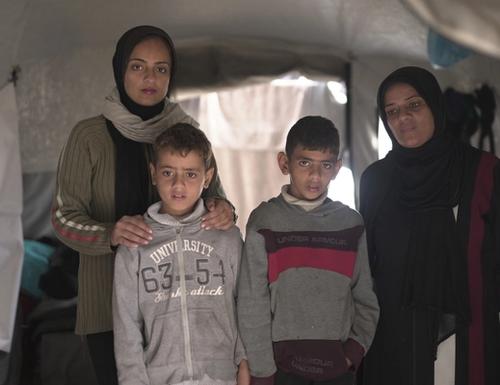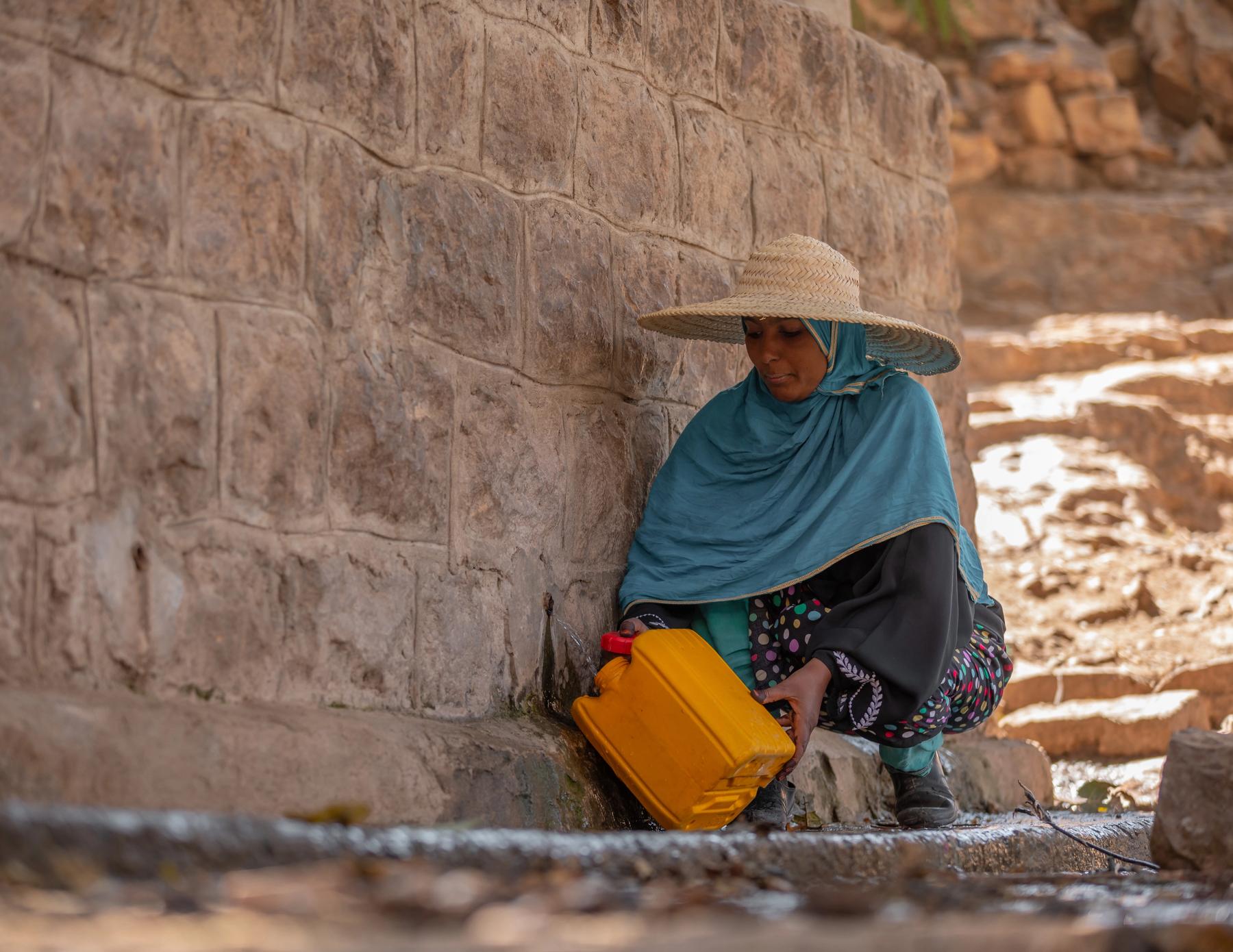
Yemen: Upon reaching the well, Rawya carefully fills her water container. The water is neither clean nor safe, but it is the only available source for her and her family. Photo:Ahmed Al-Basha / Oxfam Intermón
Poverty
What is poverty and can it be overcome?
What is poverty?
A person living in poverty lacks the money and resources to live life to their full potential.
People experiencing poverty may not be able to meet basic needs for food, water, shelter and healthcare.
Poverty is usually defined by how a person’s income compares to the rest of the population. There are different formulas for determining poverty levels around the world.
In Australia, the poverty line is set at half the median income level, which is $584 per person per week.
Globally, anyone who earns less than USD $3.00 per day is considered to be living in extreme poverty. Thanks to ambitious partnerships like the Millennium Development Goals and the Sustainable Development Goals, the world has made steady progress on reducing extreme poverty. But in 2020, the global poverty rate increased for the first time in decades because the COVID-19 pandemic hit those already experiencing poverty the hardest.
Right now, around 811 million people around the world live in extreme poverty. Therefore, we are not on track to achieve the Sustainable Development Goal of ending poverty by 2030.
What causes poverty?
Poverty is caused by more than a lack of money. Poverty is human-made and is caused by injustice. The unfair treatment of people — often based on their gender, race or religion — means they have unequal access to resources, opportunities and services. This power imbalance also means they are unable to voice their concerns or contribute to the decisions that impact their lives.
The causes of poverty are many, and they are deeply connected. Each one makes the others harder to escape.
Inequality and discrimination
When wealth and power are concentrated in the hands of a few, access to resources, education, healthcare and decision-making is systematically denied to others — often based on gender, race, class or disability.
Billionaire wealth reached $18.3 trillion in 2025, rising 81% since 2020, according to Oxfam’s own research. The $2.5 trillion rise in billionaire wealth in 2025 alone could have eradicated extreme poverty 26 times over. In the communities Oxfam works with, this inequality shows up in every aspect of daily life: who earns a fair wage, who owns land, whose voice counts.
Learn more about Oxfam’s work on economic equality.
Conflict and displacement
Armed conflict destroys infrastructure, displaces communities and collapses the food, water and economic systems that people depend on.
The World Bank found that 421 million people in conflict-affected economies live on less than $3 a day, and conflicts and related deaths have more than tripled since the early 2000s. Across the world, Oxfam’s humanitarian aid teams respond directly to the communities bearing the brunt of crises they did not cause.
Climate change and disasters
Climate change intensifies droughts, floods and extreme weather, destroying harvests and pushing communities deeper into poverty.
The IPCC has found that over 3.3 billion people live in conditions highly vulnerable to climate change. Those communities have contributed least to the climate pollution driving it. In Bangladesh, Nepal and across the Pacific, Oxfam works with communities on the frontline of a crisis that compounds every other cause of poverty. Learn more about what climate change is and why it matters.
Lack of education
Without access to education, people are cut off from skilled work, from understanding their rights, and from participating in the decisions that shape their lives.
Globally, 273 million children and young people are out of school, according to the UNESCO Global Education Monitoring Report 2026. In low-income countries, one in three school-age children are not in school. Girls are disproportionately excluded, which is a pattern Oxfam’s gender equality work challenges, because educating girls is one of the most direct routes out of poverty.
Unemployment and low pay
When work is unavailable, insecure or underpaid, people can’t meet basic needs even when they’re employed.
The ILO estimates that 402 million people globally want work but can’t find it, while two billion workers are in informal employment with no protections, no living wage and no recourse when things go wrong.
In tea plantations in Bangladesh, garment factories in Cambodia and farms across the Pacific, Oxfam works with local partners to ensure workers can learn about their rights and advocate for fair conditions.
Poor health, hunger and unsafe water
Poor health, hunger and lack of safe water are both causes and effects of poverty; each one deepens the others.
Today, 2.1 billion people — one in four — lack access to safely managed drinking water, and 1.4 million deaths every year are preventable with better access to water, sanitation and hygiene, according to the World Health Organization.
Oxfam’s water, sanitation and hygiene work delivers clean water and sanitation in emergencies and builds long-term solutions communities can maintain themselves.
Governance challenges and safety nets
When governance is underfunded, public services fail to reach the people who need them most. And when social safety nets are inadequate, a short-term shock like a flood, job loss, or illness can become a long-term crisis.
The World Bank identifies weak governance as one of the central barriers to poverty reduction, particularly in fragile and conflict affected states. Oxfam’s advocacy work demands that people in positions of power are held accountable to the communities they serve.
The cycle of poverty
Why does poverty exist generation after generation, even as the world grows wealthier? Because poverty can create barriers that limit access to opportunities and resources. While every person’s experience is different, these challenges can be passed from one generation to the next. Here’s how it can look for many people around the world.
- Born into poverty. Many children are born into challenging circumstances where access to food, water, and housing are limited.
- Poor health and nutrition. Limited access to nutrition and healthcare can affect health and wellbeing from an early age.
- Limited schooling. Financial pressure, illness and the need to work mean many children are more likely to miss school and not complete their education.
- Low-paid or informal work. These barriers to education and training can lead to less access to opportunity. Adults in poverty are more likely to end up in insecure, low paid work.
- The next generation. When families have fewer resources, their own children may face many of the same challenges to health, education and employment.
The cycle of poverty isn’t natural or inevitable. It’s sustained by inequality and injustice. The cycle can be broken if we can work together to change the rules and systems that lead to inequality and injustice.
Oxfam works to address the poverty cycle at every point. Through long-term development programs that help communities build skills and income, through humanitarian aid that responds when crises hit, and through advocacy that challenges the rules keeping people trapped in poverty. Read more below about how Oxfam is fighting poverty.
What are the effects of poverty?
The effects of poverty are devastating and they reinforce one another. Poor health makes it harder to work. Missing school can limit future earning capacity. Financial stress can damage relationships and mental health.
Health and life expectancy
Poverty can lead to negative health outcomes. A person living in extreme poverty is far more likely to experience poorer physical and mental health and a lower life expectancy. Today there is a 33-year life expectancy gap between the world’s longest and shortest-living countries, driven largely by poverty and unequal access to healthcare (WHO, 2025).
Oxfam’s humanitarian aid work ensures communities have access to basic healthcare when crises hit, and is designed to address the structural inequalities that make poverty itself a health risk.
Hunger and nutrition
A child born into poverty can have a difficult life. Their family may not have enough resources to meet their basic needs, and they may miss out on eating healthy food.
Globally, 150 million children under five experienced stunted growth in 2024, a direct consequence of poverty and food insecurity (UNICEF/WHO/World Bank, 2025). Oxfam’s food security programs support communities to grow and access enough nutritious food, and respond when crises push families into acute hunger.
Education
Children in poverty are more likely to miss school through illness, the need to work, or the inability to afford fees, uniforms or transport.
Around 273 million children and young people are currently out of school globally, with conflict and population growth the primary drivers (UNESCO GEM Report 2026). Girls are disproportionately affected. Oxfam’s gender equality work supports girls’ access to education as one of the most direct routes to breaking the cycle of poverty.
Housing and living conditions
In areas with a lack of affordable housing, people experiencing poverty may be forced to live in cramped or unsafe housing. In Australia, Foodbank’s 2025 Hunger Report found that nearly half of renting households experienced food insecurity, which is a direct consequence of housing costs leaving too little for food.
The housing affordability crisis is part of a larger problem: a system where corporations and the super-rich take more than their fair share, leaving ordinary people to cover the costs. Oxfam campaigns and advocates to change those rules.
Financial stress and mental health
Low-income families often experience financial stress, which may harm their relationships and mental health. People on lower incomes are up to three times more likely to suffer from depression and anxiety than those on higher incomes (UN 2024 report on poverty and mental health). Poverty is not just a lack of money. It shapes people’s ability to make choices, access support and advocate for themselves.
Women and girls
Poverty doesn’t affect women and men the same way. Women are more likely to be in poverty, have less access to land, money and business opportunity, and carry more of the unpaid care work (UN Women, 2026). UN Women says that by 2050, climate disruption alone could push up to 158 million more women and girls into poverty.
Oxfam’s gender equality work directly challenges the structural reasons women bear the heaviest burden of poverty.
The wider economy and society
When millions of people are locked out of education, healthcare and fair work, entire economies are held back. The World Bank finds that the world’s lowest-income countries continue to face economic challenges, even while wealthier economies have recovered. Addressing poverty is the foundation of a stable, productive and just society.
The effects of poverty are also its reinforcers. Poor health can limit earning. Limited education can narrow opportunity. Financial stress can deepen exclusion. Together, these effects can create additional barriers for individuals and communities, reinforcing the impacts of the broader social, economic and political factors that contribute to poverty.
Can poverty be overcome?
We believe that in a wealthy world, poverty is unjustifiable and preventable, that the present state of inequality and injustice must be challenged, and that with the right help, people can change their lives for the better.
Up until 2020, the world was making strong progress on reducing poverty. The COVID-19 pandemic stalled our progress, but we know how to get back on track.
Oxfam is working to address the inequalities that lead to poverty and injustice around the world. We work with local partners and communities so more people can gain the skills they need to earn an income. Through advocacy and campaign work, we challenge the unfair systems and structures in place that keep people trapped in poverty.
We won’t stop until everyone has a fair chance to live a decent and dignified life.
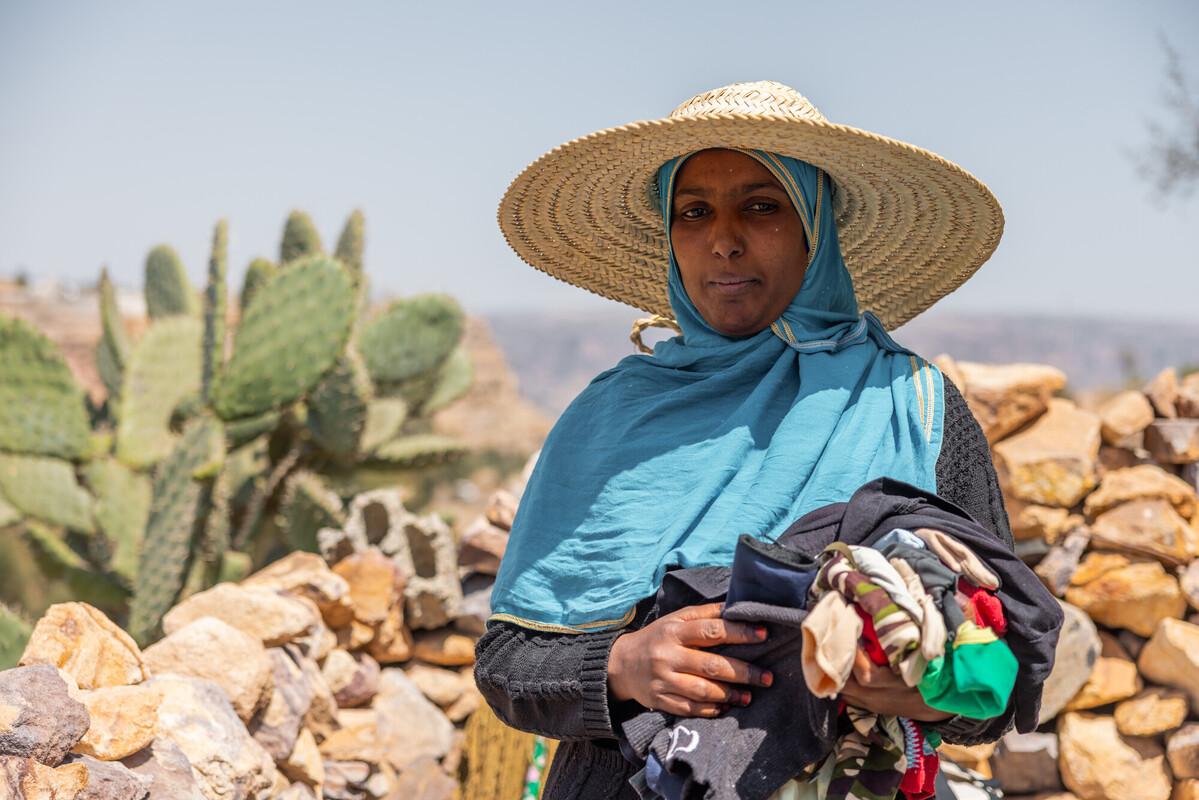
Yemen: Rawya gathers freshly dried clothes, washed with clean water—an everyday task that once required great effort, now made simple. Photo:Ahmed Al-Basha / Oxfam Intermón
Poverty around the world
- The extreme poverty rate is USD $3.00 per day (World Bank, updated June 2025).
- More than one billion people were lifted out of poverty from 1990 to 2015. (United Nations).
- Around 811 million people around the world live in extreme poverty (World Bank).
- The UN Sustainable Development Goal of ending poverty by 2030 is now off track — around 520 million people could still face hunger by 2030 (FAO, SOFI 2026).
- Around one in four people (2.1 billion) experience moderate or severe food insecurity (FAO/WHO/UNICEF, SOFI 2026).
- A woman dies every two minutes from causes related to pregnancy and childbirth (United Nations).
- One in five young women are married before they turn 18 (United Nations).
- 2.1 billion people (one in four) lack access to safely managed drinking water (WHO/UNICEF, 2025).
- In Australia, the poverty line is set at 50% of median income after housing costs, or AUD $584 per week for a single adult (ACOSS/UNSW, 2025).
- More than one in seven Australians (14.2%) live below the poverty line — 3.7 million people (ACOSS/UNSW, 2025).
- One in six children in Australia lives in poverty — 757,000 children (ACOSS/UNSW, 2025).
- 3.5 million households in Australia (one in three) experienced food insecurity in 2024–25 (Foodbank Hunger Report, 2025).
Millennium Development Goals
In 2000, the United Nations adopted the Millennium Development Goals. These were a set of eight goals for low-income countries to reach in order to improve global development by 2015.
The first goal set out in the Millennium Development Goals was to eradicate extreme poverty and hunger. Great progress was made in this period, but not all goals were achieved.
Sustainable Development Goals
In 2015, the Sustainable Development Goals replaced the Millennium Development Goals. The Sustainable Development Goals are a more ambitious set of 17 goals, each with specific targets for countries to work towards to improve the environment and global prosperity by 2030.
The first goal set out in the Sustainable Development Goals is to end poverty. This goal influences all the other Sustainable Development Goals.
How is Oxfam fighting poverty?
In this wealthy world we live in, poverty is completely unjustified. It is absurd that so many people live in poverty while the rich keep getting richer.
That’s why Oxfam is part of a global movement of people working to eliminate poverty by tackling inequality. Working with partners, allies, communities and our supporters, we are changing the world for the better.
Our long-term development projects work with communities to overcome the challenges they identify, and to implement the solutions they believe will work for them. Our advocacy and campaigning demands that people in positions of power are held accountable to the people they serve. And our humanitarian aid work assists those in life-threatening crises such as conflicts and disasters.
Poverty leads to a lack of life’s necessities, such as food, water, education and healthcare. So, we are also working with local communities to improve access to these vital resources and ensuring everyone benefits from them.