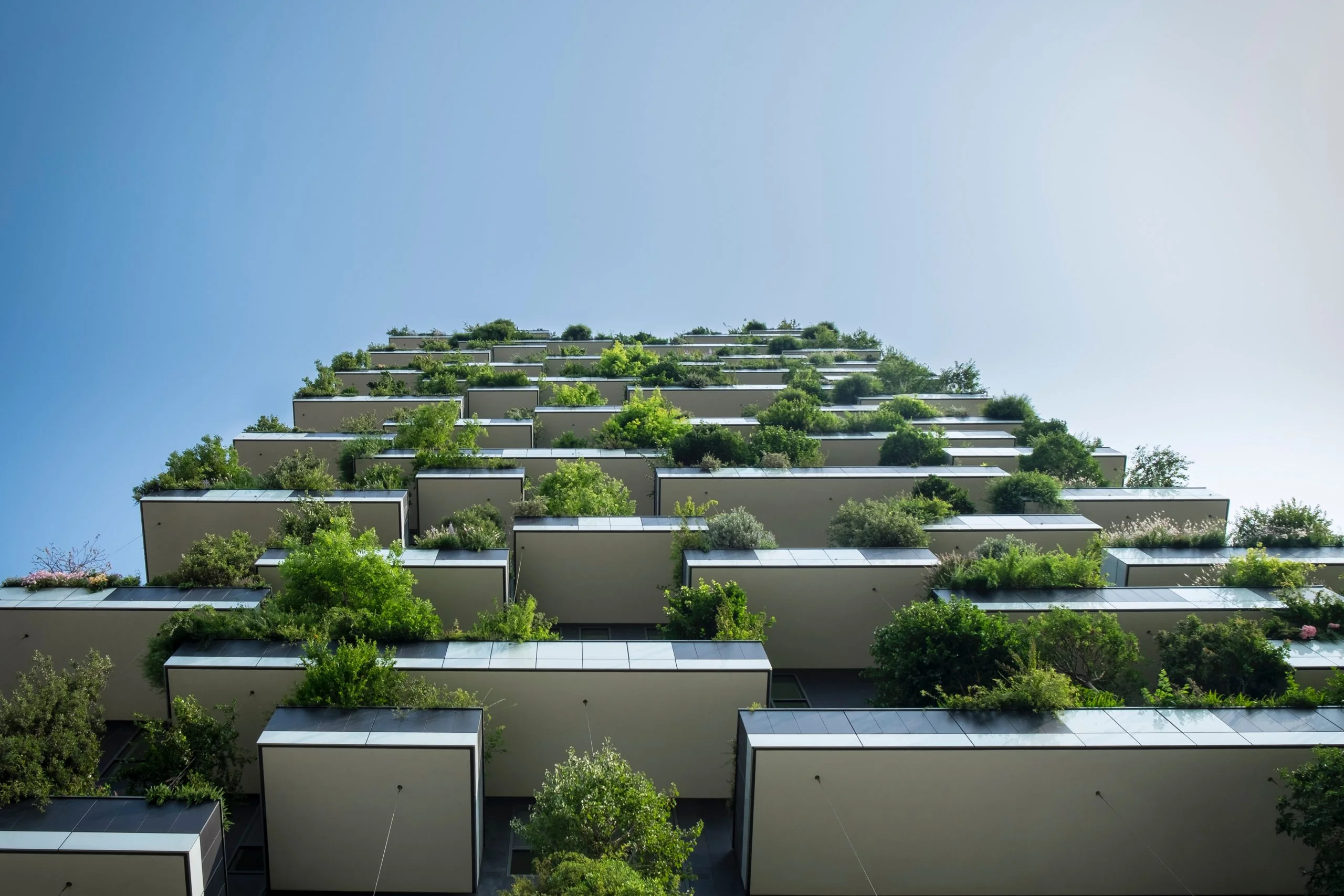
What is a sustainable city?
It is estimated that 50% of the world’s population now live in cities. With this migration into large urban centres, the difficulty of meeting the basic needs of millions has become an ever-increasing problem. Overpopulation, excessive consumption, pollution, and depletion of resources have presented environmental and health challenges in major cities. The need has never been greater to find solutions and reimagine urban landscapes.
In1994, the Aalborg Charter for sustainable cities and towns was created, and since then cities around the world have been leading the way in innovative and integrated approaches to sustainable living.
Supported by over 40 countries across the globe, the charter calls for a commitment to urban management, sustainable local economies, responsible consumption and demands legal action for violations upon health, social equity and justice. But just what makes a city sustainable?
Essential elements of a sustainable city
There is no single model of a sustainable city, rather they are a choice of different solutions designed to support long-term ecological balance. However, there are some fundamentals that are critical to the classification of every sustainable city:
1) Access to public resources
The wellbeing of residents is critical in sustainable cities, which means guaranteed access to quality education, safe health centres, easy to access public transportation, garbage collection services, safety and good air quality, among other modern living necessities. As populations and challenges change within cities, so too does the need for adaptive solutions to resources. For example, New York City created a post Hurricane Sandy action plan consisting of 250 ambitious infrastructure resilience initiatives including transportation, telecommunications, parks, insurance, and buildings.
2) Urban renewal actions
The renovation of public spaces is another fundamental characteristic of sustainable cities. Public streets, squares, parks, urban spaces as well as modern irrigation and waste management practices are vital aspects of sustainable living. They help preserve the cultural heritage and identity of a city through renovation and restoration.
Ideally, urban renewal in a city is done in a completely integrated way. For example, in Melbourne, there are rebates designed to incentivise property owners to adopt sustainable practices resulting in the efficient use of energy and water whilst reducing their waste to a minimum.
3) Reduction of CO2 emissions
The reduction of CO2 and other poisonous gases harmful to the ozone layer is perhaps the most significant measure of a cities environmental commitment. Lowering CO2 levels can be achieved through the long-term shift towards using renewable energies, vertical gardens, a good supply of alternative means of transport (e.g. bicycles, trains and electric buses) and household commitment to water and energy saving. One surprising city leading the way is Shenzhen, China, where in December 2013 a new fleet of more than 6,000 units of eco-friendly vehicles were introduced, becoming the largest zero emissions service fleet in the world.
4) Favouring ethical consumption
It is now well understood that over-consumption leads to excessive depletion of natural resources, greater waste and harmful by-products associated in the manufacturing process. Therefore it is critical that sustainable cities must promote and encourage ethical consumption, local food production and fair trade that both supports local supply chains and are environmentally friendly.
5) Reduce, reuse and recycle
Managers of a sustainable city must raise awareness about the importance of recycling and responsible consumption, and create infrastructure that allows for minimal waste. And change is possible in a short space of time if cities show leadership. San Francisco has implemented an 11-year-old zero waste program, which now sees 80% of all trash diverted from landfills. By 2020, the city hopes to bring that up to 100%.
Sound inspiring? These examples are not anomalies, with many other cities adopting a more sustainable model. From Munich to Bogota, from green energy to intelligent city infrastructure, there are some amazing and innovative examples of urban sustainability in action around the world, including these 10 that have just been awarded Climate Leadership awards.
What do you think about the move to cities that are more sustainable, clean and respectful of their environment and their inhabitants? Do you know of other initiatives, perhaps of local scope, that motivate this type of action? This could be the future of Australian cities, if we work together and apply pressure to our leaders to do the same.