Climate change in Indonesia is already reshaping daily life. People face rising seas, more intense storms and floods, and longer heatwaves that are disrupting their access to food, water and livelihoods. They’re living through some of the world’s most severe climate change impacts.
With thousands of low-lying islands and a population that depends heavily on farming and fisheries to work and eat, the Indonesian people are on the frontline of the climate emergency. But they’re also driving solutions — building preparedness, setting up early warning systems, and adapting with determination.
In this article, we’ll take a look at not just how our Indonesian neighbours are experiencing the climate emergency, but what they’re doing to adapt and thrive. So, let’s start with what’s happening right now.
What are the current impacts of climate change in Indonesia?
Rising sea levels are flooding whole suburbs, heatwaves are lasting longer, and unpredictable rainfall is disrupting crops and communities. From Jakarta’s sinking coastlines to disappearing fish, the signs of a warming world are getting stronger. Let’s look a little closer.
Rising sea levels
Sea levels are rising across Indonesia’s coasts, submerging small islands and putting parts of the capital, Jakarta, underwater.
Jakarta is sinking faster than any other city in the world (up to 25 centimetres per year) because of rising seas, increasing rainfall and excessive groundwater use, which compacts the ground.
In northern Java, saltwater now seeps into wells and farmlands, forcing families to relocate inland. Meanwhile, island communities report gradual shoreline loss that threatens homes and infrastructure.
More frequent extreme weather events
Floods, storms, droughts and landslides are becoming more frequent and severe as Indonesia’s climate warms. People can lose everything to a flash flood — their home and everything in it. Sometimes even their lives.
Storms have become harder to predict, and floods, landslides and droughts are affecting millions of people across the archipelago. In 2024 alone, more than 1,000 flood events were recorded nationwide.
Increasing food insecurity
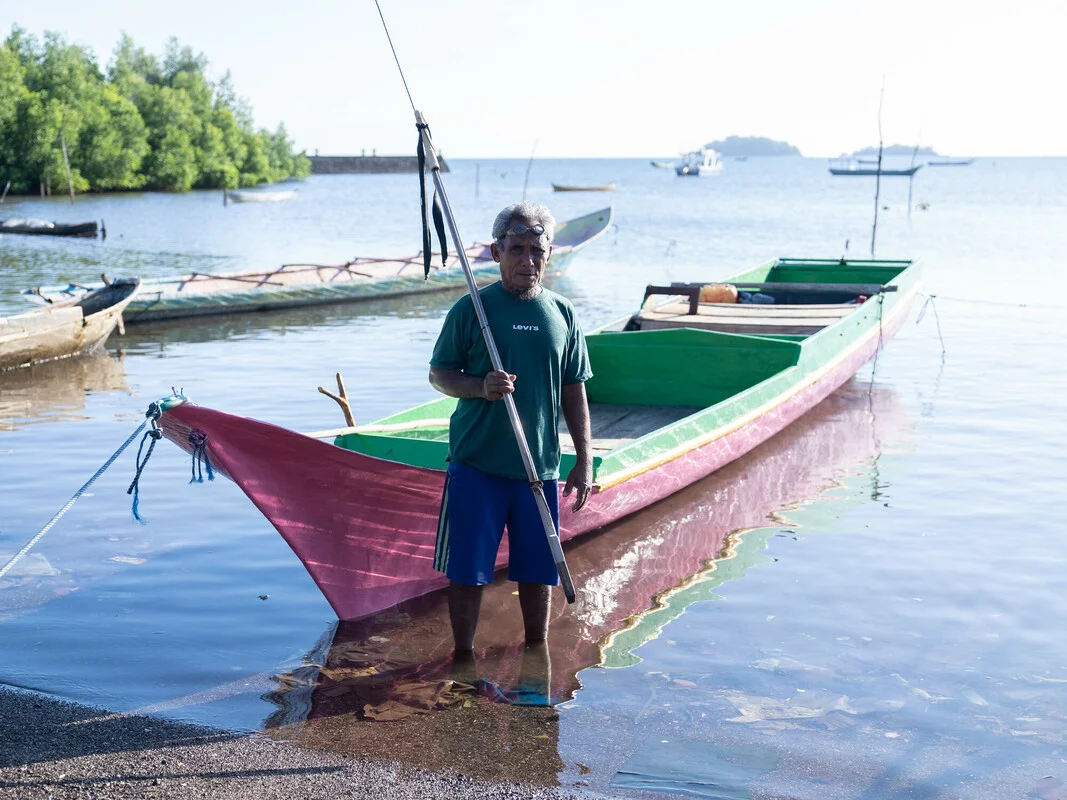
At the same time, prolonged dry seasons and shifting rainfall patterns are disrupting agriculture and threatening food security. Farmers are growing less rice and maize, while small-scale fishers are working with changing ocean temperatures and declining fish stocks. What does that all mean? Significantly less of Indonesia’s staple food is available to eat.
Compounding inequality
All of these pressures compound existing inequalities — hitting hardest in regions where work and income depend directly on natural resources. And hitting harder still for women, girls and gender diverse people who also usually carry the burden of unpaid care and household labour.
And yet, despite the strain, communities continue to adapt. With your support, Indonesians are diversifying their crops, installing local early-warning systems, and transitioning to renewable energy. Learn more about how you can support Oxfam’s work in Indonesia.
Future risks from climate change in Indonesia
The decades ahead will bring greater pressure on Indonesia’s people and environment. IPCC scientists project that if high emissions continue, average temperatures could rise by up to 2.1°C by mid-century (2040-2060).
This kind of temperature rise in Indonesia would dramatically intensify heat, floods and droughts. Coastal areas would face more tidal flooding, while inland communities could struggle with erratic rainfall and water shortages.
Without stronger action, climate impacts could significantly slow Indonesia’s economic growth and force many millions to adapt or relocate. Many families living near the coast may need to move as rising seas and tidal floods make some areas unlivable. Jakarta alone is home to 11.6 million people.
Heatwaves are also expected to become much longer. With that level of global warming in Indonesia, heat stress will increasingly limit outdoor work, with much tougher working conditions for outdoor labourers. Coral reefs and fish stocks will decline as oceans warm, threatening both food security and tourism.
But there is hope — the future isn’t fixed. Indonesia’s actions can still protect livelihoods and shape a safer, more just future for generations to come. Support Indonesia to restore essential ecosystems, transition to renewable energy and encourage community adaptation.
What causes and contributes to climate change in Indonesia?
Indonesia is both vulnerable to climate change and a major contributor to it. Land-use change, peat fires and coal power make Indonesia one of the world’s largest carbon emitters. That’s land use, forestry, and energy — the very sectors that also sustain its economy and people.
The biggest driver is land-use change. When forests and peatlands are cleared or burned for agriculture, vast amounts of carbon dioxide are released into the atmosphere. Peatlands in particular have large amounts of carbon trapped within them, and Indonesia holds some of the world’s largest tropical peatlands.
Energy use is another growing source. Coal remains Indonesia’s main source of electricity. At the same time, rapid industrial growth and rising demand for transport fuel continue to drive emissions upward.
Indonesians recognise this and they are acting. The government has pledged to reach net-zero emissions by 2050, expand renewable energy, and protect critical carbon sinks. There are plans to increase solar, geothermal and hydropower capacity through its Just Energy Transition Partnership (JETP).
There’s clear tension at the heart of the climate crisis in Indonesia: finding the balance between economic growth, poverty reduction and environmental protection. It’s a difficult balance, but local organisations are finding ways to achieve it.
Adaptation and resilience: local leadership in action
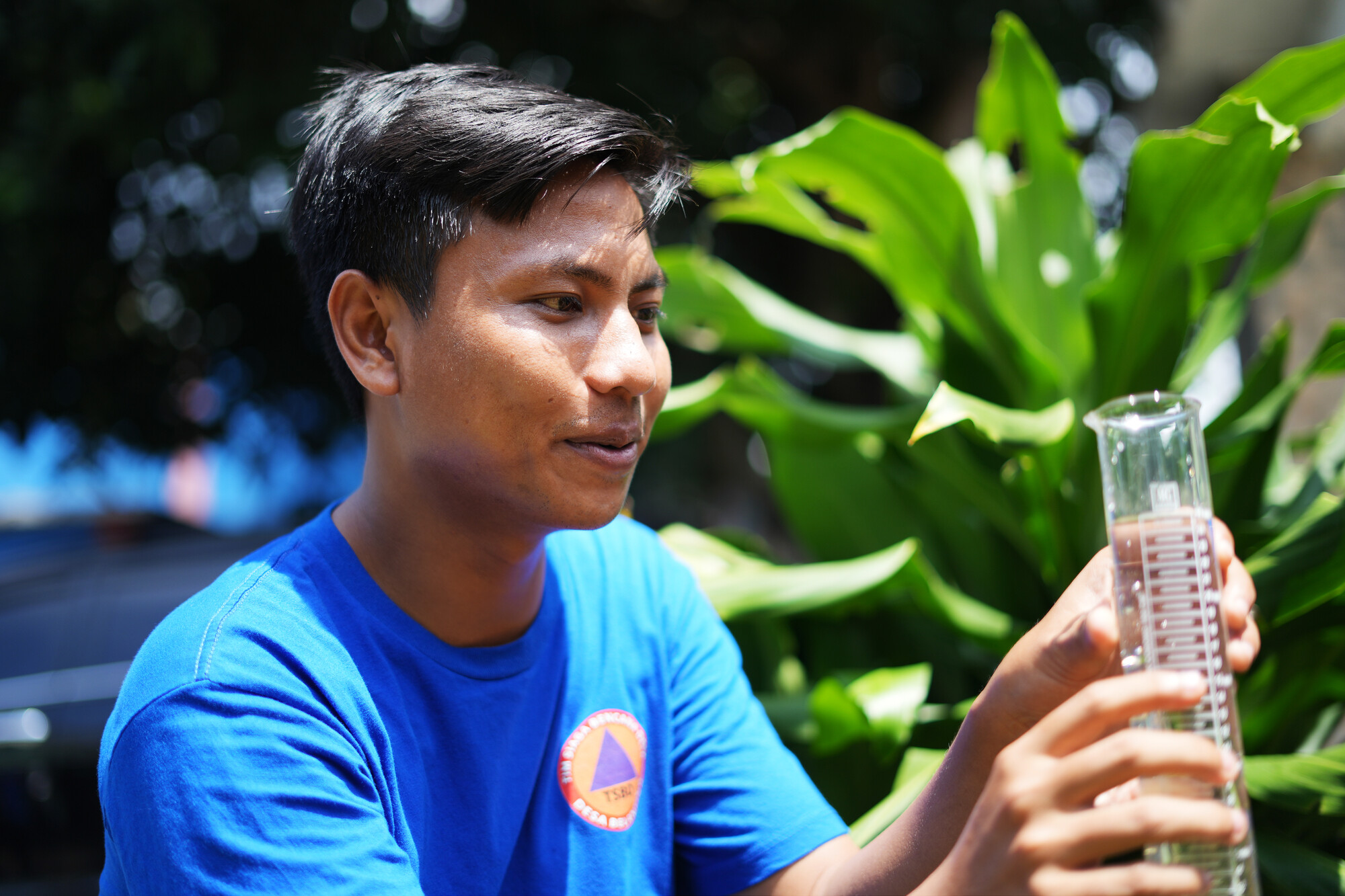
Across Indonesia, communities are adapting in smart, practical ways. In Lombok, for example, local groups supported by Oxfam are using rainfall data to predict when floods might hit — and to act before they do.
When certain thresholds are reached, community members spread warnings so that people can move animals, protect equipment and check on neighbours. This early action saves lives and livelihoods.
The approach is called anticipatory action. It’s simple but powerful: combining local knowledge with weather forecasts so families can prepare before a disaster.
Similar systems are being tested in other provinces, with women often leading planning and coordination. Alongside this, farmers are shifting to more climate-resilient crops and building stronger storage facilities for seed and grain. Local women’s networks are scoping and establishing renewable energy projects.
Oxfam works alongside local partners to strengthen these efforts, helping communities plan, secure resources, and advocate for the support they need. Adaptation is more than surviving change; it’s about shaping the future, too.
Your donation to Oxfam’s Climate Appeal helps fund this kind of community-led resilience, giving people across Indonesia the tools and confidence to prepare, adapt and thrive in a changing climate.
How Oxfam is working in Indonesia
Oxfam collaborates with local organisations across Indonesia to help communities prepare for climate shocks, strengthen adaptation, and build renewable energy systems. Our focus is long-term change that keeps people safe, informed and in control of their futures.
You can add your support
Every donation to Oxfam supports community-led programs in Indonesia. Here’s what your support can help make possible:
- Stronger disaster preparedness — through community-led planning, early warning systems, and local training
- Support for women leaders — especially in climate advocacy and community organising
- Access to clean water and sanitation — critical during disasters and for long-term health
- Local climate solutions — like food security programs, sustainable livelihoods, and community education
- Stronger regional advocacy — helping communities amplify their voices on the global stage
Donate to Indonesia now
Help us work for justice and equality. For the Indonesian people’s right to earn a reliable income and have access to safe water and a viable food network (especially as climate shocks occur more frequently).
By donating today, you’re backing the leadership of Indonesian communities facing climate extremes head-on. Every contribution helps provide practical tools, long-term support, and builds better systems for the future.
Donate now to support climate action in Indonesia.
You can also explore different ways to give with our current appeals, or learn more about Oxfam’s work on climate justice and Indonesia’s rising sea levels.
Oxfam acknowledges the support of the Australian Government through the Australian NGO Cooperation Program (ANCP).