By Tom Widdup, Close the Gap Campaign Lead
You might already be aware that Aboriginal and Torres Strait Islander Peoples die 10–17 years younger than other Australians.
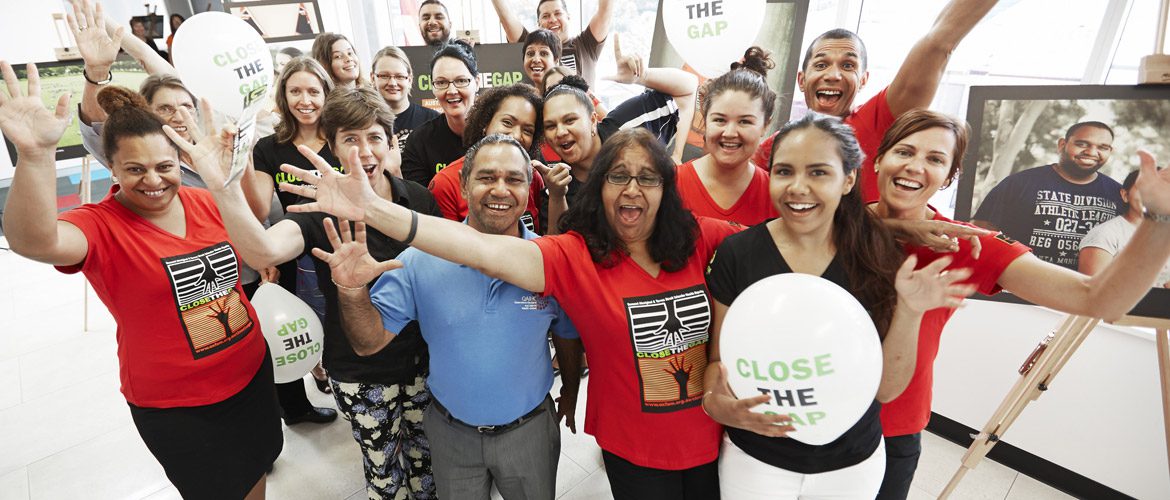
What you may not know is that more than 1,500 Australians have registered a National Close the Gap Day (NCTGD) event to close this gap and achieve Indigenous health equality by 2030. We estimate that an extraordinary 192,000 people across Australia will attend a NCTGD event this year.
But no matter who you are, and whether you’re attending an event or not, you can still help Close the Gap. By taking one or more of the five actions below, you will be showing your support for Aboriginal and Torres Strait Islander health equality.
It will also help ensure our government recommits the necessary resources to close this appalling health gap.
So here’s what you can do:
1. Sign the Close the Gap Pledge, then take the 30 for 2030 Challenge
Demonstrating community support for Indigenous health has been pivotal to the success of the campaign so far. That’s why signing the Close the Gap pledge is the number one thing you can do!
We know that building support for health equality in this way we will help keep the pressure on the federal and state governments to take strong action. Once you’ve signed the pledge, help build the movement by taking the 30 for 2030 Challenge.
2. Have a discussion
The Close the Gap campaign has helped ensure Indigenous health remains part of the national conversation. One of the most important things ways you can do is watch and share the Close the Gap video. Including the stories of two Indigenous health workers on Palm Island, Queensland, this is a great video to share with your friends before encouraging them to sign the Close the Gap pledge.
3. Share your stories
Tell your networks, tell us and tell your political representatives that you care about Indigenous health equality. Please use the hashtag #closethegap when sharing on social media (Facebook, Twitter and Instagram). You may want to include your local state or federal member in your tweets.
#closethegap Tweets
4. Tell your local MP that you care about Indigenous health
Our political leaders have the ability to ensure that change happens. Write, email, call and tweet your local member (both state and federal). Tell them you care about Indigenous health and that you expect to achieve health equality by 2030.
Please copy in the Federal Health Minister, Sussan Ley.
www.twitter.com/SussanLey – Farrer@aph.gov.au
5. Make a Donation
Donating to the campaign will help ensure the Close the Gap Coalition of organisations (including Oxfam) can keep Indigenous health equality at the forefront of our national agenda.
With your support we can be the generation that closes the gap!