By Robin Narciso, Oxfam Communications and Information Officer, Phnom Penh.
Talking about gender is never easy and it’s even harder when you’re talking about it in relation to hydropower infrastructure. As it is, hydropower can be a sensitive topic; once you add the gender nexus you have an explosive mix.
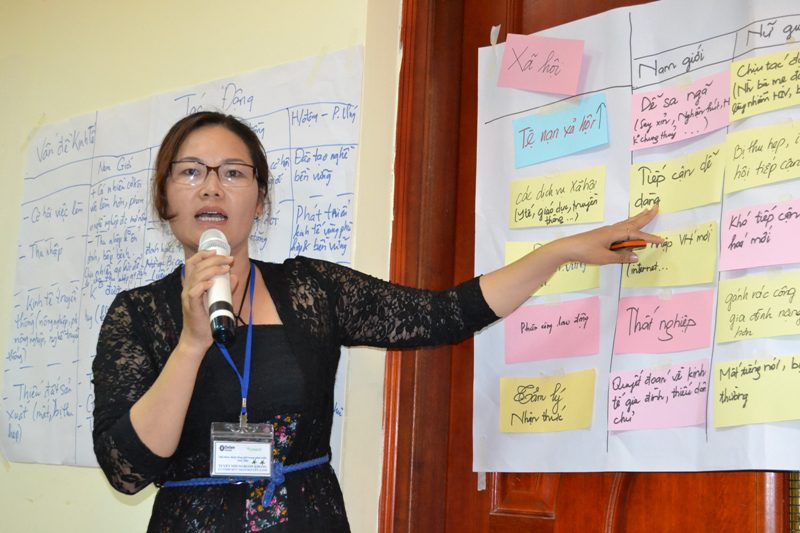
During our session at the Challenge Program Forum on Water, Food and Energy I asked my group to consider these questions:
How are the women in your community/country impacted by hydropower? Are men impacted differently? Does it depend on the cultural context of each country in the Mekong region? Would hydropower be managed more sensitively if your female colleagues were leading the project?
And, as anticipated, the answers didn’t come easily.
Challenging the role of gender
The evening before this session, Oxfam’s team were reviewing and finalising the questions we wanted participants to discuss. The idea of this exercise was to spark a conversation not only on the different impacts of hydropower on women and men but also on the proactive role that women could take around all the phases of a hydropower project.
Some questions focused on how women could be more involved in the research on gender practices for hydropower business, others on how women could contribute to planning, implementation and assessment in resettlements.
This session was not an isolated event, but a culmination of a series of three consultation workshops that Oxfam held in the past months in Vietnam, Laos and Cambodia.
Oxfam gender impact assessment manual for hydropower
Like the previous workshops, this session tested some of the assumption and findings that were used to create the Oxfam Gender Impact Assessment Manual for Hydropower. The manual, which was officially launched during the forum and should support hydropower developers including gender practices during all phases of their projects.
In the future, the hope is that the subject of gender and hydropower will be more accessible and that incorporating the perspectives of impacted women and girls into the design of a hydropower project will become a widespread practice.