Indonesia’s sea levels are rising faster than the global average — 4.97 mm per year on average, with some areas rising much, much faster. 4.97 mm. A small number, but for the world’s largest island nation, the impacts are already proving catastrophic.
Tidal floods are reaching further inland. Wells and rice fields are turning salty. In some coastal areas, homes now sit permanently below sea level.
In Indonesia, sea level rise is a slow-moving emergency and it’s already reshaping daily life for our regional neighbours. Some of the causes are global, but the impacts are deeply local — felt in villages, fishing ports and cities across the archipelago.
In this article, we’ll explore what’s causing Indonesia’s rising sea levels, how it’s affecting communities, and how, with your support, Oxfam and local partners are helping people adapt before the next storm hits.
What’s causing Indonesia’s sea level rise?
Sea levels in Indonesia are rising faster than the global average due to warming oceans, melting ice sheets and local environmental pressures. Let’s look closer.
Climate change
Sea levels are rising worldwide because the planet is heating up. As global temperatures climb, glaciers and ice sheets melt, adding more water to the oceans. Warmer seawater also expands (a process known as thermal expansion). These two effects together explain much of the steady global increase measured by scientists at the Intergovernmental Panel on Climate Change.
But Indonesia’s challenge goes beyond global trends. Local conditions make the problem worse. Land subsidence, groundwater extraction and mangrove loss are accelerating the impact of Indonesia’s sea level rise.
Land subsidence
Along much of the coast, the ground itself is sinking in a process called land subsidence. This happens when too much groundwater is pumped from underground aquifers, causing the soil to compact and drop. Parts of North Jakarta are sinking by up to 25 centimetres each year and now sit permanently below sea level.
Mangrove removal
At the same time, the removal of mangrove forests and coastal vegetation has stripped away natural barriers that protect against erosion and tidal movement.
Indonesia is home to the largest area of mangrove forest on Earth, but it’s also lost more than 40% of its mangroves since 1980. That makes it the fastest rate of mangrove destruction in the world. Mangroves are an essential barrier against sea level rise in Indonesia, shielding coastlines and helping communities resist storm surges. They also store immense amounts of carbon.
Together, these global and local forces are reshaping Indonesia’s coastline. And without major action to curb global emissions and strengthen local protections, the ocean will keep claiming more land.
How sea level rise is affecting Indonesian communities right now
Rising seas are flooding homes and farmland across coastal Indonesia, forcing families to move further inland and threatening infrastructure and food security.
Coastal flooding
Coastal flooding is no longer seasonal. It’s becoming a regular part of life for many families. Entire suburbs in northern Java now flood several times a month, forcing people to lift furniture, block doorways, and rebuild homes again and again.
In parts of Jakarta, the tide pushes through drains and up from the ground, filling streets even on clear days. Some neighbourhoods sit more than a metre below sea level, protected only by makeshift embankments. These areas face a double threat: sinking land and rising water.
Disrupting farming and fishing — threatening food security
For fishing and farming communities, the problem runs deeper. Saltwater is seeping into wells and farmland, turning once-fertile soil into mudflats. Rice yields are falling. In some villages, families have shifted to aquaculture — building ponds for crabs and shrimp on land that was once used for crops.
It’s not just land crops that are being threatened, either. In Indonesia, 2.7 million people earn their living by fishing, and the nation is the most reliant on fish in the world. Fishers must now travel further to find catches (if at all) as fish breeding grounds disappear.
Submerging small islands
Small islands in places like Riau and Cenderawasih Bay are also shrinking as coastlines erode. Some islands have already lost entire rows of homes to the sea. Others are becoming too dangerous to live on as waves cut closer each year.
Straining infrastructure
Infrastructure is under strain, too. Roads and ports flood more often, and repairs cost more each time. The Indonesian National Disaster Management Agency (BNPB) recorded more than 1,000 flood events in 2024, many in low-lying coastal districts where tides now reach further inland.
Despite all of these challenges, local communities are finding ways to adapt — from raising homes on stilts to restoring mangroves that can soften the impact of each wave. With the right support and resources, they’re preparing for a stronger future amidst significant change. Learn how you can add your support with Oxfam’s Climate Appeal.
What’s at risk if sea levels keep rising?
The World Economic Forum says if current trends continue, large parts of North Jakarta could be underwater by 2050. Thousands of small islands across eastern Indonesia also risk partial or total submersion.
As coastlines erode, families lose farmland and fishing grounds, and some may be forced to relocate entirely. The changing shape of Indonesia’s islands could even affect its archipelagic status and alter national boundaries.
The significant economic cost is growing, but the human cost is even greater. Many people will lose their main source of income. Saltwater is already damaging rice fields and ponds that once produced shrimp and fish. Coastal erosion has swallowed roads and farmland, cutting people off from markets and healthcare. Those who rely most on the sea, like fishers, farmers and day labourers, often have the fewest resources to recover.
The impacts aren’t felt equally. Women, girls and gender-diverse people carry the extra burden of care when floods hit — fetching clean water, protecting children, and helping families rebuild. When income drops, they’re also the first to go without education or even food. Sea level rise in Indonesia is deepening inequality for women and low-income households.
For many people, these pressures threaten their sense of identity and belonging. Losing a home to the sea can mean losing the community, language and traditions tied to it. That’s why local leadership and early preparation matter so much.
There’s hope. With your support, communities can work together to adapt to rising seas (without losing their cultural identity). Learn about Oxfam’s work in Indonesia or donate today.
Communities are adapting and building resilience
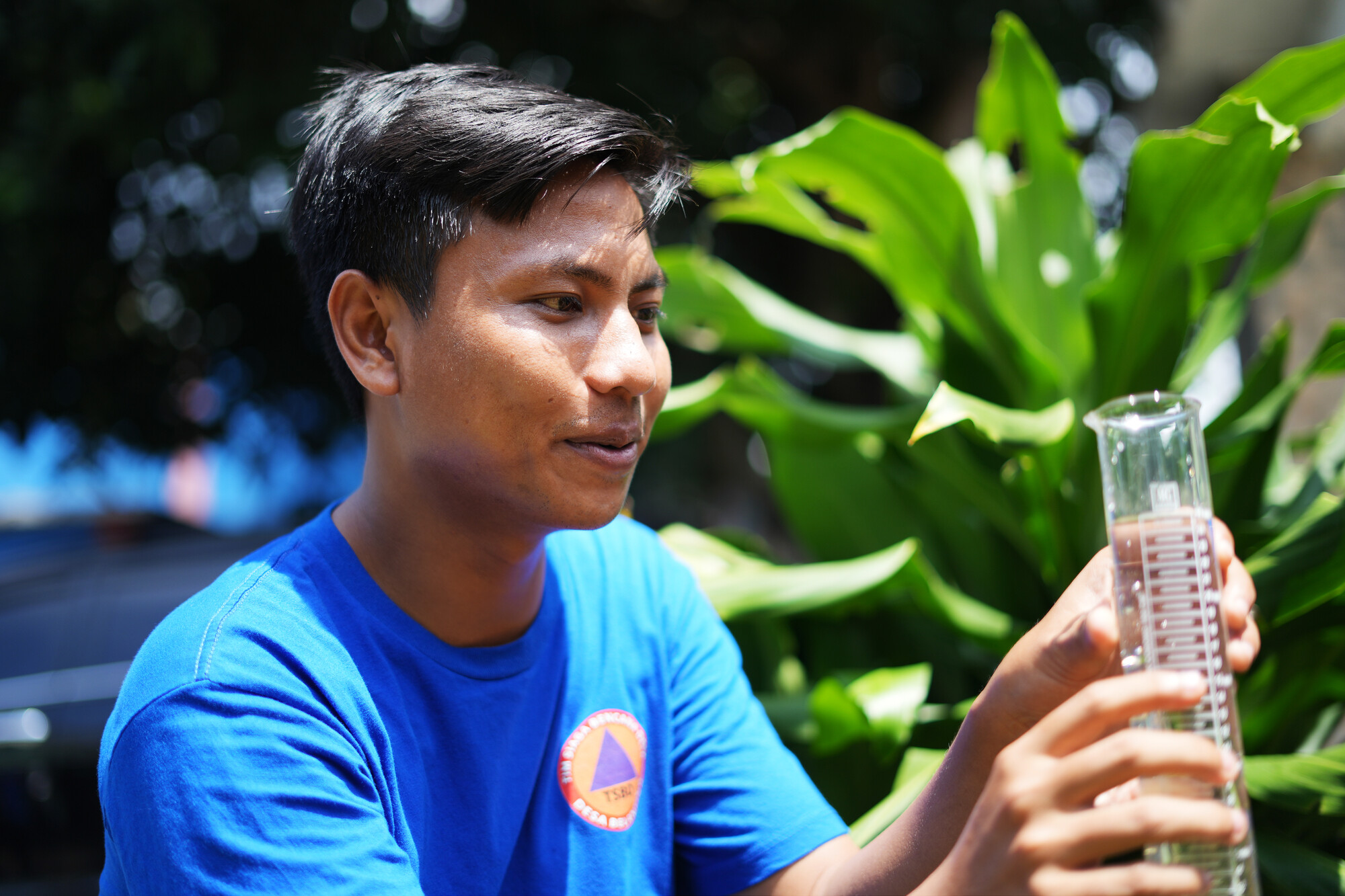
Our Indonesian neighbours are adapting to life on a changing coastline. In Lombok, villages are learning how to use rainfall and tide data to act before disasters hit. When warning thresholds are reached, community members spread alerts, move livestock, and protect essential supplies. It’s a simple approach that saves homes, livelihoods and lives.
Women are planning and developing local renewable energy systems, supporting a gradual transition. Farmers are also diversifying crops and experimenting with salt-tolerant varieties.
These practical solutions reflect the same idea: local knowledge, backed by the right support, can turn adaptation into opportunity.
Oxfam works alongside these local partners to strengthen their efforts. This collaboration helps communities prepare for climate shocks, strengthen adaptation, and build renewable energy systems. Our focus is long-term change that keeps people safe, informed and in control of their futures.
How you can help today
Sea level rise in Indonesia is a slow-moving crisis, but it requires fast, collective action. Local leaders are already showing what adaptation looks like in practice.
By donating today, you’re backing the leadership of Indonesian communities facing climate extremes head-on. Every contribution helps provide practical tools, long-term support, and builds better systems for the future.
Donate now to support climate action in Indonesia.
You can also explore different ways to give with our current appeals, or learn more about Oxfam’s work on climate justice and climate change in Indonesia.
Rising seas may be inevitable — but loss and inequality don’t have to be. Together, we can help Indonesia’s coastal communities adapt with strength, dignity, and hope.
Oxfam acknowledges the support of the Australian Government through the Australian NGO Cooperation Program (ANCP).