In his opening address to the UN Climate Summit in Durban, President Zuma of South Africa highlighted how the pacific island nation of Kiribati is set to become the first nation forced to relocate due to climate change. He also talked about the vulnerability of many Africa nations to climate change such as Ethiopia which along with Kenya and Somalia is current facing the biggest drought of the 21st century.
Even with these key themes shaping the start of the talks, there is a sense of hope amongst the thousands of environmentalists and young people attending the UN Climate Summit.
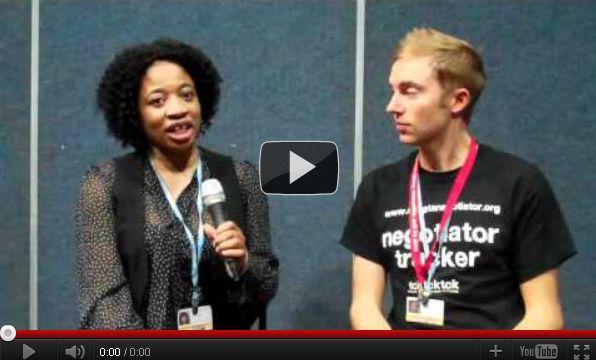
I discussed the hopes of Africa NGOs with South African Campaigner, Bertha Chiroro from the Global Campaign for Climate Action – watch the video of this interview.
Personally, I’m hopeful that Australia, as the developed country most vulnerable to climate change and the highest per-capita polluter in the OECD, can take some important next steps in tackling climate change.
This includes ensuring that the Green Climate Fund, devised to help poor in developing countries, is up and running by 2012. Australia’s negotiators also need to deliver on promises to fill the fund and support calls for new ways to raise funds such as a global levy on shipping emissions (also known as ‘bunkers’) and a financial transactions tax (FTT). A FTT or Robin Hood Tax is a tiny tax of about 0.05% on transactions like stocks, bonds, foreign currency and derivatives which could raise money to fight climate change and alleviate poverty.
I also hope that rich countries including Australia can keep the Kyoto Protocol alive and increase their emissions cuts so as to keep warming below 1.5°C and so protect the most vulnerable countries. A report recently released by Oxfam shows that extreme weather will greatly impact on food production, pushing up prices with severe consequences for the world’s poorest people.
Tomorrow I will be meeting with Australia’s Ambassador, Louise Hand so please send your questions in.
Clancy Moore is blogging from the UN Climate Summit in Durban, South Africa (November 28th – December 9th)