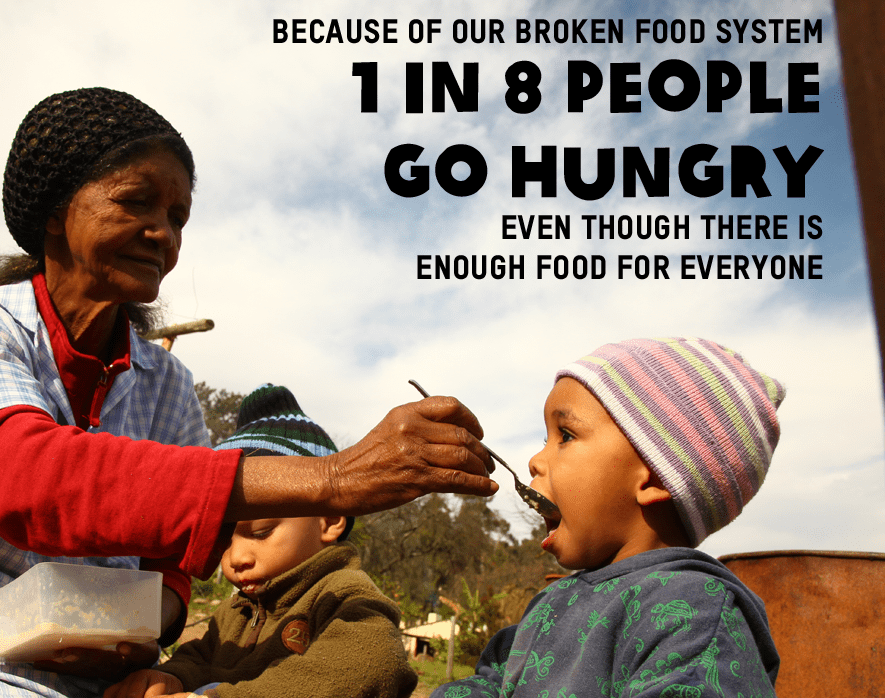
Today 870 million or 1 in 8 people will go to bed hungry. Not because there isn’t enough food. But because of the deep injustice in the way the system works. And because too many of the ways we grow today are using up and destroying the natural resources on which we all rely.
Food and oil prices. Flat-lining yields. Climate change. Unfair trade. Failing markets. Inequality between men and women. Land grabs. All of these issues are connected. And all of them are contributing to a global food system that is dominated by a few powerful governments and companies.
The recent growth in ‘land grabs’ is one issue having a devastating impact on people’s ability to access food. Recent data indicates that at least 33 million hectares of land in low and middle income countries has been sold off to foreign investors since 2001 – an area 8 times the size of the Netherlands. It’s not necessarily a problem when wealthy companies invest in agricultural land in poor countries for commercial use. But too often families are being kicked off their land in dodgy land deals. These land grabs are leaving people hungry and homeless.
Climate change is also hitting farmers hard. Rising temperatures will cause crop yields in many areas to fall – possibly to half of their current levels in some African countries. And changes in seasonal rainfall will make it harder for farmers to know when to sow, cultivate and harvest – and ultimately to grow enough to eat and earn a living.
Following a century of increases, growth in crop yields is starting to flag – because soils can only produce a certain amount of crops – no matter how much fertiliser you spray on them. And all that fertiliser also has a massive carbon footprint because of the energy needed to create it and because of all the nitrates it pumps out.
Fixing the broken food system requires changes from companies and governments.
Find out more about how you can share a meal and help GROW a future where everyone has enough to eat
Find out more