Did you know that 98% of people think we live in a world of statistics?
Whilst I just made that statistic up, I’ve found myself drowning in whirlpool of statistics and figures this election. From Kevin Rudd and Tony Abbott’s approval (or disapproval) ratings, potential swings in marginal seats and claims about budget black holes, jobs created and jobs cuts.
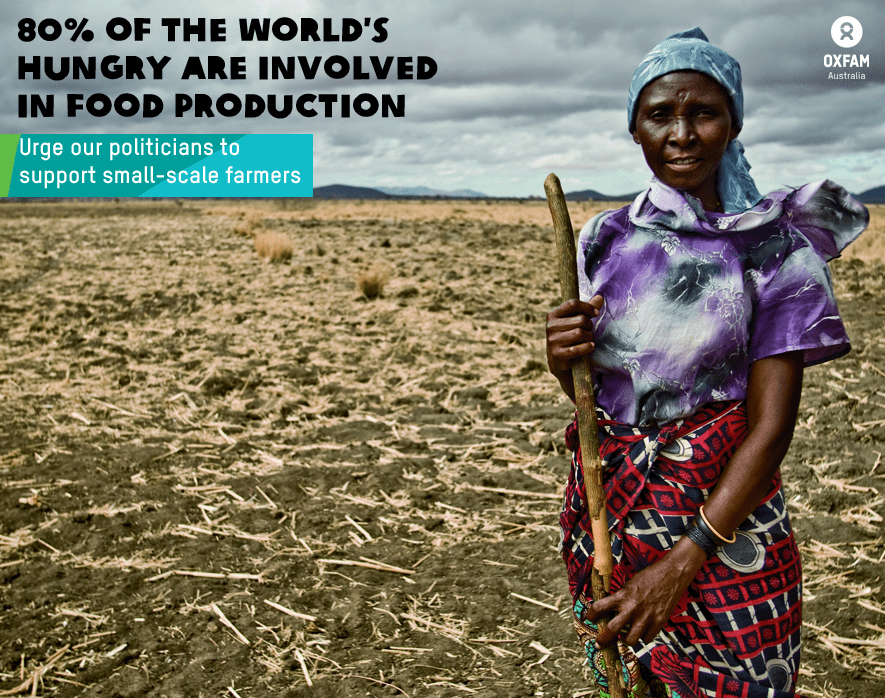
One fact that hasn’t got much airtime is that 80% percent of the world’s hungry people are involved in food production. Yes, that’s right, 80% of the 870 million people going hungry are from communities involved in producing food. They farm small plots of land. Tend cattle, fish, or even work as labourers. They are surrounded by the means to produce or collect food, yet they go hungry.
Why? Because, small-scale food producers have been neglected by governments and companies for decades.
What’s more, small-scale farmers often lack access to markets and resources like land, credit, training, storage facilities and technology. This in turn makes them more vulnerable to extreme weather events.
Travelling in Vanuatu recently, I heard a story about a family losing their entire taro crop due to tidal inundation. Slow changes in temperature and rainfall patterns are, in many areas, causing a steady decline in yields. This makes it hard for poor farmers to know when to sow and grow their crops.
Whilst there is no silver bullet solution to fix our broken food system, Australia can play a lead in tackling global hunger. After September 7th, the elected Government should commit to doubling its aid to food security by 2016, and introducing a fourth pillar of the food security aid program aimed at small-scale food producers.
This money will help them get more food to market, gain access to important resources like land, water and fertilisers, adapt to changing weather patterns and grow more food. Importantly, it will help them feed their families and their communities.
By Clancy Moore, Oxfam’s GROW Campaign Coordinator

Find out more about how you can share a meal and help GROW a future where everyone has enough to eat