Every year on June 20, the world pauses to reflect on World Refugee Day. We honour their strength, acknowledge their rights, and ask: what more can we do?
More people are living in forced displacement today than at any point in recorded history.
So this year, that question carries particular weight. The 2026 theme is Courage, and it belongs to all of us.
At Oxfam Australia, we work alongside local partners delivering life-saving humanitarian relief and pushing for long-term, systemic change that makes displacement less likely. This is what World Refugee Day means to us.
What is World Refugee Day?
World Refugee Day is an international day led by the United Nations to honour refugees across the globe. It falls every year on 20 June, shining a light on the rights and contributions of people who have been forced to flee.
The day has its roots in Africa Refugee Day, which the Organisation of African Unity observed on 20 June. The first global World Refugee Day was observed in 2001, timed to coincide with the 50th anniversary of the 1951 Refugee Convention.
If you’re not aware, the 1951 Refugee Convention is the landmark international agreement that established the legal definition of a refugee and the fundamental principle that people fleeing persecution have the right to seek safety in another country.
That legal framework (and the political will to uphold it) remains as important today as it was 75 years ago. Perhaps more so.
When is World Refugee Day 2026?
This year, World Refugee Day falls on Saturday, 20 June 2026. In Australia, the occasion extends across an entire week. Refugee Week in Australia in 2026 runs from Sunday 14 June to Saturday 20 June, with the theme A Million Stories.
The theme helps us celebrate a remarkable milestone: since 1947, Australia has issued one million permanent humanitarian visas. One million people fleeing conflict zones, persecution and displacement, who have gone on to shape the communities we all live in.
This year also marks the 40th anniversary of Refugee Week, a celebration that began right here in Australia before becoming a global movement.
Events will take place across the country throughout the week. You can find what's happening near you at the Refugee Week events calendar.
The 2026 World Refugee Day theme: Courage
Courage is not an abstract idea. For someone who has fled brutal violence and walked for days through dangerous terrain, or arrived in a country whose language they don't speak, courage is what gets you through the day. And then the next one.
The 2026 World Refugee Day theme asks us to see that courage clearly. Not as extraordinary, but as the everyday reality of millions of people rebuilding their lives under conditions most of us will never face.
But courage isn't only theirs to carry. That’s the deeper demand of this year's theme. So what does courage look like for the rest of us?
Solidarity. It takes courage to stand up and be heard — to donate, to demand better policies, to say clearly that what is happening is not acceptable.
We celebrate World Refugee Day because recognition is itself a form of solidarity. Celebrating courage is a form of resistance against the dehumanisation that is sometimes politically weaponised. That dehumanisation makes it easier for governments to turn people away and cut aid budgets. To treat displacement as someone else's problem.
This World Refugee Day, will you stand with us for a more just world? Donate today.
Forced displacement: the scale of the crisis
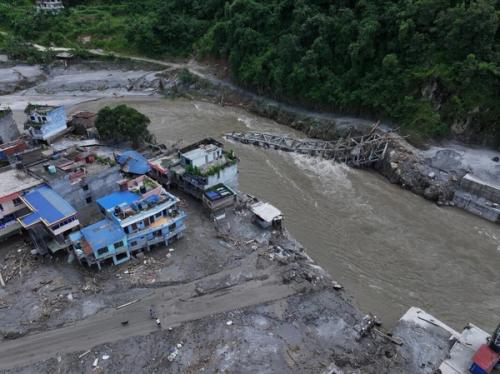
By the end of 2024, 123.2 million people had been forcibly displaced worldwide. That’s 1 in every 67 people on Earth. Displacement has nearly doubled in a decade. The main drivers are conflict, persecution and violence, but climate is an increasingly powerful force, particularly in our local Asia-Pacific region.
The injustice is impossible to ignore. The communities contributing least to climate change are the people bearing the highest costs. The people who are least responsible for the emissions driving extreme weather, flooding, and the slow erosion of coastlines are the people who are losing their homes to climate change.
This year, Australia will become home to the world’s first official climate migrants — some of our Pacific neighbours from Tuvalu.
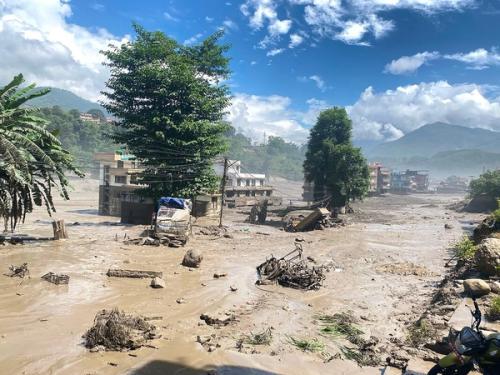
Across South and Southeast Asia, climate disasters are compounding the effects of conflict and poverty, pushing people from their homes with nowhere certain to go.
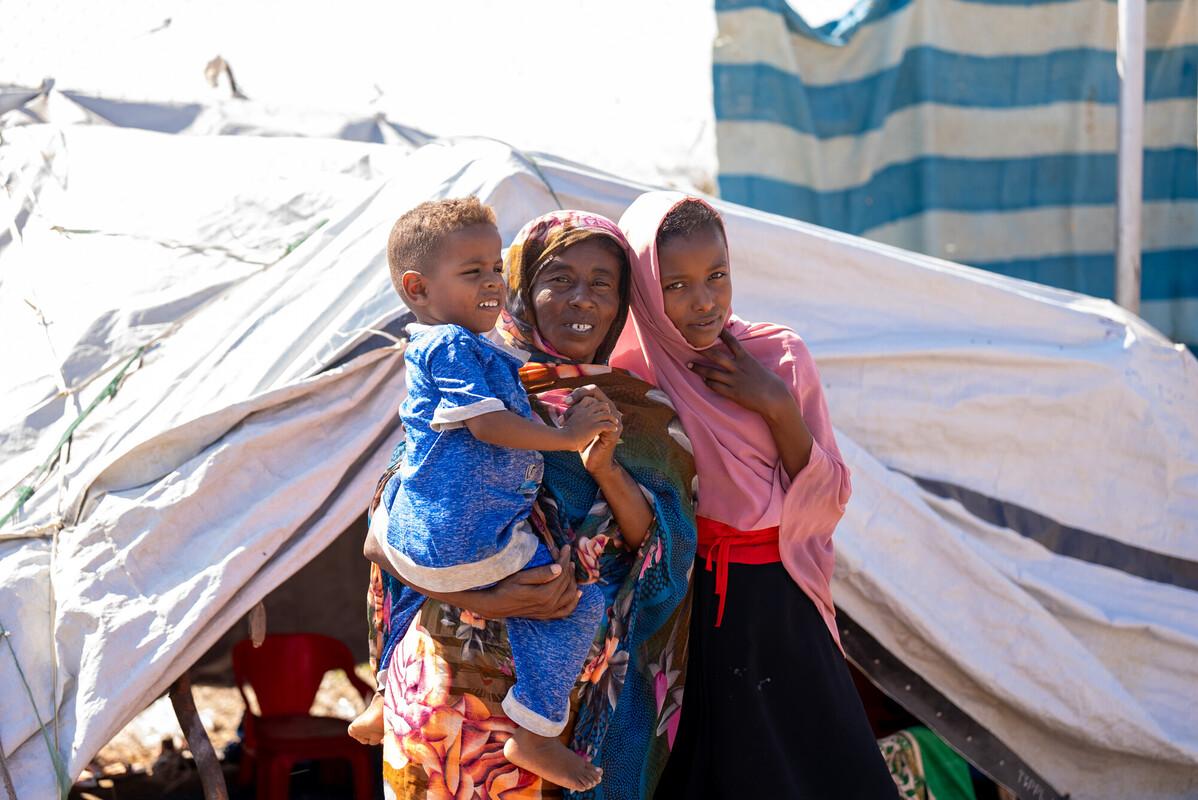
The Asia-Pacific region now hosts 17.3 million displaced people, and 47% of those people are children. This region is the world's most disaster-prone area, and our regional neighbours account for a disproportionate share of global climate displacement.
This is not misfortune. It is inequality. And like all inequality, it is the result of choices, which means we have the power to change them.
Who are refugees? Understanding the different forms of displacement
Forced displacement takes many forms.
Refugees
The word refugee has a specific legal meaning under the 1951 Refugee Convention: a person who has fled their home country due to a well-founded fear of persecution based on race, religion, nationality, political opinion or membership of a particular social group, and who cannot safely return.
Climate-driven displacement is rising sharply, but people forced to move primarily because of climate impacts currently have no dedicated international legal protection.
People seeking asylum
People seeking asylum are people who have fled and are waiting for their claim for refugee status to be assessed.
Internally displaced people
Internally displaced people, or IDPs, have been forced from their homes but have not crossed an international border. They remain within their own country, often in areas of ongoing conflict.
Stateless people
Stateless people have no recognised nationality and are excluded from basic rights, including healthcare, education and employment.
What unites all of these categories is that, in many cases, the protections that should exist for them simply don’t.
Across much of Asia, countries have not signed the 1951 Refugee Convention. That means millions of people (including the Rohingya, the world's largest stateless population) live without legal status or the right to work, and without access to essential services.
How Oxfam works with refugees and displaced people
When people are forced to flee, their needs are immediate. But at Oxfam our response doesn't stop at the emergency.
Delivering urgent humanitarian aid
When a crisis hits, Oxfam works with local partner organisations to deliver what people need to survive with dignity — clean water, sanitation, food and essential supplies, and safer spaces for women and girls.
In Cox's Bazar, Bangladesh, Oxfam Australia works through the Australian Humanitarian Partnership alongside local organisations to support over one million Rohingya refugees living in some of the most overcrowded camps in the world. Women and girls make up three-quarters of the camp population and we support their safety and leadership.
Working together to build long-term solutions
When the immediate crisis stabilises, the work shifts to recovery. In Myanmar, where over six million people are internally displaced, Oxfam works with World Vision and seven local partner organisations to help communities rebuild. Together, communities are restoring their livelihoods, strengthening local systems, and supporting women's economic participation and leadership. We support long-term efforts because recovery requires more than survival; you need resources.
Advocating for systemic change
Emergency response and recovery alone are not enough. Displacement doesn't happen in a vacuum. At Oxfam, we campaign to address those root causes, pushing governments to act on climate justice, and holding corporations and decision-makers accountable for the systems that force people from their homes in the first place.
We respond to displacement, support recovery, and work to change the conditions that cause it. That three-part commitment is what makes long-term change possible.
Support Oxfam's work with displaced communities.
How to get involved in World Refugee Day 2026
World Refugee Day 2026 — and Refugee Week in Australia — is our moment to move beyond awareness and into action. Your support connects to real change.
Donate to support direct humanitarian work
Support Oxfam Australia to help fund emergency responses, long-term recovery programs, and support displaced communities across the Asia-Pacific region and beyond.
Take campaign action to drive systemic change
Signing petitions, contacting decision-makers and supporting Oxfam's campaigns pushes governments to act. We need them to act on climate justice and the economic inequality that makes displacement more likely and recovery harder. This is how individual voices become collective pressure.
Show up and share stories
Attending Refugee Week events, amplifying the voices of people with lived experience, and engaging with the A Million Stories theme all contribute to something larger than any single action — a shift in public understanding that builds the political will for lasting change. Find events near you at the Refugee Week Australia events calendar.
Every donation, every campaign action, every shared story connects back to the same goal: a world where fewer people are forced to flee, and where those who are receive the protection and dignity they are owed.
Show courage
Courage is not passive. It’s not quiet. It doesn’t wait for the right moment or the right political climate.
On 20 June, and throughout Refugee Week, we have a choice about what kind of courage we bring. We can honour the strength of the 123 million people forced from their homes by working to change the systems — the inequality, the political failures, the climate injustice — that put them there in the first place.
A different world is possible. One where safety is a right, not a privilege. Where the people who bear the least responsibility for global crises are not also asked to bear the greatest cost. Where Australia's legacy of welcome is a foundation to build on.
That world won’t build itself. Take action with Oxfam Australia.