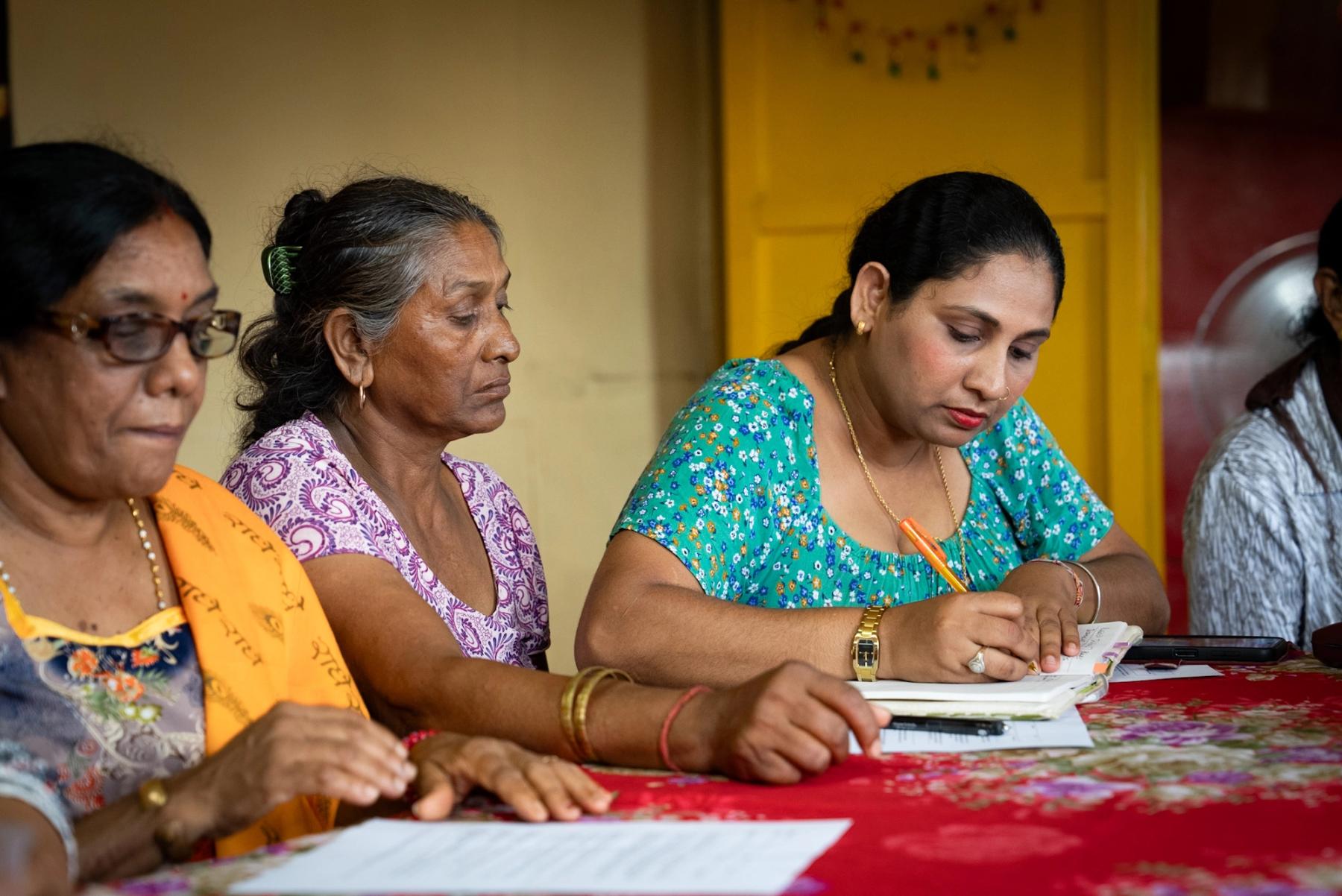
Fiji: Atishma, a member of a women's club in the community of Waituri fills out a form as Jasodra and Raj look on. The women's group is part of a project by the Pacific Centre for Peacebuilding (PCP) called the Women's Peacebuilding Ambassadors Network linking women across Fiji as ambassadors for peacebuilding in their communities. Photo: Alipate Laveti/Oxfam
Writing to your Member of Parliament
Whether you're advocating for climate action or social equality, contacting your local MP is a powerful, accessible way to push for meaningful progress.

Australia: Zedi Vahia Devesi is a passionate advocate for climate action from the Solomon Islands. He was one of three speakers for the Safe Climate, Equal Future Speakers Tour. Photo: Irene Dowdy/Oxfam
Passionate politics
Creating real change starts with making your voice heard — and one of the most effective ways by writing to your Member of Parliament (MP). MPs are elected to represent your community, but they can only act on issues they know people care about.
A well‑crafted message from a constituent can spark conversations in Parliament, influence policy decisions, and draw attention to causes that might otherwise be overlooked.
But how do you make your letter or email stand out? Here are a few simple tips for maximising the impact of your correspondence.
Use the correct title
In the case of letters, set out the name and address of the MP or Senator in the top left-hand corner. This is not necessary in the case of emails. An MP’s name should be stated in the address as follows: ‘Mr/ Mrs/Ms/Dr First Name Last Name MP’. A Senator’s name should be stated as follows: ‘Senator First Name Last Name’.
MPs or Senators who are, or have been, government Ministers, are given the title ‘The Honourable’. For ministers in the House, this becomes ‘The Hon. First Name Last Name MP’ and ‘Senator the Hon. First Name Last Name’ in the case of Ministers who are Senators.
Start your letter as follows: ‘Dear Sir/Madam’ or ‘Dear Mr/Mrs/Ms/Dr Last Name’ in the case of MPs, and ‘Dear Senator’ or ‘Dear Senator Last Name’ in the case of Senators.
Find your Representative/Senator and how to address them
If you are not responding to something, but writing off your own bat, think about whether there have been any related issues in the paper or on the news recently. If you can tie your letter into a current issue you will have a better chance of getting it published.