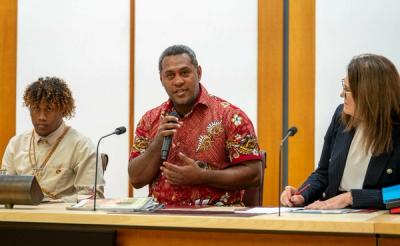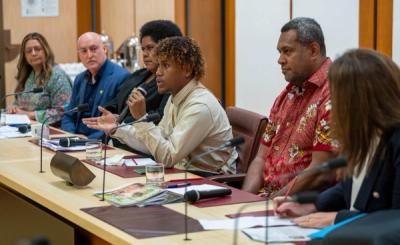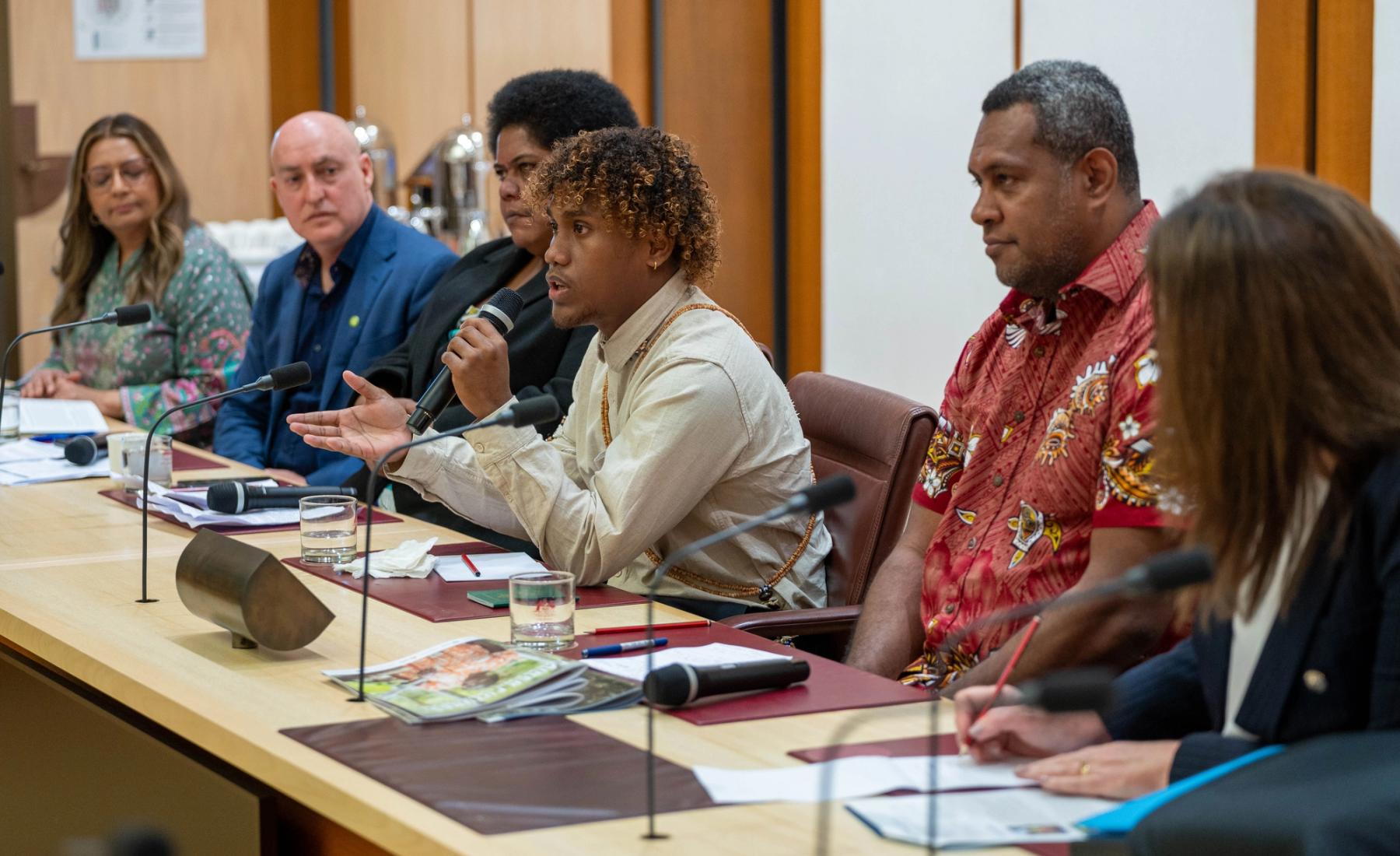
Australia: Zedi Vahia Devesi speaks in Parliament House, Canberra as part of the Safe Climate, Equal Future Speakers Tour. Photo: Irene Dowdy/Oxfam
What you can ask your member of parliament
Your local MP can take action on issues that are important to you

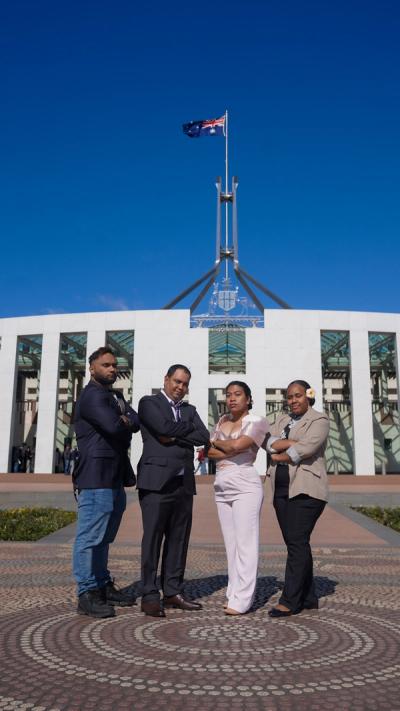
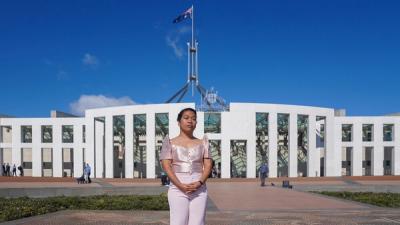
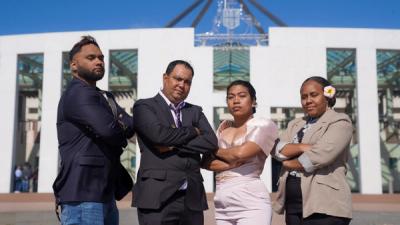
Australia: Eduardo was one of four climate activists from the Kimberley, the Philippines and the Solomon Islands who came together for the Safe Climate, Equal Future Speakers tour in September 2024.Photo: Heidi Demond/Oxfam
Passionate politics
You want your MP to take action on an issue, but what can you ask them to do? Here are some suggestions.
Whether you are writing a letter to your MP, or meeting them face to face, there are a variety of actions your MP can take to demonstrate their support for your issue or respond to your concerns.
It’s important to think about what will be most effective and make the biggest impact.
Actions in Parliament
Actions relating to Bills
If you are contacting your MP about a particular Bill that is being considered by Parliament, you can simply ask them to vote for or against the Bill.
If you are concerned about the potential consequences of the Bill, there may be value in asking your MP to initiate a committee inquiry into the bill. This will give relevant experts, organisations and people who will be affected by the Bill the opportunity to raise their concerns in Parliament.
If you think the Bill should be changed, ask your MP to move amendments to it in Parliament. Be clear about the changes you want to see made.
Speeches
Your MP may offer to raise your issue in Parliament through a speech. It is great to get issues raised on the parliamentary record and important to remember that parliamentary speeches are frequently broadcast on the radio. However, simply speaking about your issue in Parliament isn’t likely to make a big impact.
If your MP does make a speech about your issue, they will most likely send you a copy of the speech.
Motions
Another possible action for your MP to take is to move a motion in Parliament. This means the MP will ask the House to agree to a certain statement or position on the issue. If the House does agree, the motion will become a resolution of the House, that is, a formal statement of its position.
Motions can be useful in the case of controversial issues because each MP will be required to vote on the motion and it can therefore be used to assess the level of support or opposition to your issue and where each individual MP stands on it.
Questions
If you are looking for further information from the government on a particular issue, your MP may offer to ask a question in Parliament. In some cases, your MP may even be willing to ask the government about your particular situation.
Committee inquiries
If the MP believes there is broader community support for Parliament to consider the issue you have raised, they may offer to initiate a committee inquiry into the issue.