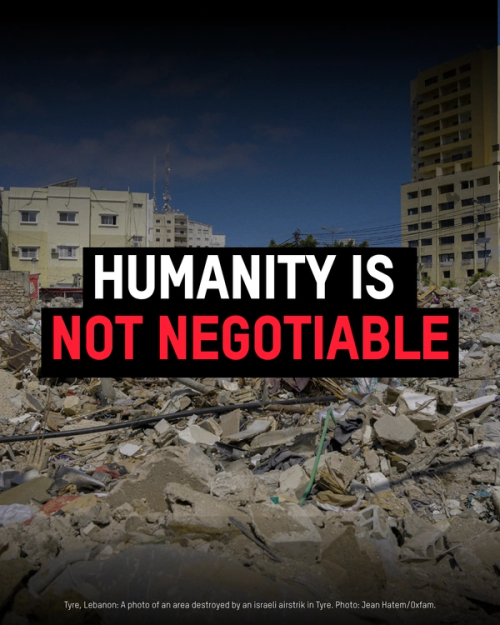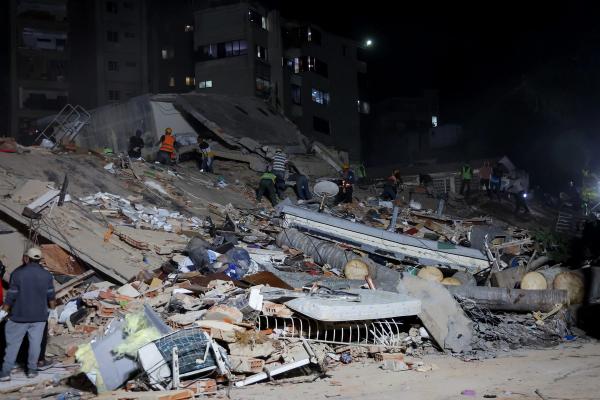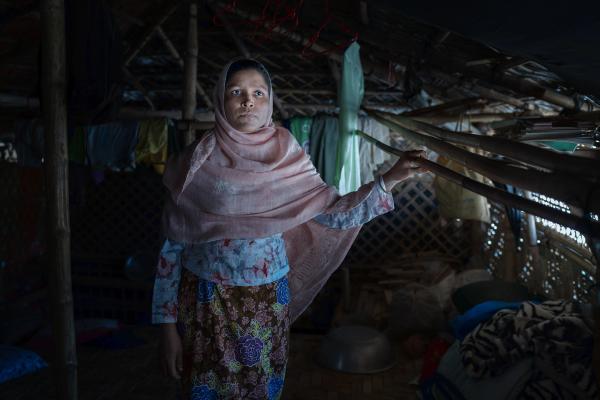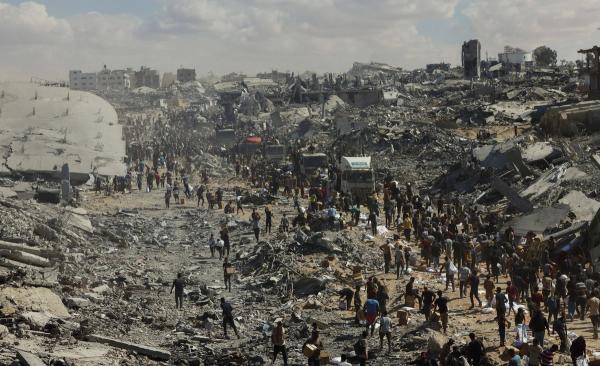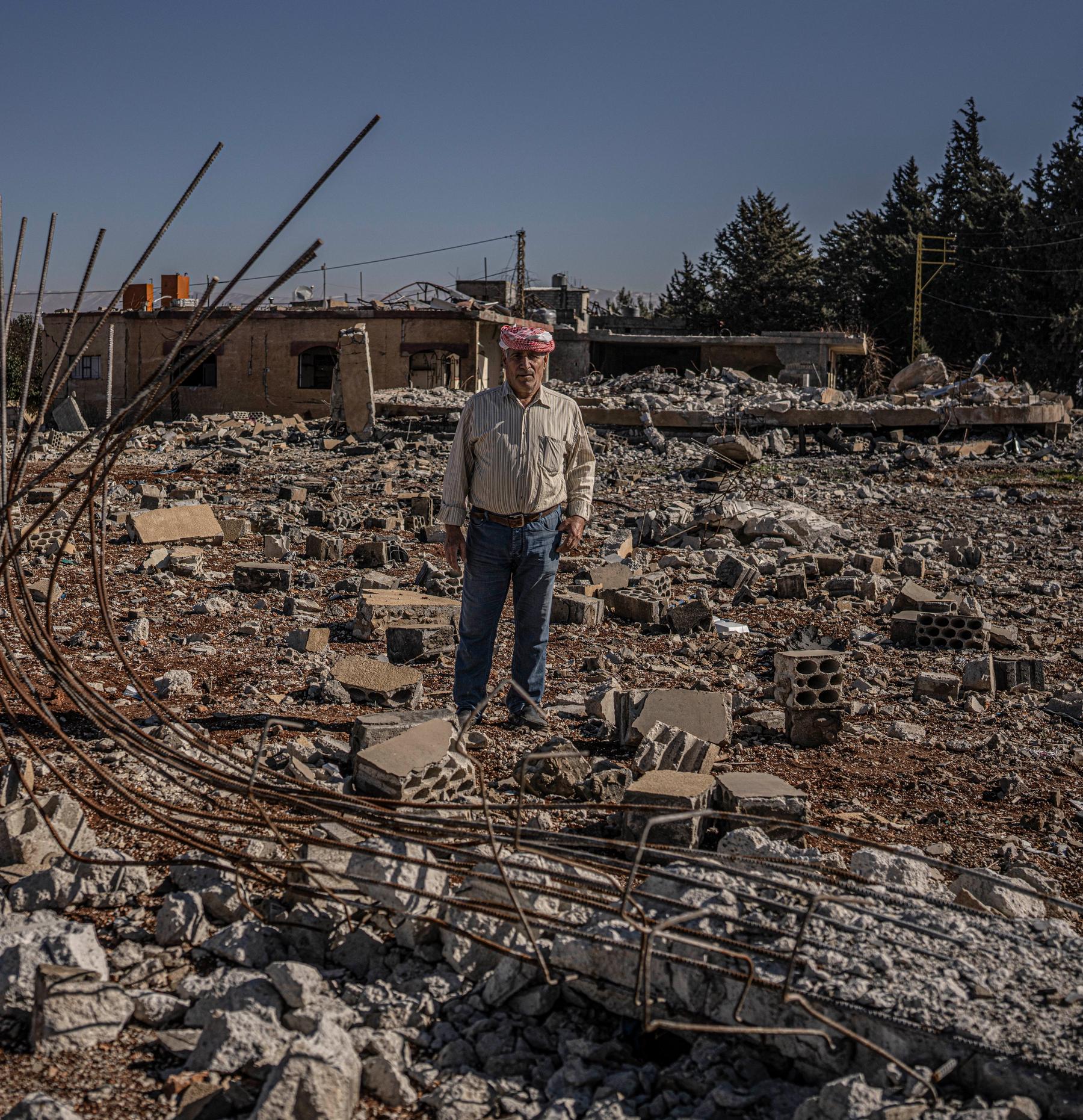
Lebanon: Hussein Amhaz, a farmer in Sai’deh, stands in the rubble caused from an Israeli airstrike. Photo: Pablo Tosco/Oxfam
Urgent: Middle East Crisis
Across the Middle East, families are in crisis because they are running out of water. Donate today and help reach more families with urgently needed essentials like clean water and hygiene kits.
Donate today
Your information is in safe hands with us. All transactions are 100% SSL secure and encrypted, and we never store your credit card information.
Having problems donating?
- Call us at 1800 088 110
- Email us at enquire@oxfam.org.au
Oxfam is an international charity and global movement dedicated to tackling the root causes of poverty
14.25 M+
people supported by Oxfam globally across 76 countries in 2024–2025
17,195
volunteer hours contributed to Oxfam Australia by 237 volunteers
226
partner organisations collaborating with Oxfam Australia to tackle poverty and injustice
14.25 M+
people supported by Oxfam globally across 76 countries in 2024–2025
17,195
volunteer hours contributed to Oxfam Australia by 237 volunteers
226
partner organisations collaborating with Oxfam Australia to tackle poverty and injustice
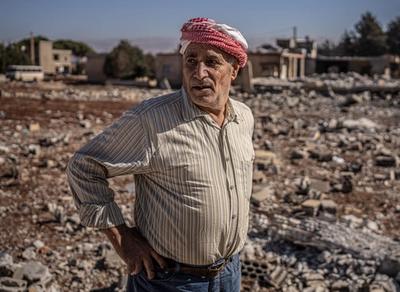
Lebanon: Hussein Amhaz, a farmer in Sai’deh, lost his agricultural machinery and seed storage from the shockwave and shrapnel of a blast which hit his neighbor’s house, destroying everything. Photo: Pablo Tosco/Oxfam
Urgent: Middle East Crisis
After an airstrike hit his village in Lebanon, Hussein and his family fled. They returned to find most of their village destroyed. With the increased conflict in recent weeks, stories like his will become more and more common.
Donate today and help reach more families with urgently needed essentials like clean water and hygiene kits.
How we advance First Peoples justice
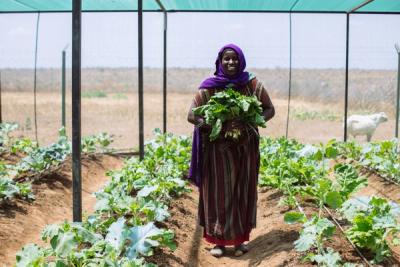
Kenya: Bone Dadach Iya holds up kale from the kitchen garden. The garden is part of the alternative livelihoods and resilience building project for drought-affected communities in Marsabit. Photo: Peter Irungu/Oxfam
Straight Talk
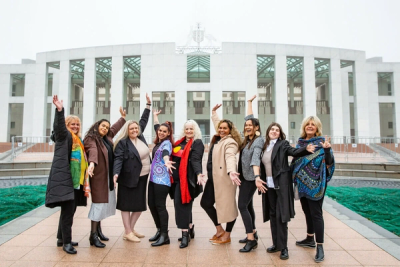
Our Straight Talk program brings together Aboriginal and Torres Strait Islander women from around the country to meet politicians, learn about Australia’s political system, and leverage/wield/use those learnings to make change happen in their communities.
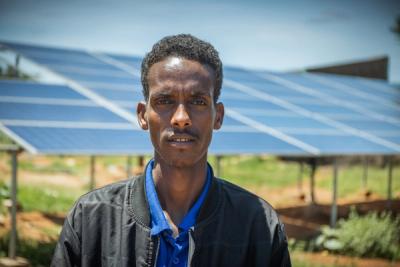
Ethiopia: Mohammud, 27, water bureau head in Ararso says, standing next to the 56-panel solar array that Oxfam installed and now powers the system. PHOTO: Petterik Wiggers / Oxfam
Enabling just and fair transitions
Our First Peoples programs supports projects that redirect/divert funding from policing and prisons into community-led social programs that reduce Aboriginal incarceration.
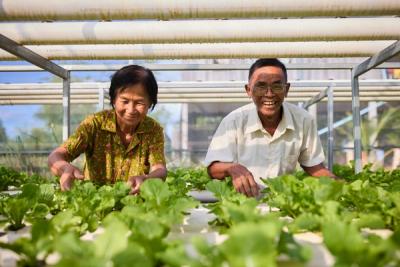
Cambodia: Bun and Vantha (both 60s) are part of an Aquaponics pilot project in their village. The pilot gives local villagers the opportunity to grow vegetables in a climate resilient way that can then be used to support their household expenses. Oxfam acknowledges the support of the Australian Government through the Department of Foreign Affairs and Trade (DFAT). PHOTO: Patrick Moran/Oxfam
Advocating for access to climate finance
We defend the traditional rights of First Nations people to access their land and water resources so they can sustain fishing practices and livelihoods, and restore ancient cultural practices and knowledge systems to protect Country.
Cambodia: Bun and Vantha (both 60s) are part of an Aquaponics pilot project in their village. The pilot gives local villagers the opportunity to grow vegetables in a climate resilient way that can then be used to support their household expenses. Oxfam acknowledges the support of the Australian Government through the Department of Foreign Affairs and Trade (DFAT). PHOTO: Patrick Moran/Oxfam
Aboriginal health initiatives
We defend the traditional rights of First Nations people to access their land and water resources so they can sustain fishing practices and livelihoods, and restore ancient cultural practices and knowledge systems to protect Country.
Cambodia: Bun and Vantha (both 60s) are part of an Aquaponics pilot project in their village. The pilot gives local villagers the opportunity to grow vegetables in a climate resilient way that can then be used to support their household expenses. Oxfam acknowledges the support of the Australian Government through the Department of Foreign Affairs and Trade (DFAT). PHOTO: Patrick Moran/Oxfam
Close the gap
We’re a founding member of the Close the Gap and Change the Record coalitions, which are Indigenous-led groups dedicated to improving health and justice outcomes for First Peoples. Launched in 2007, Close the Gap has had a real impact on the political process.
What is Oxfam doing to help
Kenya: Bone Dadach Iya holds up kale from the kitchen garden. The garden is part of the alternative livelihoods and resilience building project for drought-affected communities in Marsabit. Photo: Peter Irungu/Oxfam
Building climate resilience
We are working alongside communities to respond to the increasing risk of climate disasters. We align with local partners to help communities address climate risks, shocks and uncertainties.
Ethiopia: Mohammud, 27, water bureau head in Ararso says, standing next to the 56-panel solar array that Oxfam installed and now powers the system. PHOTO: Petterik Wiggers / Oxfam
Enabling just and fair transitions
We are moving towards an environmentally sustainable economy that is no longer reliant on fossil fuel energy and contributes to decent work for all, social inclusion and the eradication of poverty.
Cambodia: Bun and Vantha (both 60s) are part of an Aquaponics pilot project in their village. The pilot gives local villagers the opportunity to grow vegetables in a climate resilient way that can then be used to support their household expenses. Oxfam acknowledges the support of the Australian Government through the Department of Foreign Affairs and Trade (DFAT). PHOTO: Patrick Moran/Oxfam
Advocating for access to climate finance
We are strong advocates for the Australian Government and other wealthy nations increasing climate finance, which is international funding to support climate action in low-income countries. This is a matter of global justice: those who have contributed least to the causes of climate change are typically the most vulnerable to its impacts, and have the least resources to respond.
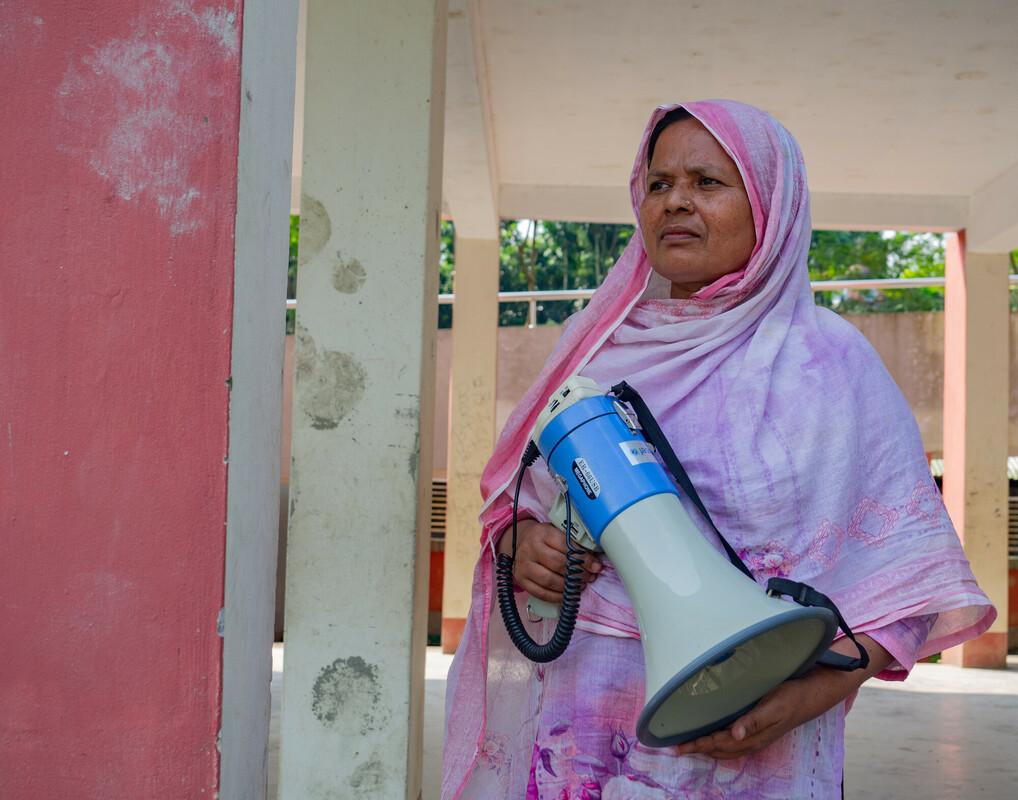
Bangladesh: With help from Oxfam partner JAGO NARI, Dulu Begum has become a community leader and an outspoken advocate for reducing disaster risks. Photo: Elizabeth Stevens/Oxfam.
Gender equality
We seek gender equality because all lives — hers, theirs and his — are equal.
2.4 Billion
women of working age are not afforded equal economic opportunity
1 in 3 women
experience physical or sexual violence in their lifetime
120 Million
girls do not go to school today
2.4 Billion
women of working age are not afforded equal economic opportunity
1 in 3 women
experience physical or sexual violence in their lifetime
120 Million
girls do not go to school today
Example caption Example caption Example caption Example caption
What’s the difference between the House of Representatives and the Senate?
A quick overview of how Parliament is structured.
Example caption Example caption Example caption Example caption
What’s the difference between the House of Representatives and the Senate?
A quick overview of how Parliament is structured.
Example caption Example caption Example caption Example caption
What’s the difference between the House of Representatives and the Senate?
A quick overview of how Parliament is structured.