Refugees
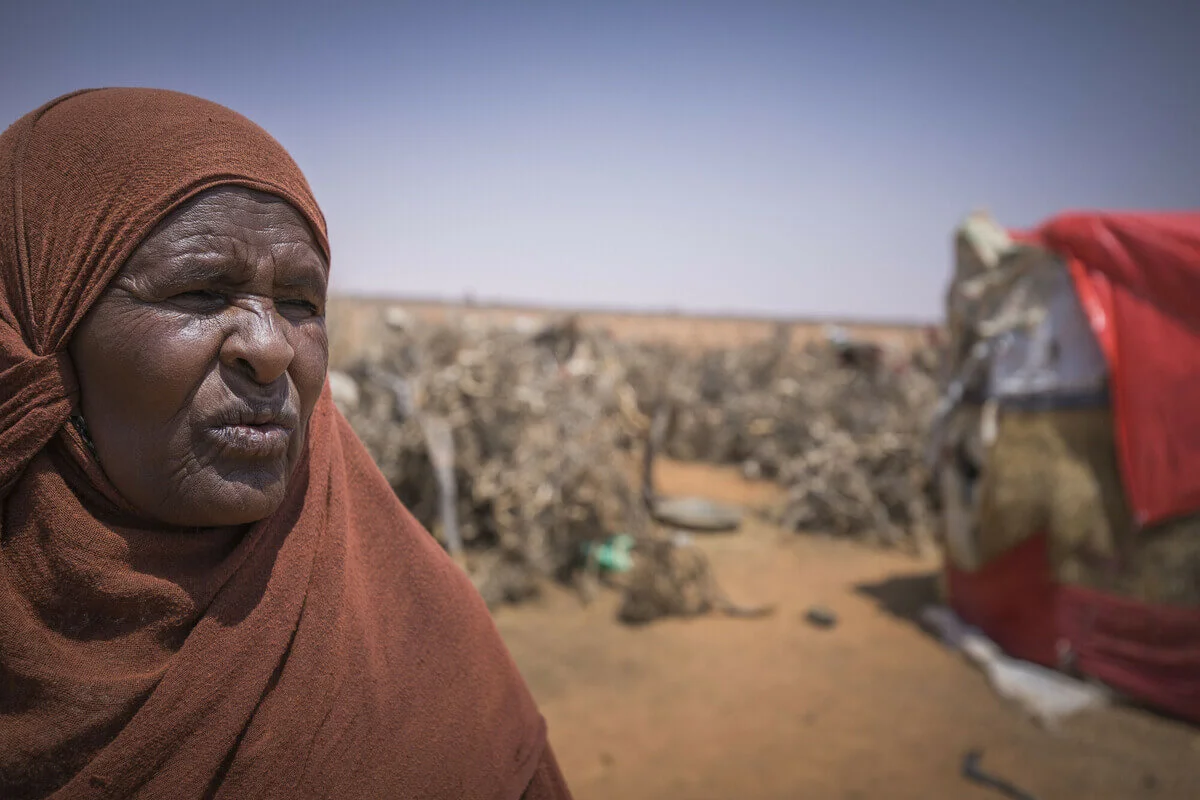
For the first time in recorded history, more than 100 million people have been forcibly displaced from their homes. These men, women and children are currently living as internally displaced people, asylum seekers or refugees.
Understanding refugees rights, their challenges, and Oxfam’s support
A refugee is a person who has fled their country because the threat of war, conflict or persecution is so great that they fear for their safety. While waiting for official refugee status, someone seeking safety in another country is known as an asylum seeker. A person who flees their home because it is unsafe, but stays within their country, is known as an internally displaced person.
Losing your home, community and even your family is a devastating trauma that few of us can understand. Even after fleeing their homes in a desperate search for safety, many people face ongoing discrimination in their new community, where resources may be scarce or prejudices may exist.
All refugees have the right to receive assistance, the right to protection from abuse and the freedom to seek asylum. These rights are enshrined in the 1948 Universal Declaration of Human Rights, which is the basis of all human rights laws and conventions and applies to everybody, regardless of who they are or where they come from.
Oxfam is working to uphold these rights by delivering humanitarian aid during times of disaster, conflict or war, when people’s lives are threatened. We support displaced people around the world to seek safety.
Refugees seeking safety amid persecution, war, and climate change
No-one chooses to be a refugee. Refugees are forced to flee their home because of the grave fear they hold for their life in their country of origin. Right now, there are around 35 million refugees around the world, and more than half of them are from just three countries: Afghanistan, Syria and Ukraine. Each of these refugees has experienced enormous loss and a difficult journey to a new land.
A person may become a refugee if they flee war, violence or persecution because of their race, religion, nationality, political opinion or membership of a particular social group. Increasingly, climate refugees are also fleeing their homes to escape extreme weather and human induced climate change.
Everyone has the right to seek asylum, which means seeking safety in another country. Often, asylum seekers will flee to refugee camps in neighbouring countries while they apply for refugee status. Conditions in these camps can be harsh, with millions of people living in crowded areas.
Even if an asylum seeker is granted refugee status, they will often face a new set of difficulties in their new country. More than three quarters of all refugees are hosted in low- or middle-income countries, where opportunities may be limited. Too often, refugees will face discrimination in their new country, particularly if food, water, shelter or job opportunities are scarce. Refugees may also experience discrimination or abuse targeted at their race, religion or nationality.
Assisting, protecting, and advocating for Refugee rights
Following the atrocities caused by World War II, the United Nations was formed in 1945 to promote international peace and prevent a future world war. The United Nations adopted the Universal Declaration of Human Rights in 1948, which still forms the basis of all human rights laws and conventions today. The Declaration states that all humans are born “free and equal in dignity and rights” (United Nations Declaration of Human Rights). Article 14 declares that everyone has the right to seek asylum from persecution (United Nations Declaration of Human Rights). In 1951, the United Nations adopted a Refugee Convention, which protects refugees from being returned to their home country if they are at risk of facing persecution.
To uphold these laws, which declare that everyone has a right to freedom and equal treatment, Oxfam demands that people in crisis situations can exercise their right to seek asylum, obtain assistance and be protected from abuse. We also insist that the systems designed to help refugees, asylum seekers and internally displaced people actually work. Often this means putting pressure on governments to act according to their legal obligations.
We also support and advocate for the principle of the ‘Responsibility to Protect’. This principle makes it the responsibility of individual governments and the international community to protect civilians from genocide, war crimes, ethnic cleansing and crimes against humanity.
Reuniting families, a fairer system for refugees in Australia
When refugees settle in a new country, they often have to learn a foreign language, understand a different culture and become qualified for work. These obstacles may seem insurmountable if you are also recovering from trauma and facing them alone.
The health and wellbeing of refugees living in Australia will improve if their family is able to join them. When families stay together they are resilient, happier and healthier.
At the moment, the Australian Government only offers limited opportunities for refugees to reunite with their families. Oxfam is calling on the Australian Government to establish a new Humanitarian Family Reunion visa stream to help more families reunite.
Our Stronger Together report found that increasing Australia’s humanitarian intake by allowing more families to reunite would boost Australia’s economy by billions of dollars. As the new arrivals complete education or vocational training and enter the workforce, these positive impacts continue to increase.
Most importantly, the health and wellbeing of refugees will improve, and communities will flourish from the contribution made by refugee families.
Safeguarding vulnerable communities: enhancing protection measures in crisis situations
Everyone has the right to a peaceful life, but war and conflict is threatening the safety of millions of people around the world. Women, men and children experience conflict differently, and require different forms of protection. During conflict, men may be engaged in warfare while women and children often flee their homes in search for safety, which is why they make up around 80% of all refugees. As civilians in a conflict setting and as refugees, women are vulnerable to sexual violence and usually hold the responsibility of caring for children and other family members during incredibly stressful situations.
We deliver humanitarian assistance to refugees and people in crisis situations that is sensitive to their needs and improves their safety. For example, in refugee camps, we install lighting and position toilets in safe areas to reduce the risk of violence for women and children using camp facilities. We also create designated areas for people who are vulnerable — such as unaccompanied women and children — to increase their safety.
The impact of family separation on refugees and humanitarian migrants in Australia (2019)
Australia is a wealthy country with the capacity to welcome many more refugees than are currently allowed on our shores. At a time when more people are fleeing their homes than ever before, we need to increase our humanitarian intake and accept more refugees. Australia should also ensure that refugees have the right to family unity by providing opportunities for their families to build a new life with them.
Faqs
What is a refugee?
A refugee is a person who has fled their country due to war, conflict, human rights violations or fear of persecution because of their race, religion, nationality, political opinion or membership of a particular social group.
In 2020, there were more than 35 million refugees around the world, and two-thirds of them lived in neighbouring countries. It is a human right to seek safety in another country, and a refugee should be offered protection and safety by their host country. These rights are enshrined in the United Nations Declaration of Human Rights.
What is refugee status determination?
Refugee status determination is the process used by governments or the United Nations Refugee Agency to confirm if a person meets the requirements to be classified as a refugee under international law.
To receive refugee status, a person must be seeking refuge in a new country and hold a well-founded fear of persecution in their home country for their race, religion, nationality, or membership of a political or social group.
Individual countries are responsible for conducting their own refugee status determination if they are a party to the Refugee Convention. If they are not party to the convention, the United Nations Refugee Agency may undertake the process on their behalf.
What is the difference between asylum seekers and refugees?
A refugee is a person who has fled their home due to human rights violations or fear of persecution and has entered another country in search of safety. They have undertaken a process of refugee status determination and have been found to have a well-founded fear of persecution in their home country.
An asylum seeker has also fled their country of origin in search of safety, but their application for refugee status is yet to be granted. It is a human right to request protection from another country and seek asylum.
How many refugees are there in the world?
In 2022, there were more than 108 million people forcibly displaced from their own country because of violence, persecution or human rights violations. That’s around four times the population of Australia who have fled their homes in search of safety. More than 35 million of these people are refugees, 62 million are internally displaced within their own country, and 5 million are asylum seekers (UNHCR 2022).
Why do refugees leave their home country?
No-one wants to flee their home. Refugees are forced to leave — often leaving behind family, friends and possessions — because they fear for their lives. More than 40% of displaced people are children.
Everyone has the right to seek asylum, which means seeking safety in another country. To be granted refugee status, the United Nations Refugee Convention states that a person must have a well-founded fear of persecution because of their race, religion, nationality, membership of a social group or political opinion and cannot be protected in their own country.
Many refugees flee their home due to human rights violations or during times of conflict or war. Increasingly, climate refugees are also leaving their homes to escape the extreme weather and disasters that are the result of human-induced climate change.
Where do most refugees come from?
For the first time on record, more than 108 million people were forced from their homes in 2022. Most refugees flee to neighbouring countries, and more than half of them are from just three countries: Ukraine, Afghanistan and Syria (UNHCR 2022).
In Australia, most of the refugees who arrived in the Financial Year 2020–2021 were from Afghanistan, Iraq, Myanmar or Syria.
How many refugees are there in Australia?
The UNHCR estimates that Australia is home to 60,000 refugees and 80,000 people seeking asylum. The Australian Government currently allows around 13,750 people per year to enter Australia as refugees or people seeking humanitarian assistance. The actual number of people granted refugee status fluctuates each year. In the Financial Year 2020–2021, only 5,947 refugee visas were granted in Australia.
Australia is one of around 25 developed countries that formally participates in the United Nations High Commission for Refugees resettlement program. However, most refugees are hosted in developing countries. There are 3.6 million refugees living in Türkiye alone.
How long do refugees stay in detention centres in Australia?
Australia has one of the strictest immigration detention policies in the world. Since 1992, Australia has exercised mandatory detention for anyone entering the country without a valid visa, even if they apply for asylum on arrival. People who are detained in Australia are only released from detention if they are granted a visa or removed from the country. There is no limit to the amount of time that a person will be detained in Australia.
In 2023, there were more than 1,000 people in immigration detention facilities in Australia. The average length of time that people are held in detention is 806 days. The Australian Human Rights Commission has called for an end to Australia’s immigration detention system because it breaches our human rights obligations.
How many refugees does Australia accept?
The Australian Government’s Refugee and Humanitarian Program allocates around 13,750 people per year to enter Australia as refugees or people seeking humanitarian assistance. These places are not always filled. In the Financial Year 2020–2021, only 5,947 refugee visas were granted in Australia. Most of these refugees were from Afghanistan, Iraq, Myanmar or Syria.
Refugees usually come to Australia via offshore resettlement processes, which means they are placed in Australia via the United Nations High Commission for Refugees resettlement process. Some places are allocated to refugees who arrive in Australia on a visa and seek protection once they have already arrived.
How can I help refugees?
There are many ways to support refugees here in Australia and around the world:
1) Make a general donation to Oxfam’s work. When disaster and crisis strike, Oxfam is there to provide people with life-saving food, water and shelter. We also work in some of the largest refugee camps in the world, helping to provide refugees with essential items and protection from violence.
2) Write a letter to your Member of Parliament, asking that the Australian Government increases our humanitarian intake beyond the current cap of 13,750 positions for refugees and humanitarian migrants and allows more families to be reunited.
3) Support refugee agencies in your community, such as the Asylum Seeker Resource Centre.
4) Have brave conversations with your friends and family about the issues that are causing millions of people to flee their homes — such as war, conflict, persecution and climate change.