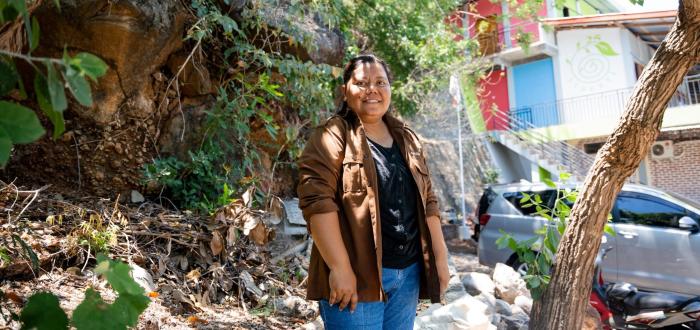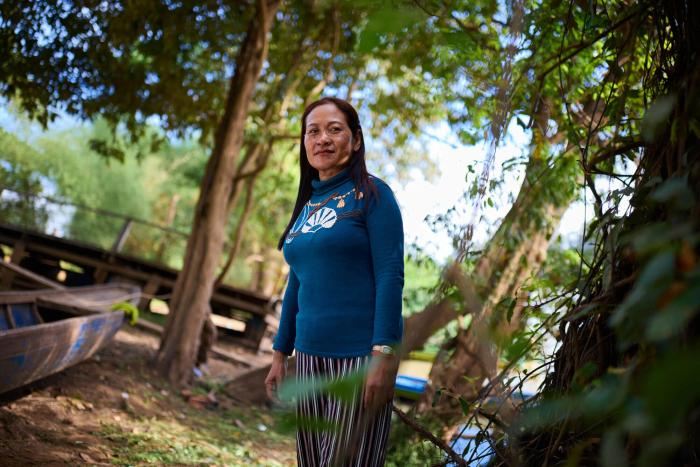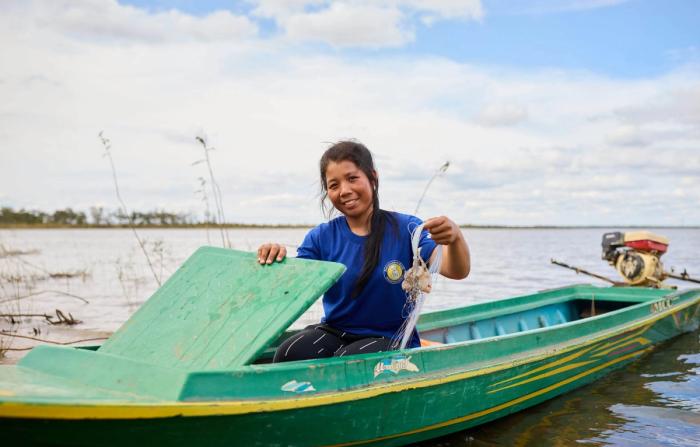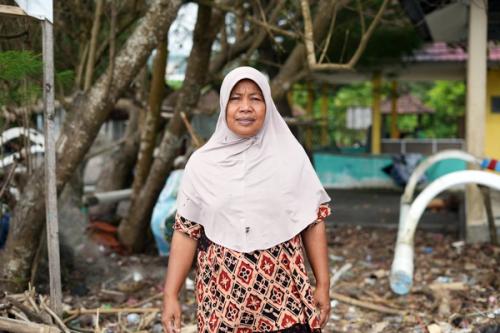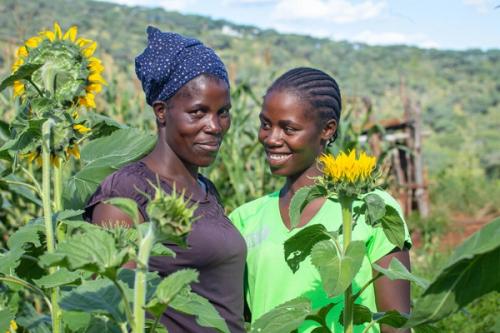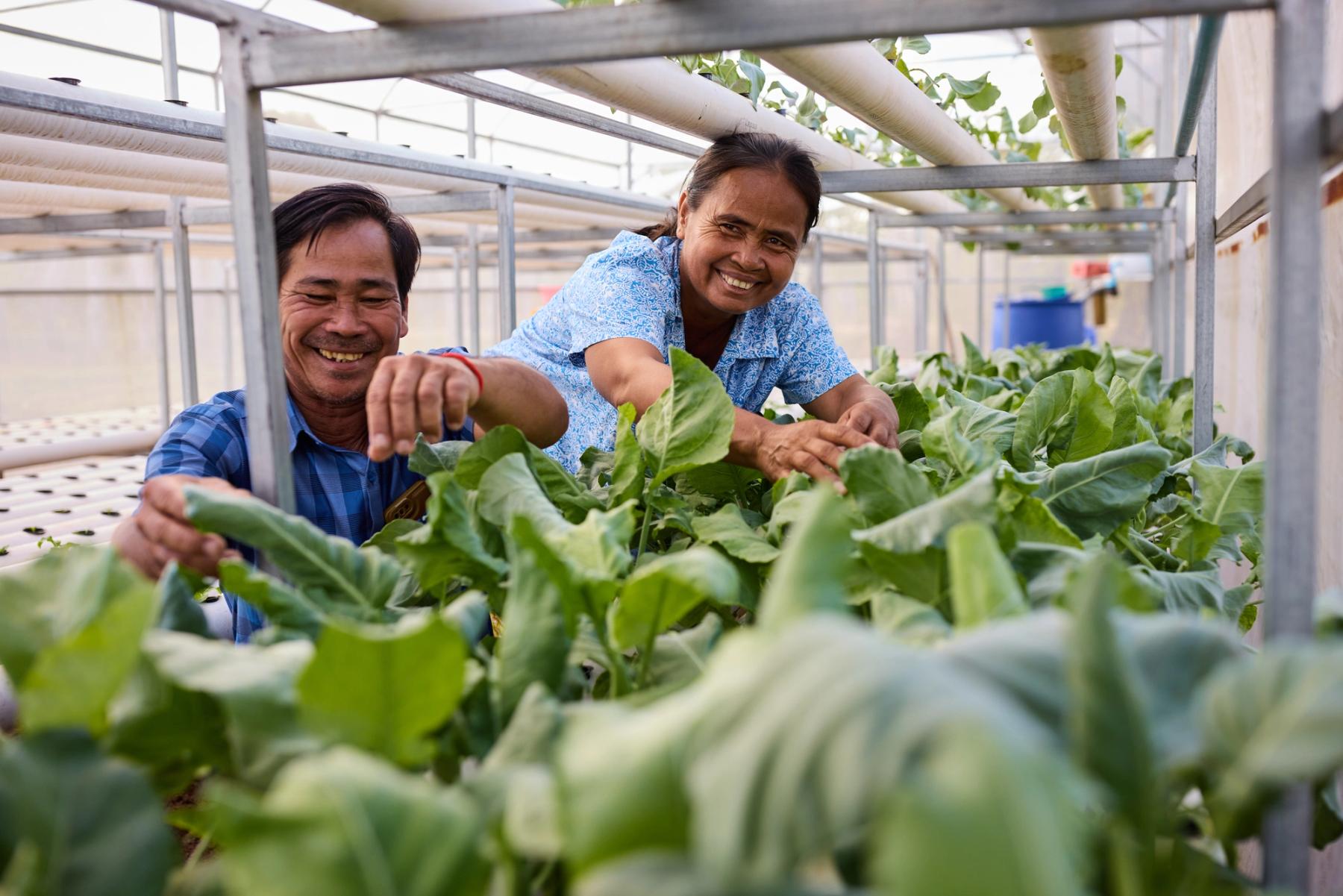
Cambodia: Chana and Sare (both 50s) in their aquaponics greenhouse. They are part of an aquaponics pilot project in their village, which gives local villagers the opportunity to grow vegetables in a climate resilient way that can then be used to support their household expenses. Photo: Patrick Moran/Oxfam. Oxfam acknowledges the support of the Australian Government through the Department of Foreign Affairs and Trade (DFAT).
What can I do about climate change?
Wondering what you can do about climate change? Practical actions for your home, your community, your vote and your giving.
If you’re asking what you can do about climate change, you already know the answer isn’t just turning off the lights. Climate change is not a natural accident. It’s the result of rules that let a small number of powerful corporations take more than their fair share, while the communities doing the least to cause this crisis pay the highest cost.
When a flood wipes out a family’s crops, or a cyclone destroys their village, it can push people into poverty overnight.
These rules can be changed when enough of us act together. Here are twelve things you can do about climate change. And you can start today. None of them require you to do everything. Start with what you can.
Make changes at home
Individual choices can help shift demand, reduce climate pollution and send a signal to the market. They form part of a push for the broader rules and systems to change.
Switch to green power
Moving your household to renewable electricity is one of the most effective changes you can make as an individual. Australia has more rooftop solar per person than anywhere else in the world. If solar isn’t an option for your home, a GreenPower-accredited plan lets you match your electricity use with certified renewable energy.
First step: Visit the Australian Government’s GreenPower page to find accredited options in your state.
Choose cleaner ways to get around
Transport is one of Australia’s largest sources of greenhouse gas emissions, and road vehicles account for the vast majority of that. Walking, cycling and public transport can be great alternatives.
If you’re ready to buy a new car, electric vehicles are now more affordable and more widely available than ever before. Fuel savings over time can significantly offset the higher upfront cost.
First step: Map one regular car trip — school, the shops, a commute — and try making it by foot, bike or public transport for a week.
Rethink food and reduce waste
A plant-rich diet produces significantly fewer emissions than one centred more heavily on meat and dairy, and Australians waste around 7.6 million tonnes of food every year. Most of that waste ends up in landfill, producing methane.
Reducing food waste costs nothing; in fact, it should save you money. Eating more plant-based meals, even a few times a week, makes a measurable difference.
This isn’t just about carbon. Oxfam works with farming communities in places like Indonesia, Bangladesh and the Pacific who are already losing harvests to climate-driven floods and drought. When communities lose their harvests and their land, it pushes families deeper into poverty and can trap the next generation in the same poverty.
The food systems that support those communities are the same ones that feed all of us. How we grow, buy and waste food is part of that story.
First step: Before your next grocery shop, check what’s already in your fridge. Meal planning around what you already have is a great way to cut food waste.
Take action in your community
What happens in your neighbourhood, your workplace and your social circles shapes what feels politically possible. Here’s where your voice starts to reach beyond your own household.
Fundraise for communities on the frontline
One of the most direct things you can do about climate change is back the communities already living through the worst impacts. When you fundraise for Oxfam, the money goes directly to communities in places like Nepal, the Pacific and the Torres Strait, who are working on the frontlines of the crisis. It funds things like flood early warning systems, food security work, and our work with the local organisations who were there before the crisis and will be there long after.
First step: Learn how to fundraise for Oxfam or read some of our fundraising ideas.
Talk about it
Conversations with people you know and love are some of the most effective ways to influence your circle to take climate action. More than half of Australians are worried about climate change, according to the Climate Council, but many people assume they’re in the minority.
Normalising the conversation changes that. You don’t need to have every answer. Just be willing to say that it matters to you, and why.
First step: Next time climate comes up in conversation at work, with family, or online, stay in it rather than changing the subject. Share a specific story, like what’s happening in Nepal or the Pacific, rather than speaking only in general terms.
Get involved locally
Community energy groups, local environment networks and council sustainability consultations are some of the places where national policy starts.
Local governments often have more immediate influence over planning, transport and land use than federal policy, and they can be responsive to constituent pressure. Getting involved doesn’t have to mean attending every meeting. Showing up once, making a submission or signing a local petition is a good start.
First step: Search your local council’s website for “sustainability” or “climate action plan” to see what’s already in progress and whether there are open consultation periods.
Put pressure on decision-makers
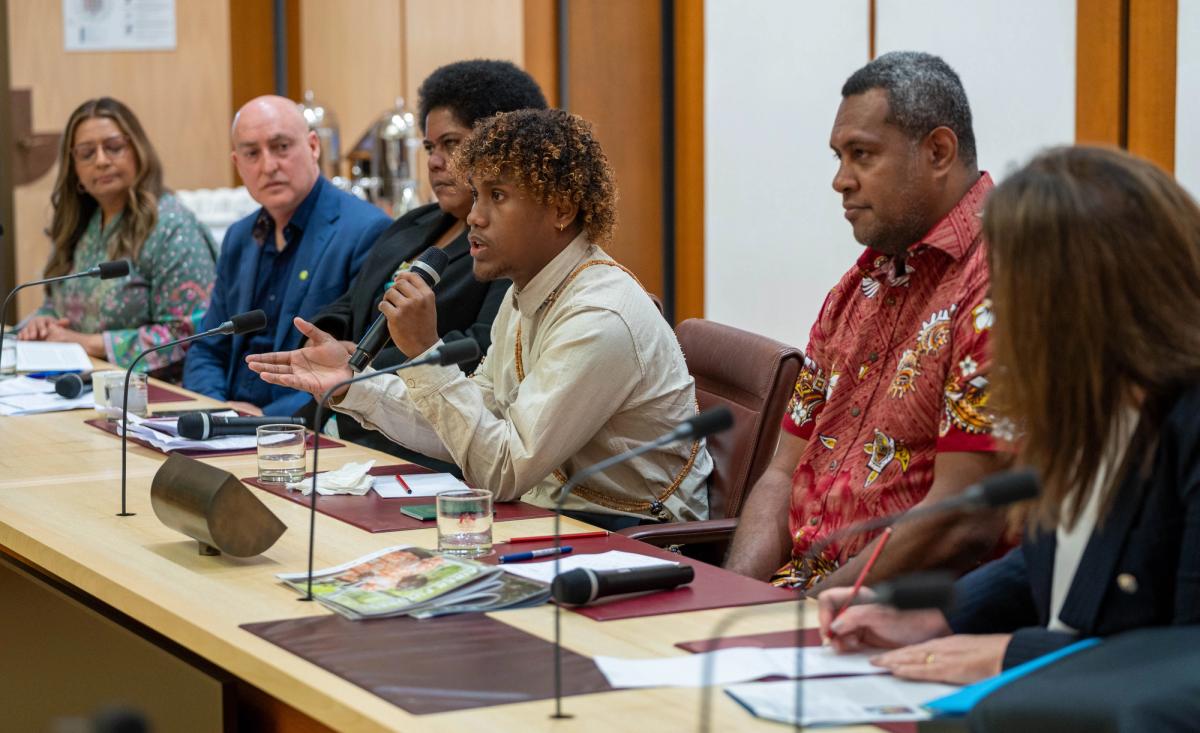
Australia: Zedi Vahia Devesi speaks in Parliament House, Canberra as part of the Safe Climate, Equal Future Speakers Tour. Photo: Irene Dowdy/Oxfam
The rules that drive climate change don’t change on their own. They change when governments feel enough pressure to act. Putting pressure on decision makers is one way for your individual climate action to become collective power.
Sign the petitions
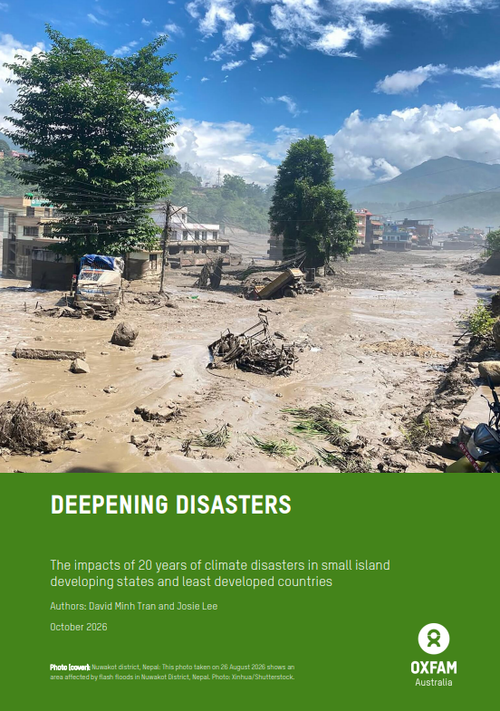
Australia has committed just $26 million to Nepal’s recovery after devastating flash flooding driven by climate change — against an estimated $7 billion recovery cost. Nepal’s communities have done little to cause this crisis, yet without sufficient international support they risk being pushed deeper into poverty, unable to recover from disasters that will only grow more frequent and severe.
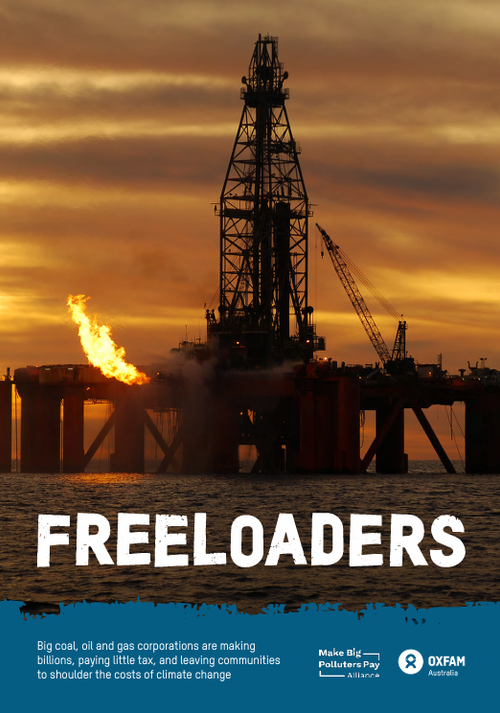
The contrast with what we hand to the fossil fuel industry speaks for itself: Australian governments paid out $16.3 billion in fossil fuel subsidies in 2025-26 alone. Large fossil fuel corporations produce 75% of Australia’s climate pollution.
Oxfam is calling on the Australian Government to set a new climate finance goal of $11 billion from 2025 to 2030, stop approving new coal and gas projects, end fossil fuel subsidies, and introduce a levy on the coal, oil and gas corporations driving climate change.
First step: Sign the Safe Climate, Equal Future petition to increase climate finance and stop funding new coal and gas projects, and the Make Big Polluters Pay petition to call on the Climate Change Minister to introduce a Climate Pollution Levy, with funds going to affected communities.
Contact your MP
Politicians respond to contact from their constituents, particularly on issues where they’re hearing consistently from people in their electorate. You don’t need to write an essay. A short, specific message with your name, your electorate and one clear ask is more effective than a long one.
Right now, the most useful asks are: end fossil fuel subsidies, support Australia’s new international climate finance commitment, and back a pollution levy on the coal, oil and gas industry.
You can find your federal MP at aph.gov.au, or most have a contact form on their website.
First step: Find your MP’s name, look up their contact, and send a message this week. Three sentences is enough: who you are, what you’re asking for, and why it matters to you. If you’re unsure, learn more about taking political action.
Check your superannuation
Australia’s 30 largest super funds hold over $34 billion in fossil fuel investments, according to Market Forces. Your retirement savings may be funding the expansion of the coal, oil and gas industry — the same industry that produces 75% of Australia’s climate pollution and costs Australian households an estimated $3,800 a year in climate disaster impacts.
Market Forces profiles funds by fossil fuel exposure and sustainable investment options, and switching funds can be easier than you might expect.
First step: Visit Market Forces’ super fund comparison tool to check where your fund sits. You don’t have to switch today, but knowing is a start.
Give to support work you believe in
Sometimes the most direct form of climate action is putting resources into the hands of people and organisations doing the work.
Give a climate gift through Oxfam Unwrapped
Do you have gifts to buy? Oxfam Unwrapped lets you give a gift that funds real climate and food security work like clean water, farming support and disaster preparedness in communities across Asia and the Pacific. It’s a way to give something meaningful rather than something disposable.
First step: Visit Oxfam Unwrapped and browse the climate and food security gifts.
Donate to Oxfam’s climate work
Oxfam works alongside local partners in places that are bearing the brunt of climate change, helping communities prepare before disasters hit, respond when they do, and recover in ways that build long-term stability. But Oxfam also works to change the rules driving this crisis — rules that let some of the most profitable companies in the world avoid paying their fair share, while driving others into poverty.
One in three large fossil fuel companies paid no corporate income tax in Australia in 2023-24, according to Oxfam’s own research. Your donation supports both the communities paying the price, and the work to change the rules that put them there.
First step: See different ways to donate. You can give once or set up a regular gift.
Climate anxiety and how to deal with it
If reading through this list brought up a feeling somewhere between urgency and dread, you’re not alone. More than half of Australians are worried about climate change. 80% say they feel anxious about the impact of extreme weather, according to NRMA Insurance research. Climate anxiety, sometimes called eco anxiety, is a rational response to a real and difficult situation.
Something that tends to help is taking action. Something specific, doable and connected to something larger than yourself. Every action on this page is also an answer to the anxiety. Signing a petition, switching your super, having a conversation, giving something — these are all ways of doing something with the feeling rather than sitting inside it.
The rules don’t change because a few people do everything. They change when a lot of people keep doing something.
If you want to go deeper, you can learn more about Oxfam’s climate work and campaigns, or what climate change is and why it matters.