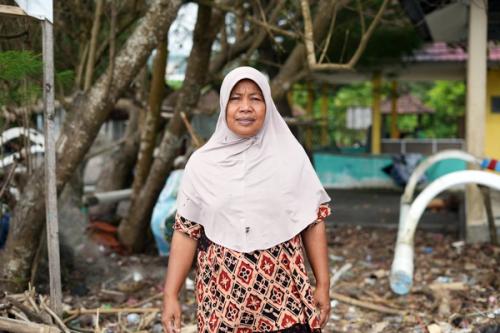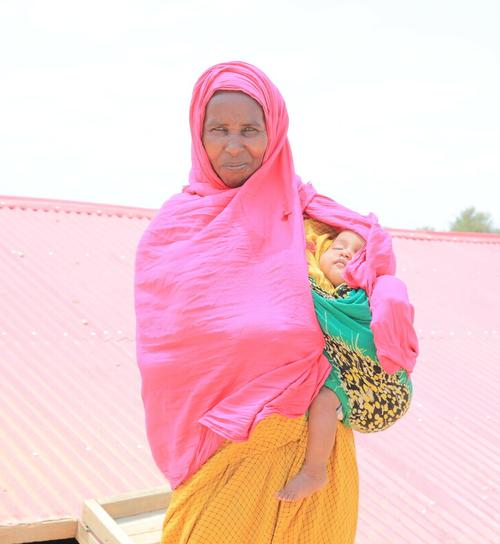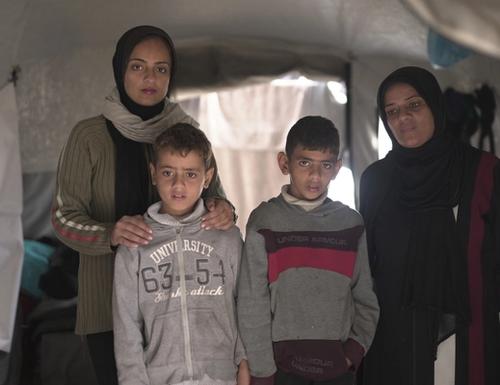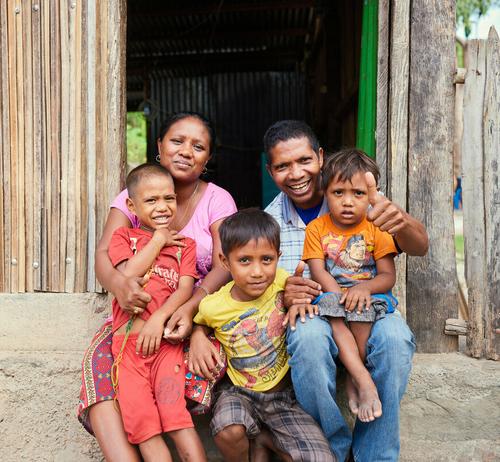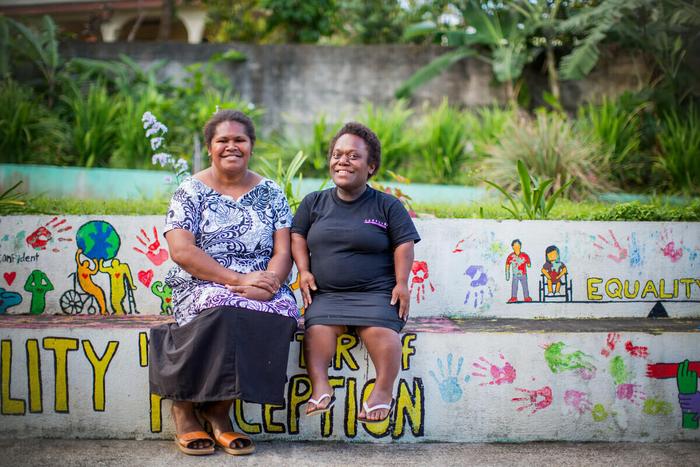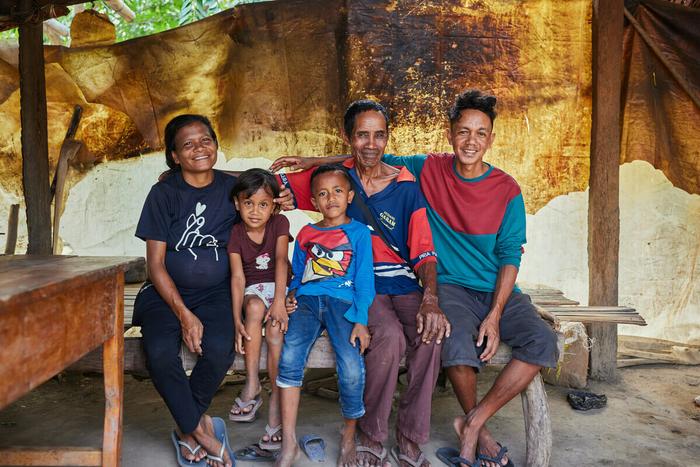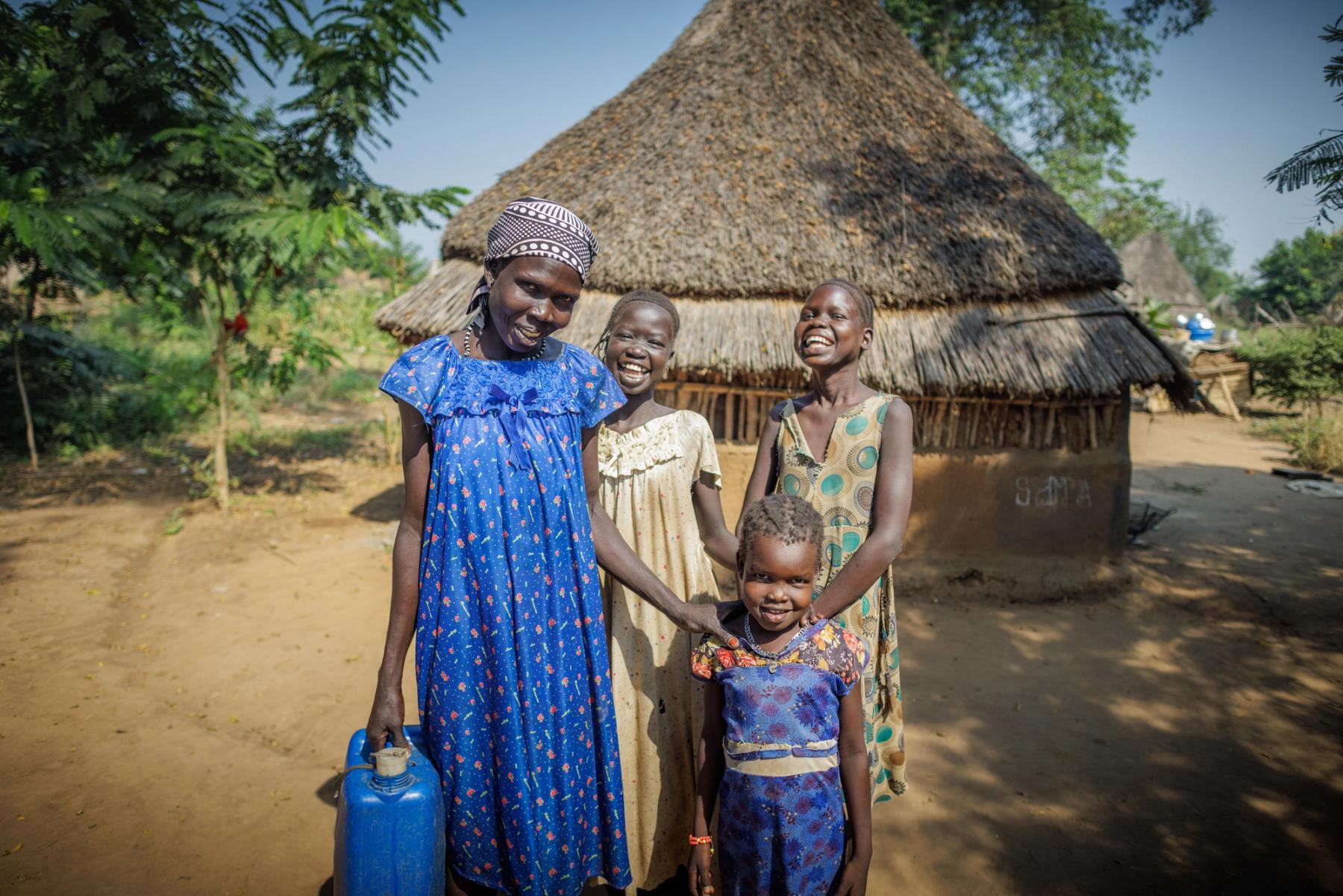
Ethiopia: Refugees are delighted to have received potable water within walking distance from their homes. The project is part of the WASH implementations by Oxfam. The refugee in blue dress is Nyhtuk Hukuch, posing together with her three children. Photo: Petterik Wiggers/Oxfam.
What are human rights?
Learn the 30 rights in the Universal Declaration, how they are protected in Australia and why they matter.
What are human rights? They’re the rights and freedoms that belong to every person on Earth, and they set the minimum standard for how every person should be treated, regardless of where they live, who they are or what they have.
They belong to us not because a government grants them, but because every human being has inherent dignity. You are born with these rights. They can’t be earned, and they can’t be permanently taken away.
When those standards are met, people can live with dignity and make real choices about their own lives. When they’re not, the consequences are often poverty and exclusion, where people live in extremely challenging conditions. When that happens, it’s not an accident. It’s the result of rules and systems that can be changed.
The four key features of human rights
Human rights share four defining characteristics, confirmed by the UN Office of the High Commissioner for Human Rights.
Universal
Human rights apply to every person in every country without exception. They do not depend on citizenship, wealth, gender, religion or any other status.
Inalienable
Rights can’t be permanently removed. Even when they are violated, the right itself remains. A person doesn’t stop having the right to a fair trial because a government chooses to deny it.
Indivisible and interdependent
All rights are equally important and connected. You can’t fully enjoy civil and political rights without access to food, healthcare and education. Denying one right tends to undermine others.
Equal and non-discriminatory
Rights belong to everyone equally. Discrimination on the basis of race, gender, disability, sexual orientation, religion, class or cultural identity is a violation of this principle.
Discrimination rarely arrives alone; it compounds. A person facing gender discrimination, racial discrimination and economic exclusion faces a fundamentally different reality than someone facing only one of these barriers.
Who’s responsible for protecting human rights?
Rights belong to people. The obligation to uphold them belongs to governments. Under international law, governments have three specific duties: to respect human rights (refrain from interfering with them), to protect them (shield people from abuses by others), and to fulfil them (take positive action to make rights a lived reality). When any one of these three duties fails, a violation occurs.
Civil and political rights vs economic, social and cultural rights
Human rights fall into two broad categories. Civil and political rights protect individuals from abuses of power and ensure participation in public life. Things like the right to life, freedom from torture, free speech, a fair trial and the right to vote.
Economic, social and cultural rights guarantee the conditions necessary for a dignified life. Things like the right to food, healthcare, housing, work and education.
The two categories are inseparable. A person without a reliable source of food can’t participate fully in public life. A person whose right to speak is suppressed can’t advocate for better food, housing or healthcare. Protecting one set of rights depends on protecting the other.
The Universal Declaration of Human Rights
The foundation of modern international human rights law is the Universal Declaration of Human Rights (UDHR), adopted by the United Nations General Assembly on 10 December 1948.
In the aftermath of World War II, representatives from 50 member states came together to agree on a set of rights that every person everywhere should enjoy. Australia played a leading role in shaping and championing the Declaration. The result was a document of 30 articles, translated into more than 500 languages, that has since inspired more than 70 international human rights treaties.
The Declaration is not legally binding in itself, but it carries enormous moral authority and has shaped national and international law in countries across the world. Below are all 30 rights, grouped by theme. For the full legal text of each article, visit the UN’s official UDHR page.
What are the 30 human rights from the declaration?
Life, liberty and security
These are the most foundational protections in the Declaration; they’re the floor beneath everything else.
The right to life, liberty and security (Art. 3) means every person has the right to live freely and safely. Freedom from slavery (Art. 4) prohibits slavery and the slave trade in all forms. Freedom from torture (Art. 5) means no one may be subjected to cruel, inhuman or degrading treatment or punishment under any circumstance.
Equality and non-discrimination
These rights establish that every person is equal before the law and that no one can be treated differently on the basis of who they are.
All human beings are born free and equal in dignity and rights (Art. 1). Everyone is entitled to every right in this Declaration without discrimination of any kind — race, sex, language, religion, political opinion, national or social origin, or any other status (Art. 2). All people are entitled to equal protection of the law and equal protection against discrimination (Art. 7).
These rights to equality and non-discrimination are important because gender inequality alone means that 2.4 billion women of working age are not afforded equal economic opportunity (UN, 2024), and nearly 120 million girls don’t go to school (Malala Fund, 2024).
Discrimination like this compounds across gender, race, disability, class, sexual orientation and cultural identity. People facing multiple forms of exclusion face a fundamentally steeper climb to claim their human rights.
Oxfam’s gender equality work supports women, girls and gender-diverse people to exercise their rights, earn fair incomes and live free from violence in Bangladesh, Indonesia, Cambodia and communities across the world.
Recognition, justice and a fair trial
These rights protect people from arbitrary state power and guarantee access to legal remedy.
Everyone has the right to be recognised as a person before the law (Art. 6) and to an effective legal remedy when their rights are violated (Art. 8). Freedom from arbitrary arrest, detention or exile (Art. 9) means no one can be locked up without lawful process.
Everyone is entitled to a fair and public hearing by an independent and impartial tribunal (Art. 10), and anyone charged with a crime is presumed innocent until proven guilty (Art. 11). Everyone also has the right to privacy; to be free from arbitrary interference with their home, family, correspondence or reputation (Art. 12).
Movement, asylum and family
Everyone has the right to move freely within their country, and to leave and return to it (Art. 13). People facing persecution have the right to seek asylum in other countries (Art. 14). Everyone has the right to a nationality and cannot be arbitrarily stripped of it (Art. 15).
Adults have the right to marry freely and found a family, with equal rights in marriage and at its dissolution — and only with free and full consent (Art. 16). Everyone has the right to own property and cannot be arbitrarily deprived of it (Art. 17).
Today, more than 108 million people have been forcibly displaced from their homes because of persecution, conflict, violence or human rights violations (UNHCR 2022). For these people, the rights to movement, asylum and family can be the difference between life and death.
Thought, expression and participation
Everyone has the right to freedom of thought, conscience and religion, including the freedom to change beliefs and to practise them in public or private (Art. 18). Everyone has the right to freedom of opinion and expression. That is, to hold views without interference and to share information and ideas across any medium (Art. 19).
The right to peaceful assembly and association means people can gather and organise freely, and can’t be compelled to join any group (Art. 20). Everyone also has the right to take part in government, directly or through freely chosen representatives, in genuine elections held by secret ballot (Art. 21).
Work and fair conditions
Everyone has the right to social security and to the economic, social and cultural rights necessary for dignity and personal development (Art. 22). The right to work covers free choice of employment, just and favourable conditions, protection against unemployment, and equal pay for equal work (Art. 23). Everyone also has the right to rest and leisure, including reasonable limits on working hours (Art. 24).
These rights are violated every day for millions of people, often for those least able to fight back. Munni works eight hours a day in a tea plantation in Bangladesh, earning $2.30.
Before her workday begins at 8am, she has already been awake since 4am feeding cattle, cleaning, and cooking for her family. Through Oxfam’s partner Breaking the Silence, Munni and workers like her now meet regularly to learn about their human rights at work and at home. As she put it: “When meetings started here, I attended those and gradually gained courage. Now, there is no fear.”
Food, housing, health and an adequate standard of living
Everyone has the right to a standard of living adequate for the health and wellbeing of themselves and their family, including food, clothing, housing, medical care and necessary social services (Art. 25). This right also provides for security in the event of unemployment, illness, disability or other circumstances beyond a person’s control.
Around 700 million people live in extreme poverty — which is defined as earning less than USD $2.15 per day — without reliable access to food, clean water or healthcare. Climate change is compounding this: when a flood destroys a family’s harvest or a cyclone wipes out their home, the right to an adequate standard of living becomes impossible to realise without support. And more than 339 million people will need life-saving humanitarian aid as climate-fuelled disasters continue to rise (UN OCHA).
Oxfam’s food security and humanitarian response work helps communities access these rights when crises hit, providing clean water, food, emergency shelter and the support to rebuild. Oxfam also works to change the rules that leave people exposed in the first place.
Education, culture and social order
Everyone has the right to education — free and compulsory at the elementary level, with higher education equally accessible on the basis of merit (Art. 26). Education must promote understanding, tolerance and respect for human rights.
Everyone has the right to participate in the cultural life of their community and to share in the benefits of scientific progress (Art. 27). Everyone is entitled to a social and international order in which these rights can be fully realised (Art. 28). These rights come with responsibilities to the community; rights may only be limited by law to protect the rights of others (Art. 29). And nothing in the Declaration may be used to justify the destruction of the rights it sets out (Art. 30).
What are human rights violations?
A human rights violation occurs when a government, institution or individual fails to respect, protect or fulfil human rights.
Violations range from specific acts like arbitrary arrest, denial of medical care, or forced displacement, to systemic failures built into laws, policies and economic structures.
Poverty itself is a form of human rights violation. When people can’t reliably access food, healthcare, housing or education, their rights to those things are being denied. Not as a result of individual acts of cruelty, but because our rules and systems concentrate power and resources in the hands of a few.
As Oxfam’s work on poverty makes clear: poverty is not an accident. It is human-made, it is not inevitable and it is sustained by the same inequalities that drive discrimination.
Climate change is increasingly recognised as a threat to human rights and potential cause of violations (OHCHR 2026). Extreme weather events, rising seas and intensifying droughts are undermining the right to food, housing and a safe and healthy environment. And communities that did the least to cause the crisis are bearing the brunt of the worst impacts.
Human rights violations also aren’t only a problem in other countries. In Australia, 3.7 million people live below the poverty line (ACOSS and UNSW Sydney, 2025). First Peoples communities continue to experience disproportionate rates of incarceration, poverty and health inequality; a direct consequence of dispossession that remains a live human rights issue today.
Human rights in Australia
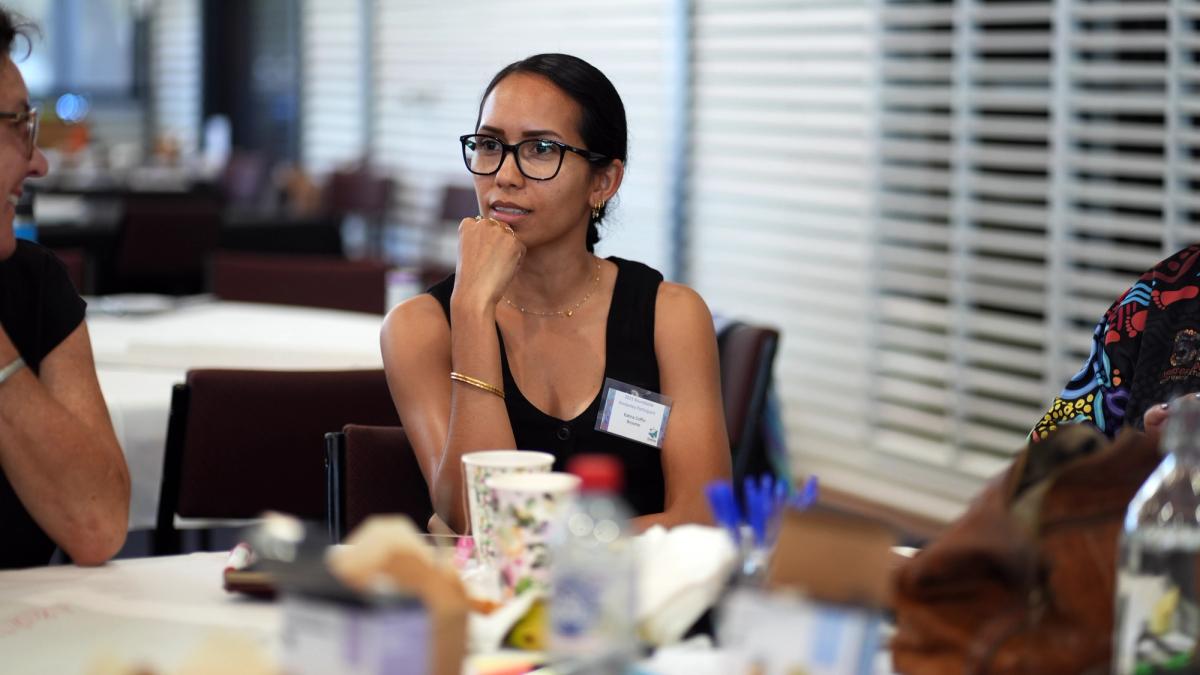
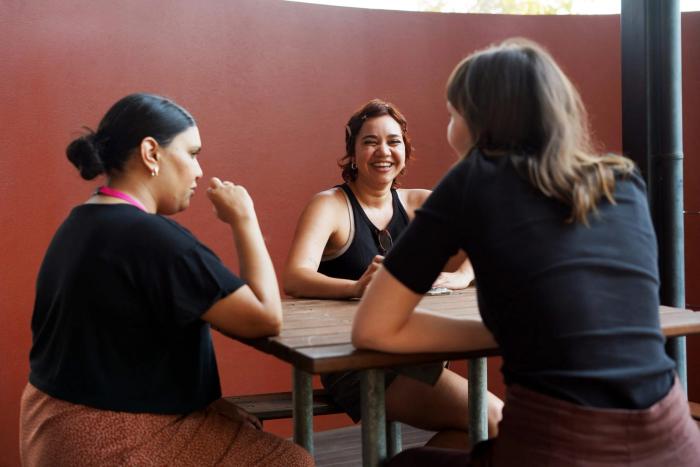
Australia: Deep listening: Katina Coffin during discussion time at the 2025 KAWC Roundtable. Photo: Aimee Han/Oxfam
Australia does not have a national human rights act, though several states and territories (Victoria, the ACT and Queensland) have enacted their own human rights legislation. The Australian Human Rights Commission monitors and investigates human rights issues nationally and accepts complaints from people whose rights have been breached.
Australia has ratified most major international human rights treaties, including the International Covenant on Civil and Political Rights and the International Covenant on Economic, Social and Cultural Rights. Australia also played a leading role in shaping and championing the Universal Declaration itself in 1948.
For many Australians, human rights are exercised daily without a second thought — the freedom to travel, to join a union, to practise a religion, to take a child to the doctor. But for others, these rights remain a daily struggle.
Katina Coffin is a Yawuru woman who delivers sexual health education to girls in the Kimberley region of Western Australia, working with the Kimberley Aboriginal Women’s Council. Her community works actively to protect and pass on rights to health, education, cultural life and self-determination.
“Women’s voices are really important,” she says. “So, if we’ve got a voice, we’ve got to use it.” First Peoples women in Australia often face a double burden — discrimination on the basis of both gender and identity — which compounds inequality and limits economic opportunity. Oxfam’s First Peoples justice work is grounded in solidarity, and often works with communities like Katina’s.
How Oxfam works to uphold human rights
Oxfam’s work begins with a simple belief: poverty isn’t inevitable. It’s the result of rules about who gets access to resources and opportunities and whose voice counts in decisions. Those rules can be changed.
That belief shapes everything we do at Oxfam. When disasters strike, Oxfam and local partners deliver humanitarian aid to communities in need of basic human rights like food, clean water, shelter and sanitation.
When crises pass, Oxfam works with those communities to rebuild, strengthen local food systems and reduce vulnerability to future shocks. We believe everyone has the right to participate in decisions that affect their lives. Working alongside local partners, we support long-term development programs that help people claim their rights, challenge inequality and build more secure futures.
And throughout all this, Oxfam advocates for the systemic changes that make rights real for more people: fairer economic rules, stronger protections for workers, more equitable climate finance, and greater power for the communities most affected by inequality.
Rights belong to everyone. The work is to make sure everyone lives with them.
You can also explore our appeals, or read about what climate change is and why it matters, how we work to reduce poverty, and to improve food security.