By Louise Mooney
Louise Mooney is the humanitarian program coordinator for Oxfam Australia’s Africa unit, and is currently in Niger to see how our response to the West Africa food crisis is unfolding. Here, she reports from her first full day in Niamey.
17 September 2012
My first full day in Niger’s capital Niamey fortunately began much cooler than the oppressively hot day I arrived, thanks to an impressive electrical storm overnight. It also served to dampen the red dust that often blankets this city, perched on the edge of the Sahara.
We spent the day monitoring distributions of much-needed essential household items for people who have lost nearly everything in recent flooding. This flooding hit just at a time when millions of people in Niger were hopeful that this year’s coming harvest would ease the severe food crisis that has affected the Sahel region for much of the year. Instead, heavy rains quickly inundated drought-hardened areas that had not had decent rain for years, destroying houses and crops.
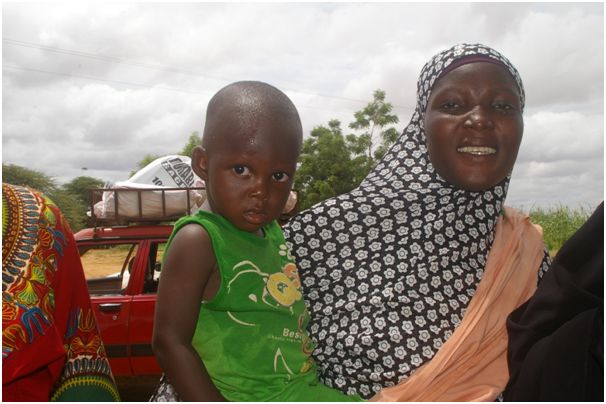
To help get people back on their feet, Oxfam is working with organisations such as the World Food Programme, UNICEF and the Niger Government to distribute essential items including food, blankets, mosquito nets, soap, water purification tablets and money. Mothers Ramtou and Kadija (pictured above), with 11 children between them, were among the 18,000 to lose their homes to flooding and plan to use the money distributed to buy millet to feed their families.
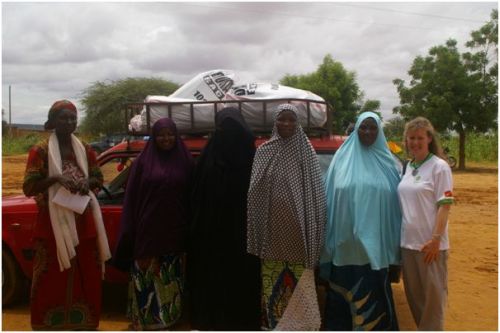
In the late afternoon I caught up with Oxfam’s Humanitarian Manager in Niger, Housseini Ouedraogo, and discussed how Oxfam plans to soon shift the support provided to communities from essential household items, cash and food, to support for longer term rehabilitation and resilience to future disasters. Depending on the needs and location, this may include establishing dry season gardens and grain banks, supporting small scale agriculture, purchasing livestock, improving water supply and providing adequate sanitation.
This long-term approach is essential in a region that is experiencing more frequent and severe disasters, political instability and chronic poverty.
Find out more
Read more about Oxfam’s response in West Africa
Read a blog post by Oxfam Australia’s ED Andrew Hewett, about the situation in Burkina Faso