Famine is the most extreme and deadly form of food crisis. It’s what happens when food scarcity becomes so severe and widespread that people are dying. In 2025, the 2026 Global Report on Food Crises confirmed two simultaneous famines: in parts of Sudan and in Gaza.
Famine is not natural. It doesn’t happen because the world runs out of food. It happens because of conflict, inequality and political failure. And that means it can be prevented.
This article explains what famine is, how it’s declared, what drives it, where it’s happening now, and how we can respond. Not just with humanitarian aid, but with the systemic change that makes food crises less likely in the first place.
What is famine?
Famine, defined in its technical sense, is a situation of extreme food shortage so severe and widespread that people are dying from acute hunger and disease.
It’s distinct from related terms that are sometimes used interchangeably. Hunger is a physical sensation (the discomfort of not having eaten). Food insecurity describes unreliable or insufficient access to nutritious food over time. A food shortage is a temporary disruption to supply. Famine sits at the catastrophic end of this spectrum — a crisis so immense and prolonged that people are dying.
The word itself dates to the 14th century, but today famine has a specific technical definition governed by the Integrated Food Security Phase Classification (IPC), an international system used by UN agencies, governments and humanitarian organisations to measure the severity of food crises. Under the IPC, famine is not declared based on perception or description. It is declared when measurable thresholds of food deprivation, malnutrition and mortality are simultaneously met.
What are the health and developmental effects of famine?
Famine has severe and lasting consequences beyond immediate mortality. Research from UNICEF and the World Health Organization shows that children who survive famine often face stunting, impaired cognitive development and lifelong health complications.
A community recovering from famine can face reduced economic productivity and food insecurity for years. Children experiencing food insecurity may struggle to concentrate at school. Over time, this can reduce educational attainment and earning potential, reinforcing intergenerational poverty.
How is famine officially declared?
The IPC classifies food insecurity across five phases, from Phase 1 (Minimal) to Phase 5 (Famine). Understanding what the earlier phases mean helps clarify just how extreme Phase 5 is.
For an area to be classified as Famine, IPC Phase 5, all three of the following thresholds must be met simultaneously, according to the IPC’s famine criteria:
- Food access: More than 20% of households face extreme food shortages with a limited ability to cope.
- Malnutrition: More than 30% of children under five suffer from acute malnutrition (also known as wasting, when children are dangerously thin for their height).
- Mortality: The death rate exceeds two people per 10,000 per day, or four children under five per 10,000 per day.
All three thresholds must be met, or two confirmed with the third assessed as likely based on available evidence. Famine can be classified with “solid evidence” or “reasonable evidence,” with the latter applying when data access is restricted — which happens in conflict zones like Sudan and Gaza, where collecting reliable mortality and nutrition data is extremely difficult or dangerous.
The declaration process involves the IPC Famine Review Committee (an independent body of technical experts) and carries no binding legal obligations. But it does focus global attention, unlock emergency funding and create accountability for inaction.
Two bodies, the IPC and FEWS NET, monitor famine risk globally, providing early warning analysis months in advance of confirmed crises.
What causes famine?
Famine doesn’t happen because the world doesn’t produce enough food. Global food production is sufficient to feed everyone on earth. Famine happens because of how food and power are distributed. There are four primary drivers.
Conflict
Conflict is currently the leading cause of famine. The 2026 Global Report on Food Crises, published in April 2026 by an alliance of UN agencies and partners, confirms that conflict was the primary driver of acute food insecurity in 20 countries and territories in 2025, affecting nearly 140 million people.
Conflict destroys crops and farming infrastructure, displaces agricultural communities, blocks aid delivery and, increasingly, is used deliberately to deprive civilians of food.
Climate change
Climate change compounds every other driver of famine. Prolonged drought in the Horn of Africa and the Sahel has repeatedly pushed communities from food insecurity into food crisis, killing livestock, destroying harvests and contaminating water supplies. Flooding disrupts food supply with equal power.
The communities bearing the heaviest cost of climate-driven food scarcity are almost always those who contributed least to the emissions causing it. To understand more about the connection between climate and hunger, read our climate change explainer.
Economic inequality and poverty
Economic inequality and poverty mean that sometimes, even where food is physically available, it’s unaffordable. Currency collapse, inflation, the withdrawal of subsidies and the destruction of livelihoods by conflict can all make staple foods unreachable.
Structural economic inequality is why the same regions face repeated food crises generation after generation. It means communities have no buffer when harvests fail or prices spike, and a single shock can push whole regions into crisis.
Learn more about Oxfam Australia’s economic equality work.
The failure to act on early warnings
The failure to act on early warnings is a cause in itself. Systems like FEWS NET can predict famine conditions months in advance. The data exists. What’s often missing is the political will to fund a response before a crisis becomes a confirmed catastrophe. Every famine that has been declared in the past decade was visible in early warning data long before it reached Phase 5.
None of these causes of famine is inevitable. Each is the outcome of choices. Choices about whether humanitarian access is protected or denied, how much humanitarian aid is provided, who receives climate finance, how economies are structured, and whether governments treat early warning data as a call to act.
Where is famine happening right now?
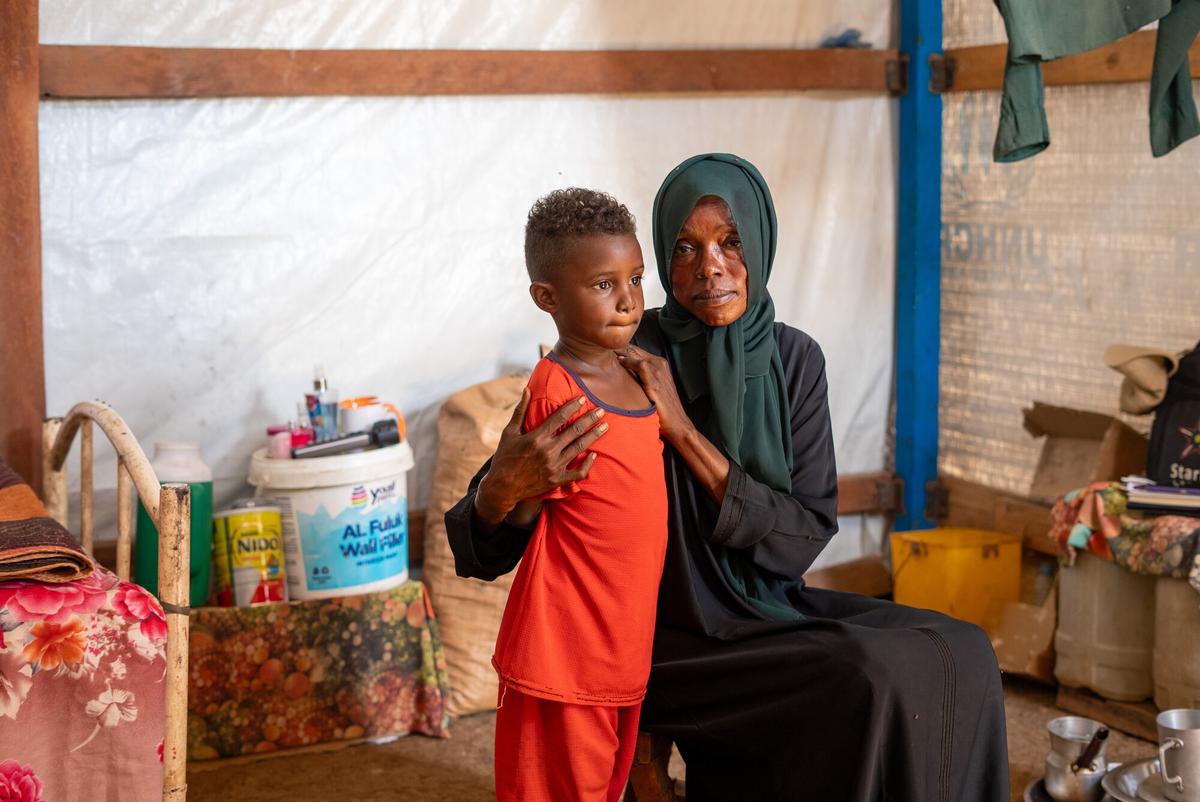
South Sudan: 35-year-old Nadia Zahad, a refugee from the Sudan war, with her son at their makeshift home in Renk. Photo: Herison Philip Osfaldo/Oxfam
Historically, the IPC declared famines in Somalia in 2011, and South Sudan in 2017. The scale of the current global hunger crisis is staggering.
In 2025, famine was declared in two countries in the same year (Sudan and Gaza), and 266 million people in 47 countries experienced high levels of acute food insecurity. That’s nearly double the share recorded in 2016.
Looking ahead, the World Food Programme estimates 363 million people are at risk of acute hunger in 2026. Let’s look at three places where the crisis has reached or is approaching the most extreme threshold.
Sudan
Sudan is experiencing one of the world’s most severe food crises. Famine was confirmed in El Fasher and Kadugli in September 2025, with at least 20 additional localities at risk if violence continues or humanitarian access remains blocked.
An estimated 21.2 million people (45% of the population) faced high levels of acute food insecurity at its peak in 2025. The current conflict began in April 2023 and has destroyed infrastructure, displaced millions and systematically blocked aid delivery.
Donate to our International Crisis Fund.
Gaza
In August 2025, famine was confirmed in Gaza City (the second of the two famines declared in the same year).
Following a ceasefire and improved humanitarian access, conditions improved by late 2025. But the situation remains critically severe, with around 1.6 million people (77% of the population) still facing high levels of acute food insecurity, and the risk of famine persisting into 2026.
The Israeli Government’s deliberate restriction of aid has been identified as a key cause. You can read more about the situation in our Gaza update.
Yemen
Yemen has not formally declared famine, but the conditions are among the most precarious in the world. In 2026, an estimated 23 million people need humanitarian assistance, with over 18 million facing acute hunger and pockets of famine-like conditions emerging. A decade of conflict, economic collapse and chronic underfunding of humanitarian response have pushed the country to the edge.
Donate to our Middle East Crisis appeal to support people across the region.
How does Oxfam Australia respond to famine?
When we understand what famine is, we understand why the response can’t stop at emergency relief.
Immediate humanitarian response
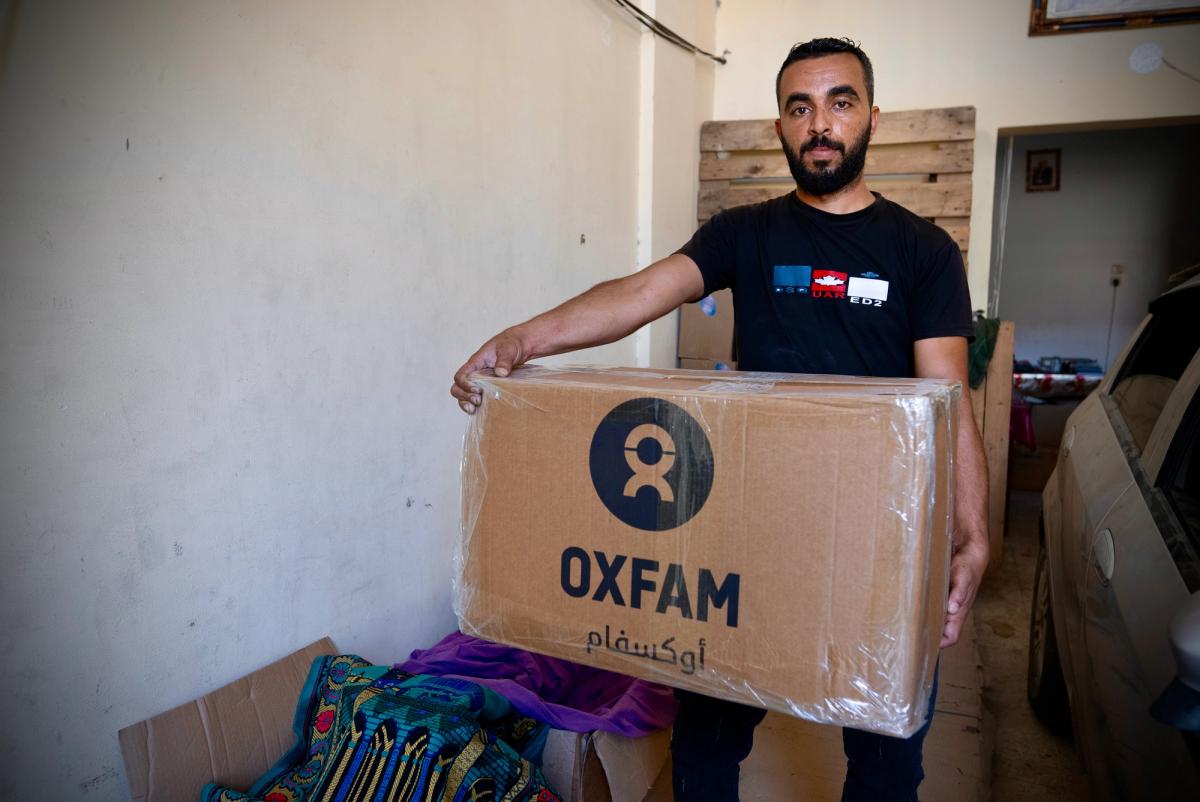
Oxfam works with local partner organisations to deliver what communities need to survive: clean water, sanitation and hygiene support (WASH), emergency food assistance, hygiene and dignity kits, and cash assistance so families can meet their own needs with dignity.
In Gaza, the Oxfam confederation and local partners have installed small-scale desalination units, placed water tanks and tap-stands, repaired damaged water lines and distributed hygiene kits, reaching over 800,000 people since October 2023.
Clean water is not incidental to famine response. Contaminated water drives the disease outbreaks that kill malnourished people.
Recovery and rebuilding
Once the immediate crisis stabilises, our work shifts to restoring the foundations of food security: rehabilitating water systems, supporting smallholder farmers to restart production, rebuilding livelihoods and strengthening the local systems that protect communities against future shocks.
This work is often led by local partners who understand their communities’ needs and will remain long after emergency teams withdraw.
Advocacy for systemic change
Emergency relief saves lives now. Systemic change means fewer lives need saving in the future.
Oxfam campaigns for increased humanitarian aid funding, unrestricted humanitarian access in conflict zones, climate finance that flows to affected communities, and fairer economic systems that address the poverty driving food insecurity.
Will you support this vital work?
Can famine be prevented?
Yes. And this is the most important thing to understand about famine.
The world produces enough food to feed every person on earth. Famine is not a supply problem. It’s a distribution problem driven by conflict and inequality. It’s the outcome of systems that have been allowed, by policy and by inaction, to fail the people most at risk.
The early warning tools exist. FEWS NET and the IPC can identify famine risk months before conditions become catastrophic. But further action requires political will. Governments and donors must respond to data with funding and diplomatic pressure.
The evidence is clear. The technology exists. The knowledge exists. What we need is the collective resolve to take action.
When you support Oxfam Australia, you’re funding both the immediate response — clean water, food, protection — and the long-term advocacy that works to end the conditions causing poverty and acute hunger in the first place.
That’s the kind of change that doesn’t just save lives today. It helps prevent the next famine from happening at all. Take action with us today.