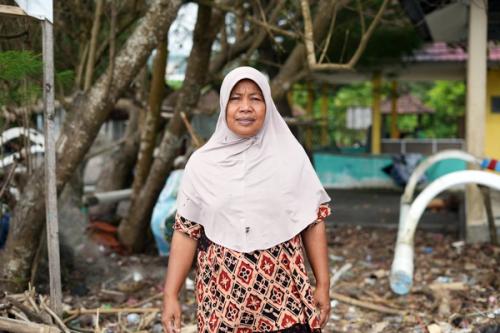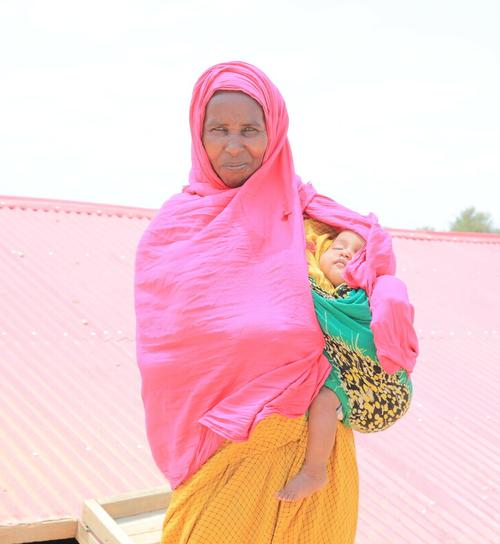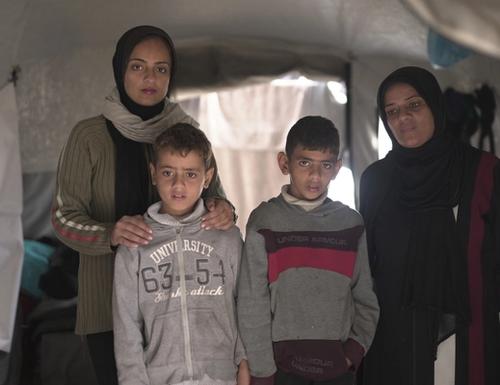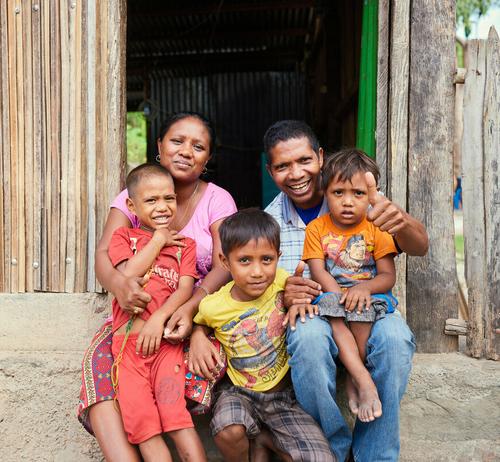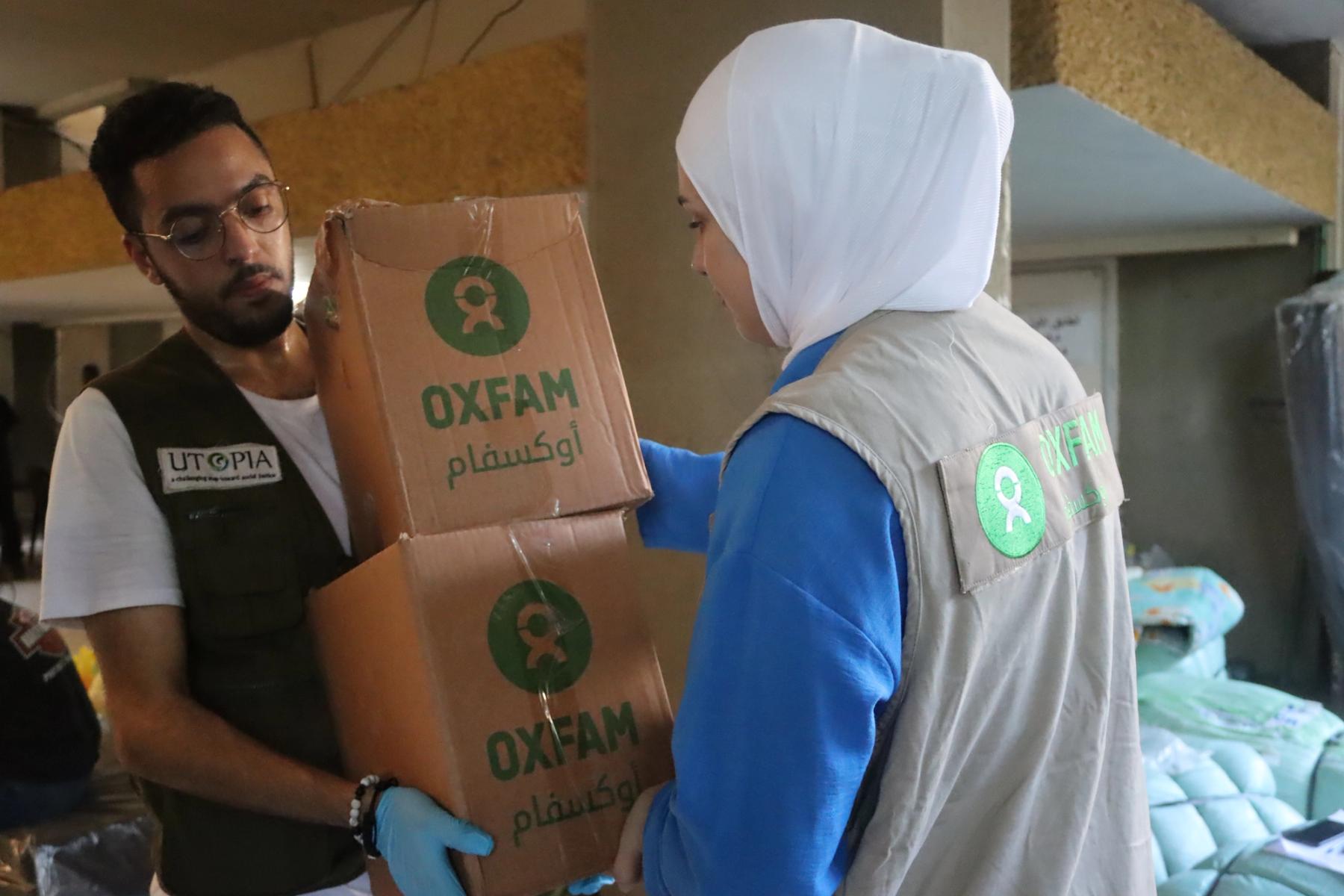
Lebanon: Oxfam and partners distributing Menstrual Hygiene Management kits at a collective shelter for displaced people in North Lebanon. Photo: Walid Aassar/Oxfam
What is humanitarian aid?
Learn what humanitarian aid is, the four humanitarian principles and how it differs from development aid.
Humanitarian aid is assistance provided to people affected by crises (including conflict, displacement and sudden-onset disasters) to save lives, minimise hardship and protect human dignity. It is delivered by humanitarian organisations, governments and local communities when the scale of an emergency exceeds what affected people can manage alone.
When crises strike, humanitarian aid is often the difference between survival and loss of life. It reaches people at their most urgent moment of need, delivering the essentials that keep people alive, safe and connected to their basic human rights.
What does humanitarian aid include?
Humanitarian aid covers the immediate essentials: food and nutrition, clean water and sanitation, shelter, medical support, cash assistance, protection and education.
It also includes advocacy, ensuring that humanitarian organisations can access people in need, that the laws protecting civilians in conflict are upheld, and that aid reaches people based on need, not political interest.
Effective humanitarian responses combine several types of aid at once. Clean water prevents disease as surely as medical care does. Shelter and protection services both ensure safety. In 2024-25, Oxfam responded to 22 emergency situations around the world, working across all of these areas alongside local partners who know their communities and their needs.
The four humanitarian principles
Humanitarian aid is guided by four principles, endorsed by the United Nations and upheld by Oxfam and the broader humanitarian sector in every response.
Humanity
The purpose of humanitarian aid is to address human suffering wherever it is found, protect life and health, and uphold the dignity of all people.
Neutrality
Aid organisations don’t take sides in conflicts or engage in controversies of a political, racial, religious or ideological nature, so that aid can reach people on all sides of a crisis.
Impartiality
Aid is provided solely on the basis of need, giving priority to the most urgent cases and making no distinctions based on nationality, race, gender, religion or political affiliation.
Independence
Humanitarian action remains autonomous from political, economic or military objectives, so that the decisions about who receives aid are made on the basis of need, not the interests of governments or other actors.
Humanitarian aid versus development aid
Humanitarian aid and development aid are related but distinct. Both aim to improve people's lives, but they operate on different timescales and address different problems.
Humanitarian aid responds to immediate, urgent needs. Development aid addresses the longer-term conditions that make communities vulnerable to crises in the first place. Things like investing in food systems, education, economic resilience and governance over years and decades.
Between the two sits disaster risk reduction, which is the work of reducing risk before disasters strike by equipping communities with the skills, systems and local knowledge to prepare for and respond to crises. It’s how short-term emergency response connects to lasting change.
Oxfam works across all three areas responding to emergencies, reducing risk before they strike, and building the long-term conditions for communities to thrive.
It’s not enough to only consider what humanitarian aid is, we also need to consider why it’s so important.
Why is humanitarian aid important?
It saves lives
When crises strike, access to clean water, food and shelter is usually the difference between life and death. Oxfam and local partners deliver the essentials that keep people alive in the hours and days when it matters most. In 2024-25, Oxfam Australia contributed to the Oxfam confederation reaching 14.25 million people in times of crisis.
It controls disease
Crises create the conditions for disease to spread rapidly. Without clean water, cholera and typhoid move through displaced communities with devastating speed. Oxfam's core humanitarian specialisation — water, sanitation and hygiene — prevents outbreaks before they begin, protecting the health of entire communities through the delivery of safe water and sanitation facilities.
It protects people who have been displaced
More than 100 million people are currently forcibly displaced. Losing a home to conflict or disaster doesn't mean losing the right to safety, dignity and legal protection. Through the provision of shelter, protection services, safe spaces and legal assistance, humanitarian aid maintains the humanity of people who have lost everything else.
It builds stability
Unmet basic needs deepen the conditions that drive further conflict and displacement. When basic needs are met and suffering is alleviated, communities have a foundation for recovery. Effective humanitarian response doesn't end crises, but it creates the conditions in which recovery becomes possible, reducing the cycle of need that drives long-term instability.
It upholds human rights
Humanitarian aid is a recognition that all people have rights, including the right to life and to dignity. Oxfam's humanitarian work includes advocacy: ensuring that humanitarian access is protected, that the laws of war are upheld, and that aid reaches people based on need, not political calculation.
Types of humanitarian aid
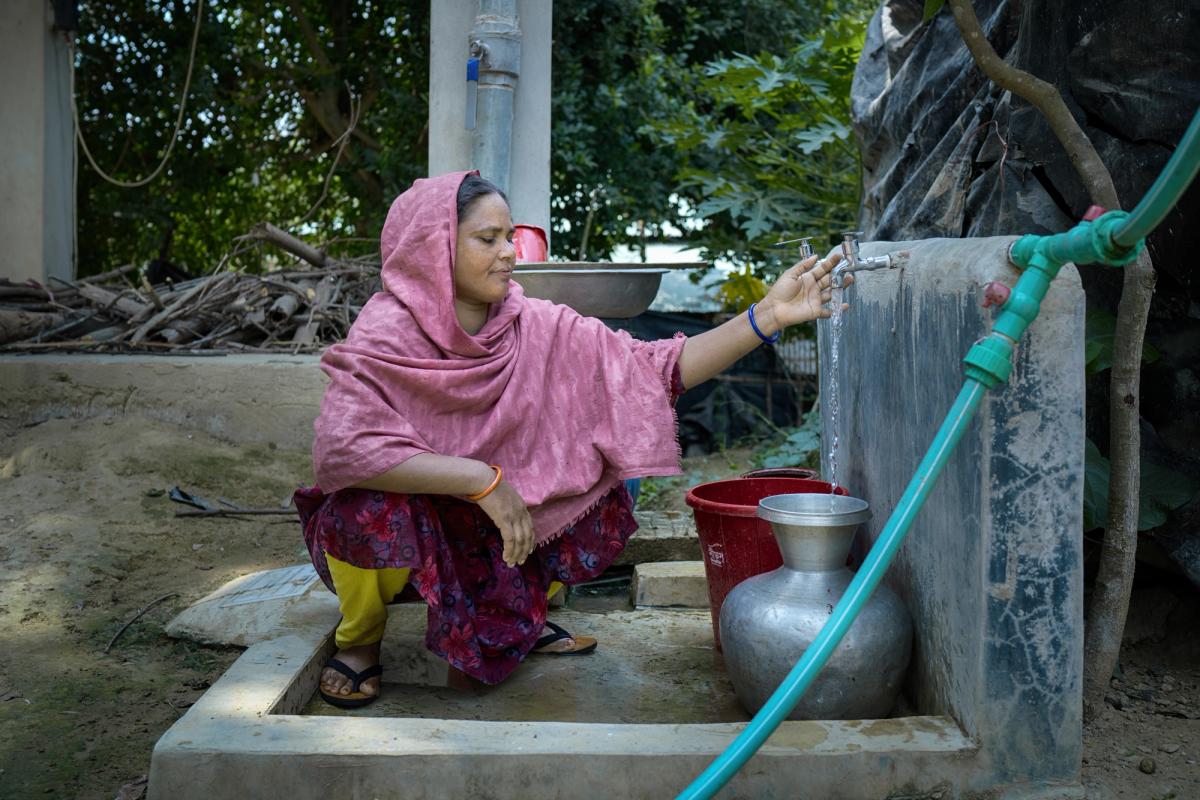
Bangladesh :Jannat collects water from the community water point. Jannat lives in Nayapara, in the Cox's Bazar area which hosts over 1.7 million Rohingya refugees. Her community was severely impacted by water scarcity until Oxfam partner organisation NGO Forum installed a Mini Piped Water Distribution Network, enabling community members to access safe, clean water whenever they need. Photo: Fabeha Monir/Oxfam Oxfam acknowledges the support of the Australian Government through the Australian Humanitarian Partnership (AHP).
Every crisis is different, and effective humanitarian response draws on several types of aid simultaneously.
Food and nutrition
Access to safe, nutritious food is among the most immediate needs in any humanitarian crisis. Food assistance includes emergency distributions, nutrition supplements for malnourished children, and cash assistance that allows families to buy food from local markets (which supports local economies while addressing immediate need).
Oxfam is delivering food support and cash assistance to communities across East Africa, where more than 56 million people face acute hunger. In South Sudan, Shaima Ali is a refugee and mother of four who receives monthly cash assistance through an Oxfam program that helps her family meet their most urgent food needs. Cash-based assistance enables families to buy what they need from local markets, rather than relying solely on pre-packaged distributions.
Water, sanitation and hygiene (WASH)
Clean water is a lifeline in any crisis. It prevents disease, enables food preparation, and maintains the dignity of people who have lost access to basic services.
Oxfam's WASH teams are among the most experienced in the humanitarian sector. We work with local partners to deploy water purification systems, truck water to displaced communities, install emergency latrines and distribute hygiene kits in some of the world's most difficult operating environments.
In Lebanon in 2026, Oxfam delivered water trucking and hygiene support to 8,460 displaced people across 40 collective shelters in Beirut, Mount Lebanon and North Lebanon. In Yemen, a solar-powered system installed by Oxfam now serves 4,650 people in Farjat Adeem with reliable, affordable clean water. The response also eliminated dependency on diesel fuel supplies disrupted by conflict. In Syria, Oxfam reached 2.4 million people with support in 2024 and 2025.
Learn more about Oxfam's WASH work
Shelter
When homes are destroyed by conflict or crisis, people need immediate protection from the elements and a safe, private space from which recovery can begin. Shelter assistance ranges from emergency tarpaulins and tents in the immediate aftermath of a disaster to transitional housing and reconstruction support as communities begin to rebuild.
In the Pacific, Oxfam's Disaster Ready program is implemented with local partners in Vanuatu, Fiji, Solomon Islands and Timor-Leste. It supports communities to prepare for disasters before they strike. When Cyclone Pam devastated Vanuatu in 2015, Oxfam coordinated the Vanuatu Humanitarian Team. The team brought together more than 50 organisations to deliver water, sanitation, food security, shelter and protection responses across 38 islands, working alongside the national disaster management office.
Medical aid and public health
Healthcare in a crisis prevents suffering and saves lives. Medical humanitarian response includes primary healthcare, emergency surgery, vaccinations and public health campaigns that prevent disease outbreaks before they take hold.
Oxfam's contribution to health in emergencies operates primarily through WASH and public health awareness. Access to clean water and sanitation is one of the most effective disease prevention measures available.
In 2026, when an Ebola outbreak struck the Democratic Republic of Congo, Oxfam mounted an emergency response in Ituri. The response delivered clean water, hygiene kits and health awareness to affected communities. Oxfam also worked to improve health infrastructure in the country, where years of conflict and aid cuts had weakened the systems that should have detected the outbreak earlier.
Cash assistance
Cash is increasingly recognised as one of the most effective forms of humanitarian aid. Rather than imposing pre-determined packages of goods, cash assistance allows people to meet their own priorities. They can buy the food, medicines or household items they most need from local sellers, which also supports local economies.
In East Africa, Oxfam delivers cash assistance across multiple crisis contexts. In Somalia during the drought crisis driven by El Niño, Oxfam provided timely cash to thousands of families in Somaliland and Kenya to reduce the risk of hunger and famine.
Cash allows people to exercise agency in their own recovery — consistent with Oxfam's commitment to working with communities rather than for them.
Protection and education
Crises expose people to heightened risks of violence, exploitation and abuse; particularly women, children, LGBTQIA+ people and people with disabilities.
Protection responses create the conditions for safety. Legal assistance for displaced people, safe spaces for survivors of violence, lighting and secure toilet placement in refugee camps, and dedicated areas for unaccompanied women and children.
Education in emergencies maintains children's sense of safety and continuity, and protects their long-term futures.
Oxfam's refugee response includes protection-focused measures drawn from decades of experience: thoughtful camp design, support for survivors of gender-based violence, and advocacy for the rights of refugees under the 1951 Refugee Convention and the Universal Declaration of Human Rights.
Explore Oxfam's current emergency appeals
How Oxfam Australia delivers humanitarian aid
Oxfam Australia is part of a global confederation of 21 independent organisations working in more than 70 countries. In 2024-25, Oxfam Australia responded to 22 emergencies, contributing to the confederation reaching 14.25 million people in times of crisis — more than 660,000 of them women.
Oxfam's humanitarian response is built on partnership; we always work alongside local organisations. Our partners are at the frontline of every crisis, know their communities, speak the language and understand what people need.
We are not an international organisation arriving with predetermined solutions. We share expertise and mutual accountability, ensuring that responses are effective, appropriate and community-led.
Oxfam's three humanitarian specialisations are water, sanitation and hygiene; support for refugees and displaced people; and disaster risk reduction. They reflect decades of experience and deep operational expertise. And together, they cover the immediate, protective and preventive dimensions of humanitarian action.
Our humanitarian work doesn't stop at the delivery of aid. We advocate for the right to humanitarian access, for the protection of civilians and aid workers, for funding to match need, and for the systems and laws that protect people in crisis to be upheld. Effective humanitarian response requires both action on the ground and accountability from the world's most powerful actors.
Learn more about Oxfam's humanitarian aid work, or read more specifically about water, sanitation and hygiene; refugees and displacement, or disaster risk reduction.
FAQ: What is humanitarian aid?
What is the meaning of humanitarian aid?
Humanitarian aid is assistance provided to people affected by crises (including conflict, displacement and sudden-onset disasters) to save lives, relieve suffering and protect human dignity. It’s guided by four principles: humanity, neutrality, impartiality and independence.
What are some examples of humanitarian aid?
Examples include clean water delivery and sanitation facilities in conflict zones, emergency food distributions and cash assistance for displaced families, temporary shelter after a crisis, protection services for survivors of violence, and public health support during disease outbreaks. Oxfam delivers all of these during emergency responses, with particular expertise in clean water and sanitation, food and cash assistance, and protection measures for displaced communities.
What are the types of humanitarian aid?
The main types are food and nutrition, water and sanitation, shelter, medical aid and public health, cash assistance, and protection and education. Effective humanitarian responses typically combine several types simultaneously because people’s needs during a crisis are interconnected.
Why is humanitarian aid important?
Humanitarian aid saves lives in the immediate aftermath of crises, controls disease outbreaks, protects displaced people, provides the stability that makes recovery possible, and upholds the fundamental human rights of people in need, regardless of their nationality, identity or political affiliation.
What is the difference between humanitarian aid and development aid?
Humanitarian aid addresses immediate, urgent needs during and after crises. Development aid focuses on longer-term goals like reducing poverty and building sustainable systems. Disaster risk reduction bridges the two, preparing communities for crises before they strike.
What are the four humanitarian principles?
The four humanitarian principles are humanity (addressing human suffering wherever it is found, protecting life and health, and upholding human dignity), neutrality (not taking sides in conflicts), impartiality (providing aid based on need alone) and independence (keeping humanitarian action free from political, economic, or military influence).