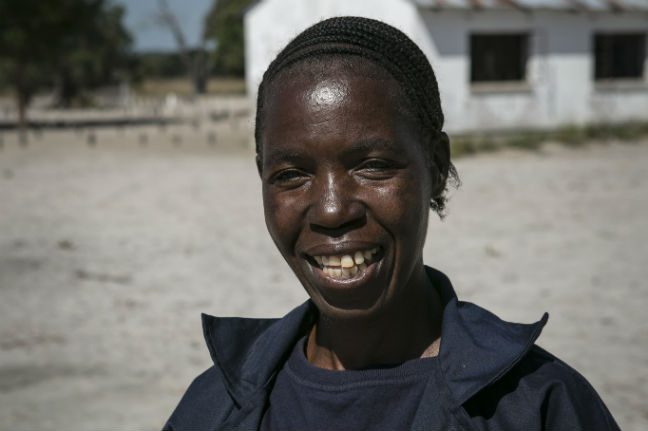
Right across the globe, Australian aid is making a difference in women’s lives. It’s providing opportunities – to survive, to gain an education, to build a business and to lead. But right now projects like Oxfam’s work in Zambia – which empowers women and builds their economic independence – are under threat because of the largest planned cuts to Australian aid in history.
“They didn’t believe that a woman can do the type of work I did,” said a beaming Maureen Likezo.
“I remember while I was working, some women would come out to watch me and some men would even come to shake my hand and say ‘you are doing a good job’.”
Maureen is a construction worker by trade. Together with Oxfam and our local community partners, she’s helping us deliver a clean water and sanitation program by building vital services like toilets, hand-washing facilities and water pumps.
But as a woman, life wasn’t always this way.
When Oxfam first started working in Maureen’s district, we met with the local community to discuss the best way to install the toilets and water pumps. Women were often absent, sidelined or excluded from the discussions – and therefore the decisions that would affect them.
Despite the fact women need toilets as much as men – and it’s usually women who take on the laborious task of collecting clean water – women remained voiceless. And when it came time to build the project, local businesses didn’t employ the women who were willing.
So, with the support of Australian aid funding, Maureen became one of 20 women trained and certified in building and construction.
Today, Maureen and other women from her community have come together to create their own small construction firm, and they have been awarded other contracts to build new services and facilities in their communities.
“This project changed my life because I learnt skills in construction and now I compete with other men and women. If there is construction work in other communities I have the skills to do it.” said Mareen.
It’s an amazing story of the power of Australian aid to not only provide the essentials that people need – like clean water – but also to empower women and men to make a more equal world.
Australia must contribute our fair share to international aid to help women like Maureen lift themselves out of poverty.
This International Women’s Day, call on the Australian Government to support women by supporting Australian aid.