What are the Millennium Development Goals?
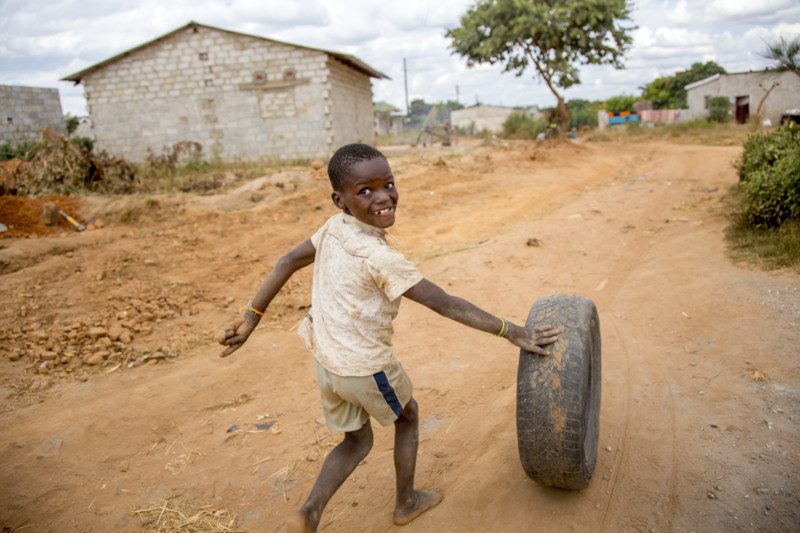
Photo: Jerry Galea/OxfamAUS
The Millennium Development Goals (MDGs) are a set of eight goals set by 191 United Nations member countries that have the goal of halving world poverty by the year 2015.
The goals are:
1. Eradicate extreme poverty and hunger
This goal calls for reducing by half the proportion of people living on less than $1 a day. It also calls for halving the proportion of people who suffer from hunger.
- Around 1 billion people live on less that $1 per day
- 800 million people go hungry every day
- While there are some poor countries who are on course for achieving goal 1, most of the poorest countries especially in Africa are falling well behind the targets
2. Achieve universal primary education
The target is for all children, boys and girls, to complete a full course of primary schooling.
- 133 million young people cannot read or write
- Only 37 of 155 developing countries have achieved universal primary school completion
- If current trends persist, children in more than half of the developing countries will not complete a full course of primary education in 2015
3. Promote gender equality and empower women
To eliminate gender disparity in primary and secondary education.
- Two-thirds of the world's illiterate people are female
- Women only held 15% of seats in national parliaments in 2003
4. Reduce child mortality by two thirds for children under five
This goal is to reduce the 1990 under-five mortality rate by two-thirds.
- Over 9 million children under the age of five die each year, mostly from preventable diseases
- Very few developing countries are on track to achieve the two-thirds reduction in mortality rates
5. Improve maternal health
Reduce by three-quarters the maternal mortality ratio.
- Of the 14,000 women and girls who die each day from causes related to childbirth, 99 percent are in the developing world
- Progress is well behind the 2015 target
6. Combat HIV and AIDS, malaria and other diseases
The aim is to halt and then begin to reverse the incidence of HIV and AIDS, malaria and other major diseases by 2015.
- The 2004 global report on AIDS concluded that there is almost no country where the spread of HIV/AIDS has been definitely stopped 2004 is fairly out of date is there something more recent we could use?
7. Ensure environmental sustainability
This goal embraces the general aim of sustainable development, while specifically seeking to halve the number of people without access to safe drinking water and sanitation, and to significantly improve the lives of the estimated 100 million slum dwellers.
- Over 2.4 billion people lack access to proper sanitation facilities
- 1 billion people lack access to drinkable water
- In sub-Saharan Africa progress falls far short of meeting the targets for this goal
8. Develop a global partnership for development
- This is to be achieved by establishing a fair and transparent world trade rules, debt relief and more and better quality aid
Developed countries to work in partnership with developing countries to provide the resources and structures needed to meet the MDGs targets including Overseas Development Assistance (ODA) of 0.7%
Learn more
- Goal 8 report 2009 (PDF, 1.3MB) measuring progress towards achievement of the MDGs by the Australian government
- Find out more about the Millennium Development Goals
Conditions of use
When you contribute content to our site, you retain ownership of the copyright. You also grant permission to Oxfam Australia to display and distribute your content, and to use it for any promotional purpose, without remuneration, compensation, or payment of royalties.
In addition, you are responsible for the content of your material. Oxfam Australia takes no responsibility for the content of any messages or information posted by contributors.
Oxfam Australia retains the right, in our sole discretion, to review, edit or delete any material which we deem to be illegal, offensive or otherwise inappropriate.