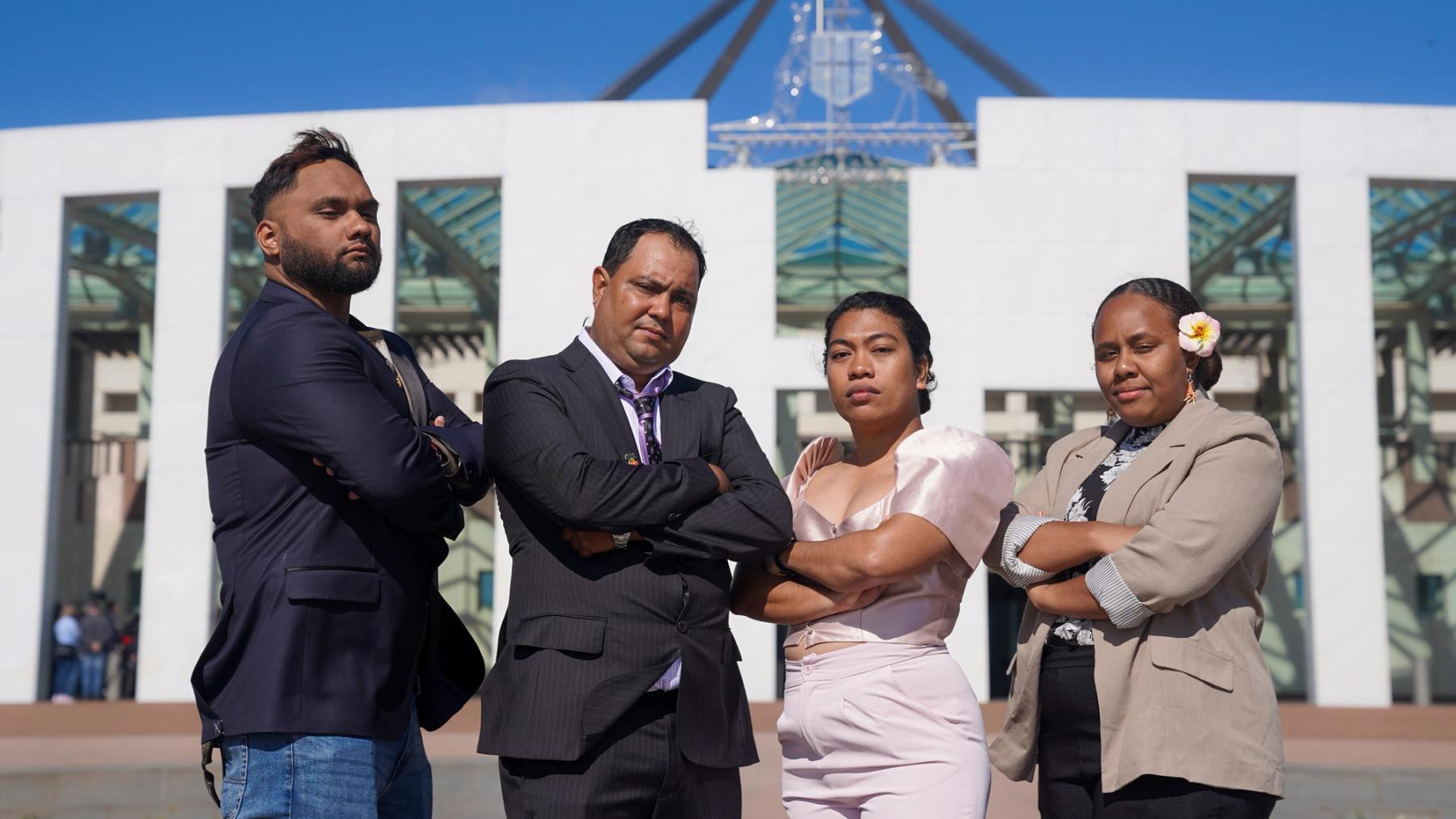
Australia: Four climate activists from the Kimberley, the Philippines and the Solomon Islands came together for the Safe Climate, Equal Future Speakers tour in September 2024. Photo: Heidi Demond/Oxfam
How political parties work and why we have them
To exist, political parties in Australia must follow a strict number of conditions
Australian law prescribes a number of conditions which must be met in order to form a political party. The party must have a written constitution. It must also aim to achieve the election of members to the House of Representatives or Senate. And, it must have either 1500 members whose names appear on the electoral roll, or have at least one member who is a current member of the Federal Parliament.
The consequences for misleading the Australian Electoral Commission, even inadvertently, when registering a political party can be severe – as Pauline Hanson learned when she was sentenced to three years in jail (but later acquitted) in 2003 for an electoral offence.
The two-party system
Australian politics is known as a two-party system. This is a result of the system of voting used to elect MPs to the House of Representatives.
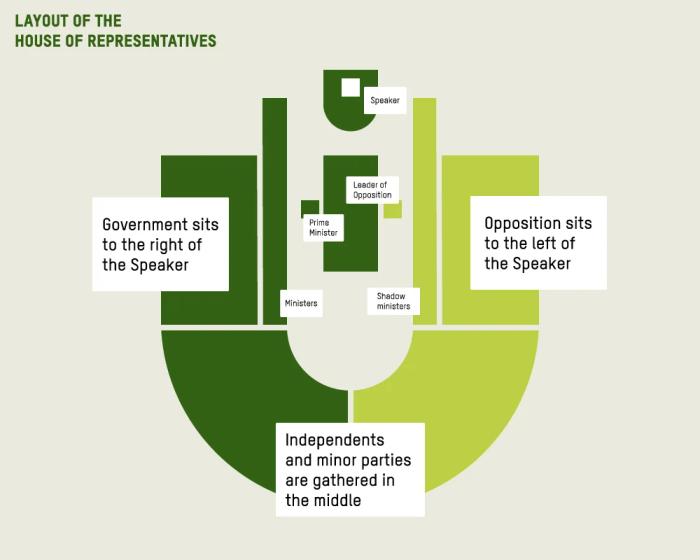
It is almost inevitable that either the Coalition (comprising the Liberal, Country Liberal and National parties), or the Labor Party will win a majority of seats and therefore be eligible to form government.
Nevertheless, smaller parties and parliamentarians who are not linked to any political party – known as ‘independents’ – are also represented in the Federal Parliament. In the 48th Parliament, there are 10 Independents and four minor party members in the House, and 10 Greens, seven other minor party members and three Independents in the Senate.