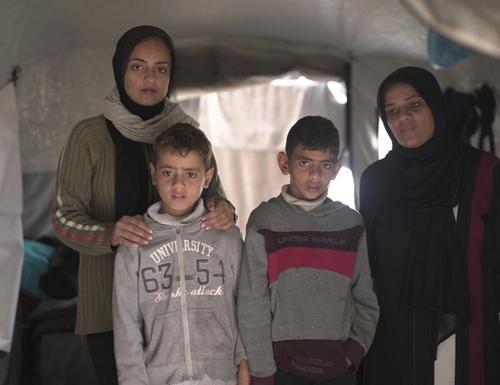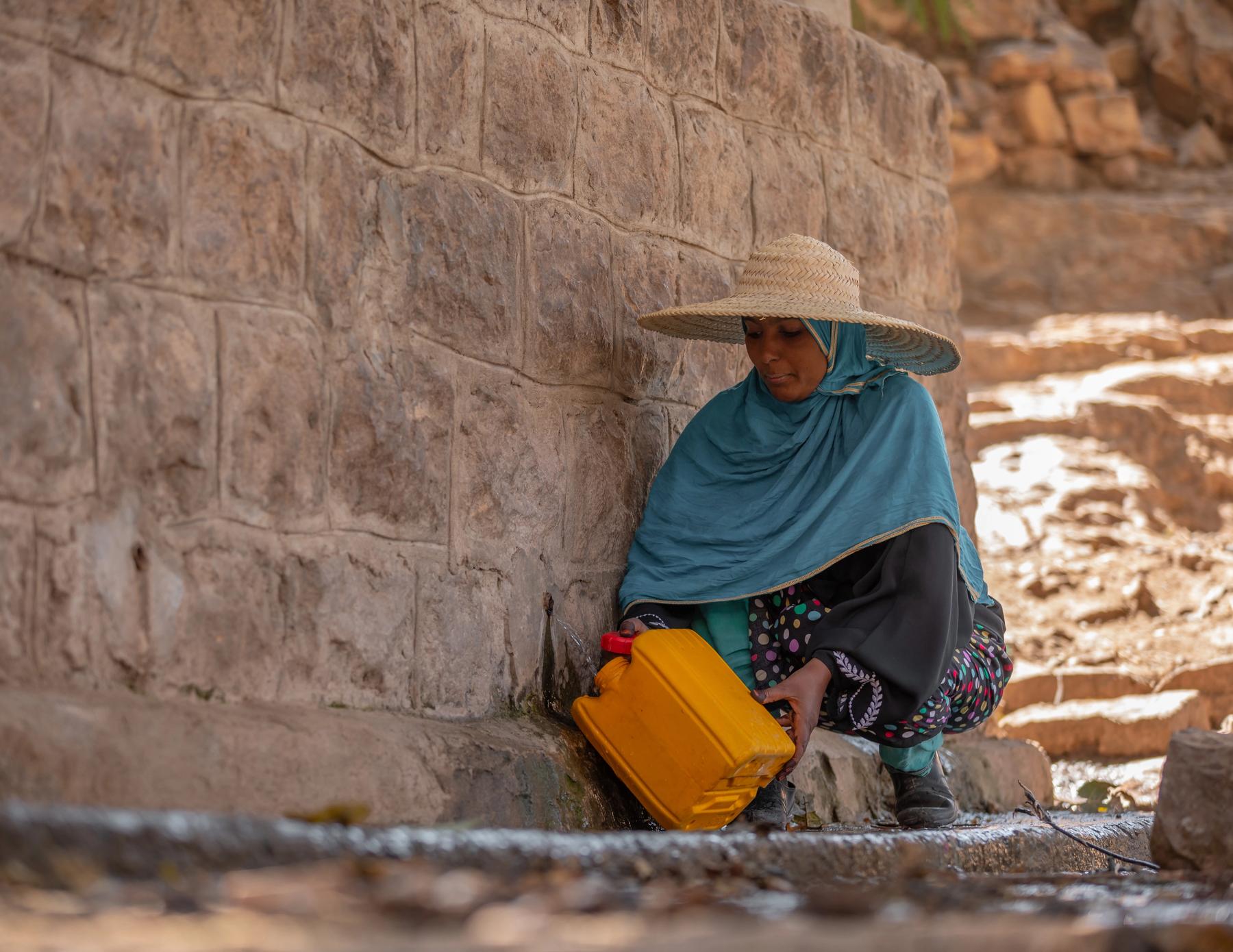
Yemen: Upon reaching the well, Rawya carefully fills her water container. The water is neither clean nor safe, but it is the only available source for her and her family. Photo:Ahmed Al-Basha / Oxfam Intermón
Poverty
What is poverty and can it be overcome?
What is poverty?
A person living in poverty lacks the money and resources to live life to their full potential.
People experiencing poverty may not be able to meet basic needs for food, water, shelter and healthcare.
Poverty is usually defined by how a person’s income compares to the rest of the population. There are different formulas for determining poverty levels around the world.
In Australia, the poverty line is set at half the median income level, which is $489 per person per week.
While the definition of poverty relates to low-income levels, poverty is caused by more than a lack of money. Poverty is human-made and is caused by injustice. The unfair treatment of people – often based on their gender, race or religion – means they have unequal access to resources, opportunities and services.
This power imbalance also means they are unable to voice their concerns or contribute to the decisions that impact their lives. This is how the vicious cycle of poverty continues.
Globally, anyone who earns less than USD $2.15 per day is considered to be living in extreme poverty. Thanks to ambitious partnerships like the Millennium Development Goals and the Sustainable Development Goals, the world has made steady progress on reducing extreme poverty. But in 2020, the global poverty rate increased for the first time in decades because the COVID-19 pandemic hit those already experiencing poverty the hardest.
Right now, around 700 million people around the world live in extreme poverty. Therefore, we are not on track to achieve the Sustainable Development Goal of ending poverty by 2030.
What are the effects of poverty?
The effects of poverty are devastating. A child born into poverty can have a difficult life. Their family may not have enough resources to meet their basic needs. They may miss out on eating healthy food, having a safe home and going to school.
Low-income families often experience financial stress, which may harm their relationships and mental health.
In areas with a lack of affordable housing, people experiencing poverty may be forced to live in cramped or unsafe housing.
Poverty also leads to negative health outcomes. A person living in extreme poverty has poorer physical and mental health and a lower life expectancy.
Can poverty be overcome?
We believe that in a wealthy world, poverty is unjustifiable and preventable, that the present state of inequality and injustice must be challenged, and that with the right help, people can change their lives for the better.
Up until 2020, the world was making strong progress on reducing poverty. The COVID-19 pandemic stalled our progress, but we know how to get back on track.
Oxfam is working to address the inequalities that lead to poverty and injustice around the world. We work with local partners and communities so more people can gain the skills they need to earn an income. Through advocacy and campaign work, we challenge the unfair systems and structures in place that keep people trapped in poverty.
We won’t stop until everyone has a fair chance to live a decent and dignified life.
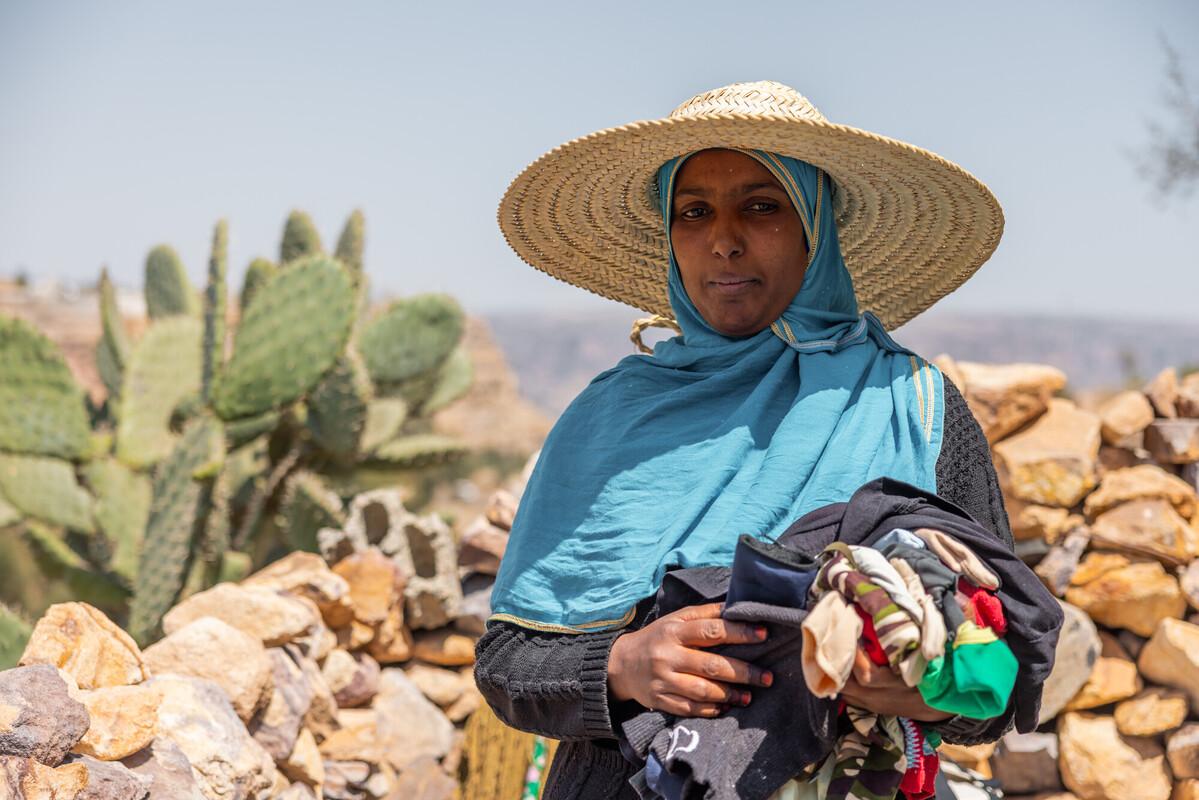
Yemen: Rawya gathers freshly dried clothes, washed with clean water—an everyday task that once required great effort, now made simple. Photo:Ahmed Al-Basha / Oxfam Intermón
Poverty around the world
- The extreme poverty rate is USD $2.15 per day (World Bank).
- More than one billion people were lifted out of poverty from 1990 to 2015. (United Nations).
- 700 million people around the world live in extreme poverty (World Bank).
- 575 million people are likely to be living in extreme poverty by 2030 (United Nations).
- One in three people around the world live with moderate to high food insecurity (United Nations).
- A woman dies every two minutes from causes related to pregnancy and childbirth (United Nations).
- One in five young women are married before they turn 18 (United Nations).
- In 2022, 2.2 billion people did not have access to safe drinking water (United Nations).
- In Australia, the poverty line is set at 50% of median income, or AUD $489 per person per week (ACOSS).
- In 2022, more than one in eight Australians lived below the poverty line, or 3.3 million people (ACOSS).
- In 2022, one in six children in Australia lived in poverty, or 760,000 children (ACOSS).
- 3.7 million households in Australia experienced food insecurity in 2022 (Foodbank).
Millennium Development Goals
In 2000, the United Nations adopted the Millennium Development Goals. These were a set of eight goals for low-income countries to reach in order to improve global development by 2015.
The first goal set out in the Millennium Development Goals was to eradicate extreme poverty and hunger. Great progress was made in this period, but not all goals were achieved.
Sustainable Development Goals
In 2015, the Sustainable Development Goals replaced the Millennium Development Goals. The Sustainable Development Goals are a more ambitious set of 17 goals, each with specific targets for countries to work towards to improve the environment and global prosperity by 2030.
The first goal set out in the Sustainable Development Goals is to end poverty. This goal influences all the other Sustainable Development Goals.
How is Oxfam fighting poverty?
In this wealthy world we live in, poverty is completely unjustified. It is absurd that so many people live in poverty while the rich keep getting richer.
That’s why Oxfam is part of a global movement of people working to eliminate poverty by tackling inequality. Working with partners, allies, communities and our supporters, we are changing the world for the better.
Our long-term development projects work with communities to overcome the challenges they identify, and to implement the solutions they believe will work for them. Our advocacy and campaigning demands that people in positions of power are held accountable to the people they serve. And our humanitarian aid work assists those in life-threatening crises such as conflicts and disasters.
Poverty leads to a lack of life’s necessities, such as food, water, education and healthcare. So, we are also working with local communities to improve access to these vital resources and ensuring everyone benefits from them.