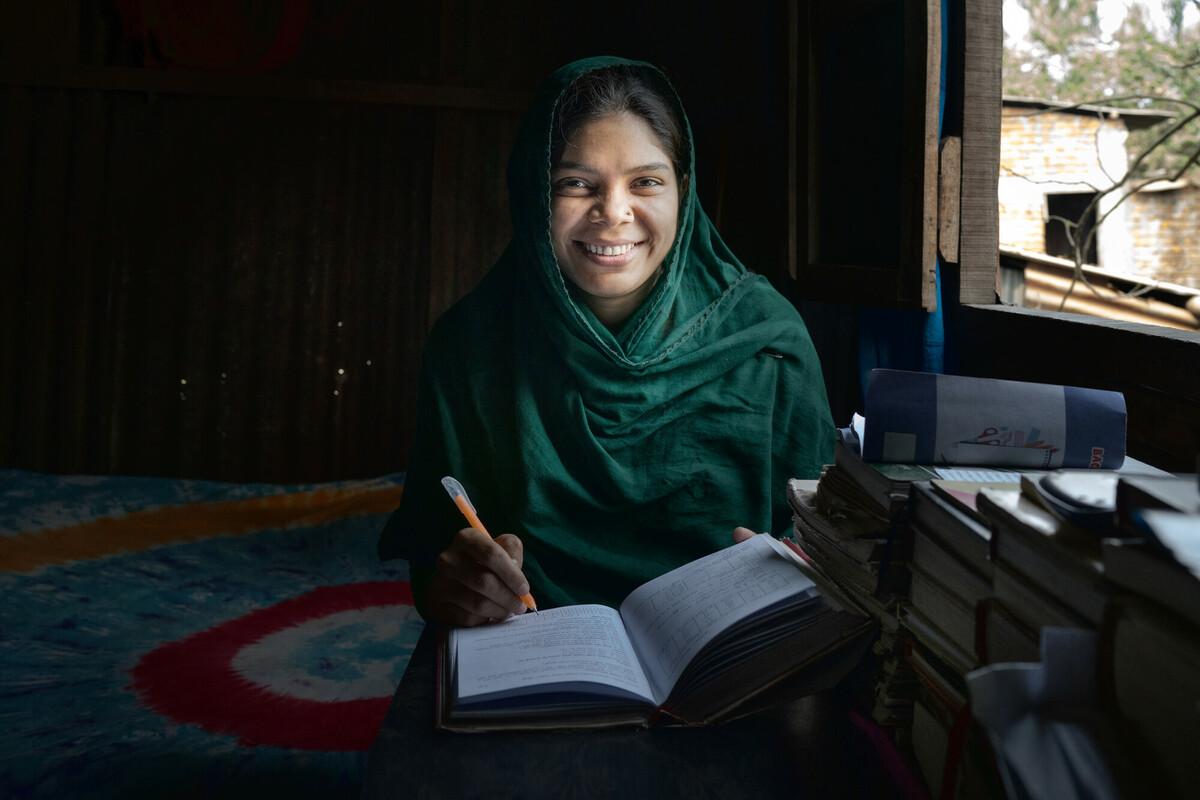
Bangladesh: Sharmin (23) received training with Green Jobs. She and other women are making jute products. They make lunch carrier bags, ladies bags, handcrafts, wall-mates and penholders, among other things. Photo: Fabeha Monir/Oxfam. Oxfam acknowledges the support of the Australian Government through the Australian NGO Cooperation Program (ANCP).
Writing a press release
When you’re speaking up on an issue that matters, a media release is one of the most powerful tools you can use.
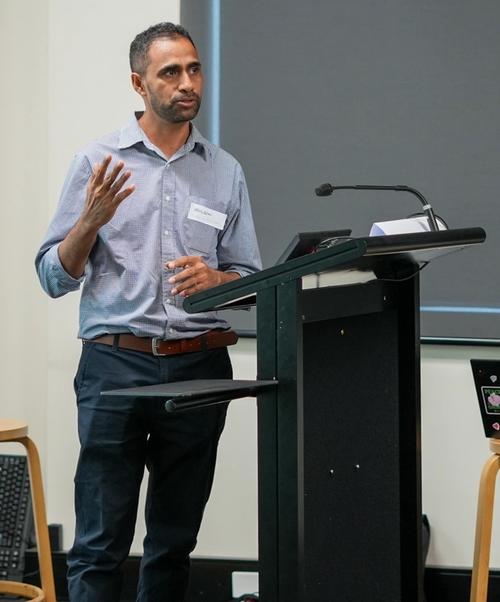
Australia: Pankaj Anand, Country Director of Oxfam in Timor-Leste, and Adilson da Costa Junior, Strategic and Engagement Lead in Oxfam in Timor-Leste, visited Australia to meet with supporters and to share their vision and hope for Timorese people. Photo: Heidi Demond/Oxfam
Passionate politics
Media releases are one of the most effective ways to share news, announcements, and stories with the public. They help build credibility, reach wider audiences, and shape the narrative around the moments that matter most.
The media is broad and diverse and there are many thousands of small publications and radio programs focusing on specific areas of interest.
Here's how you can craft a media release that ensures your message gets noticed.
Follow format protocol
A media release should be set out on a standard size (A4) sheet of paper with a margin of at least 2 centimetres on each side and at the top and bottom. It should include the words ‘Media Release’ in large, bold font near the top of the page, so that it is clear what it is.
It is also important for the media to know exactly who has issued the media release. If you are writing it on behalf of an organisation, you can use letterhead or a small logo. If you are writing it on your behalf, you will need to make sure your name and a relevant description of yourself are set out near the top of the page – for example, ‘Melanie Brown, Smith Street High School Student’. Don’t use graphics or pictures on the release.